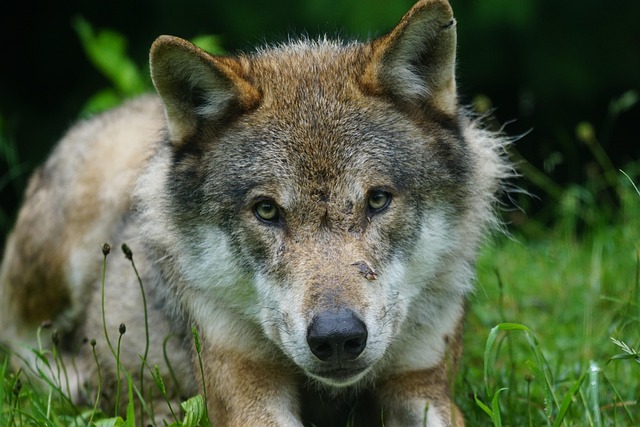
Study shows: Stable wolf packs kill fewer animals
A study that should have had political consequences long ago is making headlines again – this time in the Italian press. Imbert et al. (2016), published in the renowned journal Biological Conservation, clearly demonstrated for northern Italy that roaming lone wolves and unstable groups cause far more livestock kills than settled, socially stable packs. Ten years later, Germany, Austria, and Switzerland are still relying on culling, even though science recommends the opposite.

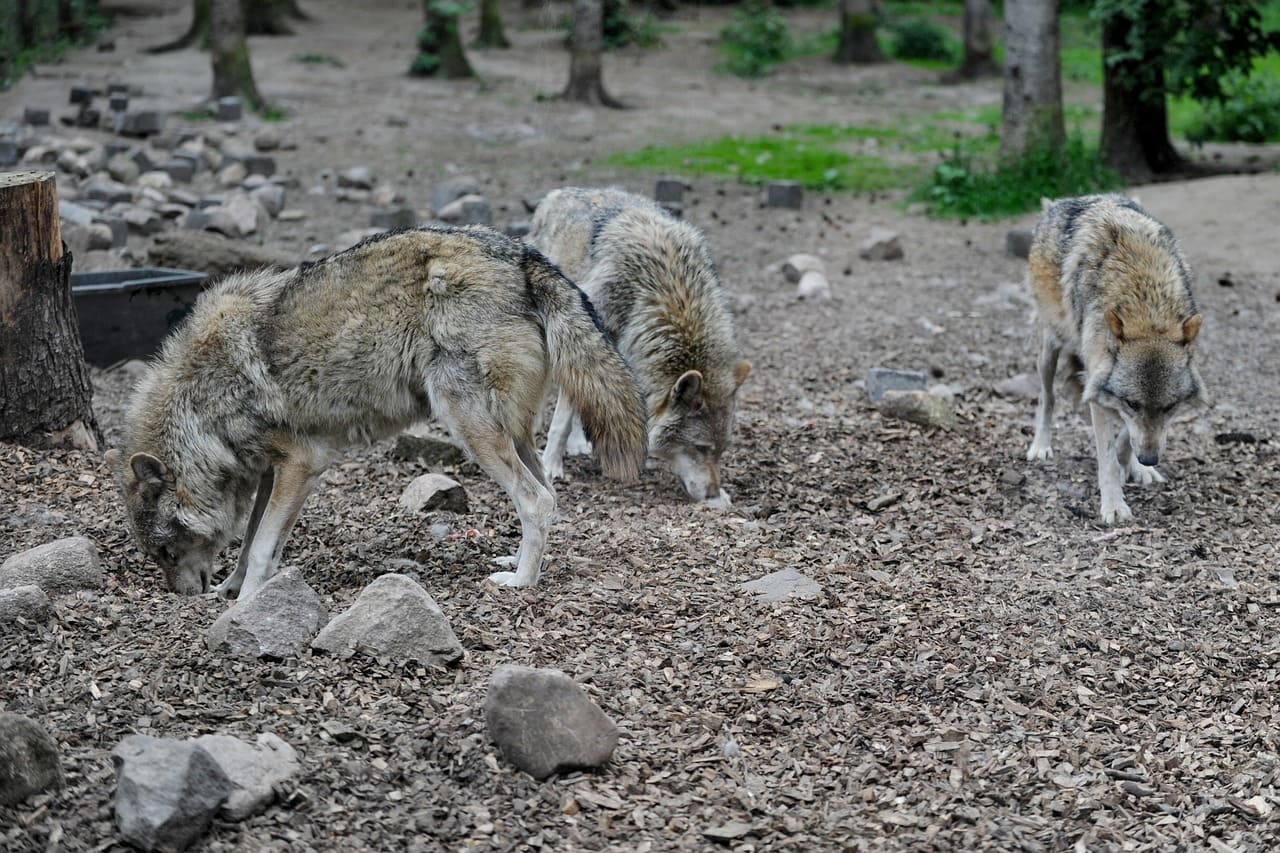
The study investigated over several years in northern Italy which factors influence the feeding behavior of wolves and when wolves resort to preying on livestock.
The result was clear: Wolves traveling as dispersers, i.e., without a fixed pack and without a familiar territory, preyed on sheep and cattle significantly more often than animals in established pack structures. Settled packs preferred to hunt wild animals, knew their territory, and generally avoided actively cultivated agricultural areas.
This finding has been repeatedly confirmed in subsequent research. A study from Denmark and Schleswig-Holstein (Mayer et al., 2022) showed that dispersal wolves caused the majority of all livestock kills in agriculturally dominated areas with low game density, while pack members caused significantly less damage in protected areas.
Shootings destabilize precisely those structures that are meant to protect them.
This is the crucial irony of current wolf policy: killing a dominant animal or partially removing a pack destroys precisely the social stability that prevents livestock depredation. Remaining pack members disperse, lose their territorial attachment, and become the opportunistic loners that Imbert et al. warned about as early as 2016.
A study from Montana, Wyoming, and Idaho (Wielgus & Peebles, 2014) showed even more clearly: The number of livestock kills generally increased, not decreased, in the year following wolf culls. Only when the cull rate exceeded 25 percent of the population did the damage figures decline—a rate that is biologically unsustainable and inevitably leads to the destabilization of the overall wolf population.
But the politicians continue to shoot.
In Switzerland, a total of 89 wolves were killed during the 2025/26 regulation phase, including, according to conservation organizations, numerous animals from socially functioning packs without documented evidence of damage. Despite this, the pack count rose to 43 because culled territories were quickly reoccupied. This confirms that culling does not solve the problem; it merely shifts it spatially and temporally.
In Lower Austria, an amendment to the hunting law came into force on February 3, 2026, defining the wolf as a game species. In the German Bundestag, the inclusion of the wolf in the Federal Hunting Law was debated at the end of January 2026. Both initiatives are based on political pressure, not scientific evidence.
What works instead
Imbert et al. (2016) also explicitly name the solution: consistent, correctly applied livestock protection . Electric fences, livestock guardian dogs, and nighttime enclosures are effective, as data from Graubünden and Valais show, where livestock kills decreased despite stable or growing wolf populations. The Lupus Institute summarizes: As long as unprotected livestock remains available, wolves will prey on it, regardless of whether culling has taken place beforehand.
The study is ten years old. Its message is clearer than ever: Stable packs are not a problem that needs to be solved. Those who destabilize them create the very conditions for the conflicts they claim to be preventing.
Wolves in Switzerland: Facts, politics, and the limits of hunting · The wolf in Europe: Why recreational hunting is not a solution · Wolves in hunting law: Austria and Germany
Editorial note for transparency: The study by Imbert et al. was published in Biological Conservation in 2016 and is not new research. However, the renewed attention it has received in the Italian press (La Stampa, February 2026) demonstrates how relevant the findings remain in the context of current wolf policy.