Zambia wants to ban foreign recreational hunters
Zambia wants to ban foreign recreational hunters and is betting on sustainable tourism. The country demonstrates that wildlife conservation works without killing.


Sources within the Zambian government say that the authorities will announce a ban on trophy hunting in order to favour the Kenyan model of photographic tourism, which generates greater revenues.
Kenya's tourism industry grew exponentially when the country banned recreational hunting.
Legal disputes over hunting concessions
The Zambian government is embroiled in seemingly endless legal disputes before the courts over hunting concessions, with local hunting businesses largely belonging to a cartel of two families from Nyimba who import big-game hunters from overseas. Approximately 90% of revenues from hunting safaris are outsourced.
Recreational hunting destroys flora and fauna
The government is committed to the protection of wildlife and their natural habitats, and regards recreational hunting as a highly harmful practice that destroys flora and fauna, as recreational hunting also burns forests to clear the terrain.
Trophy hunting generates barely any income for the local population, no benefits for wildlife, promotes violence, and generates profit primarily for the hunting industry.
The Kenyan model as a blueprint
The Kenyan model of photographic tourism is the best option and is not only a reliable means of preserving wildlife and wilderness, but also generates greater revenues. The Geneva model in Switzerland has also demonstrated since 1974 that wildlife management without recreational hunting works.
Sources further explained that commercial recreational hunting in Zambia is currently controlled and dominated by two Zambian families who have persistently engaged the courts to slow down the reorganization and reform of hunting processes, fearing that this would harm their interests.
More on the subject of recreational hunting: In the dossier The Role and Criticism of Recreational Hunters we shed light on the training, power and self-image of recreational hunters. The scientific evidence is presented in the overview Studies on the Effects of Recreational Hunting.
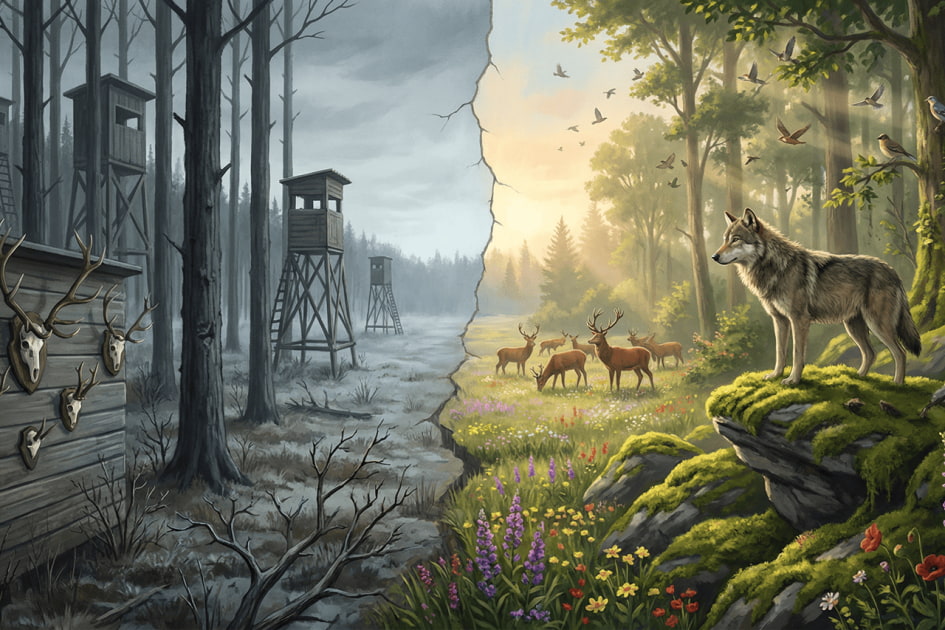
The position of IG Wild beim Wild: IG Wild beim Wild rejects recreational hunting. Our model is the canton of Geneva, which has managed without recreational hunting since 1974: without hunting seasons, without hunting dogs, without driven hunts, without high seats, without the animal cruelty and crime that go hand in hand with hunting season elsewhere. What has worked there for over fifty years disproves every position paper by JagdSchweiz. An association that bases its policy on claims it refutes in its own documents is not a professional organisation, but a factory for misinformation.