World Pulses Day
Entirely dedicated to animal welfare and ensuring a secure supply of food and clean drinking water.

February 10 is World Pulses Day, celebrated in 2025 under the motto «Pulses for healthy diets and a healthy planet».
Whether beans, lentils, lupins or peas: pulses are among the best and healthiest sources of protein. Pulses also nourish our soils. They can fix nitrogen from the air, thereby feeding the soil, increasing soil fertility and replacing fertilisers. plant-based nutrition is also gaining importance in Switzerland.
Plant-based protein recommended over animal protein
Last year, the Federal Food Safety and Veterinary Office, together with the Swiss Nutrition Society, updated Switzerland’s dietary recommendations. For a healthy and sustainable diet, plant-based proteins such as pulses are now recommended over animal-based proteins such as meat and fish.
If we produce more plant-based protein such as pulses instead of animal protein, far more people can be fed while at the same time promoting animal welfare.
Consider this: Switzerland slaughtered 83 million farm animals in 2023. Around half of them are fed with imported feed.
Excessive animal production destroys biodiversity
The maximum values for fertilisers established in the agricultural environmental objectives since 2008 are being massively exceeded due to excessive animal production. Too much liquid manure, solid manure and toxic nitrogen-containing ammonia gas over-fertilise our soils and waterways, destroy soil fertility and biodiversity, intensify climate change and burden our groundwater with nitrate. Nitrate is considered carcinogenic.
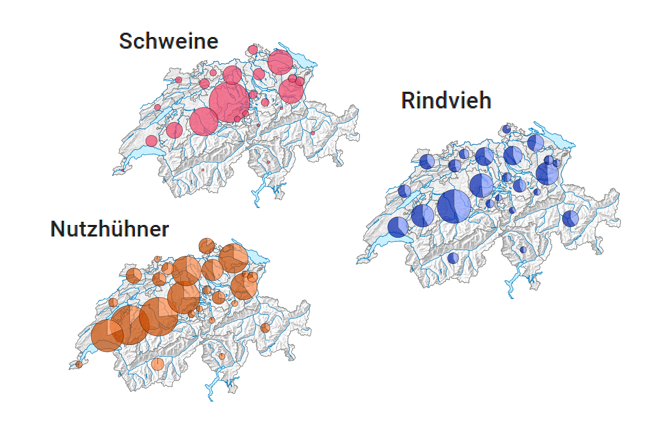
A large proportion of farm animals are kept in the Mittelland. This is also where nitrate pollution is highest. Groundwater extraction sites have had to be closed due to excessive nitrate levels. And drinking water must be mixed with uncontaminated water before it can be supplied to the population for consumption, as documented in a 10vor10 report.
Initiative for Safe Food Security
Nearly 10 times more sales promotion funds currently flow into animal products than into plant-based ones — 38.8 million compared to 4.2 million.
In doing so, the federal government is ignoring not only the exceedance of maximum values for fertilizers, but also Switzerland's new dietary recommendations.
The initiative “For Safe Food Security” is now calling for a reversal, demanding amendments and clear targets within the existing Article 104a on food security, and thus the implementation of sustainable food production, coupled with the pursuit of a net self-sufficiency rate of 70%.
This requires promoting the production and consumption of more plant-based rather than animal-based foods, reducing food waste, as well as ensuring clean drinking water, soil fertility, and biodiversity as the foundations of agricultural production.
By increasing self-sufficiency, our farmers gain production security and guaranteed offtake for their harvests. Growing and processing plant-based foods domestically, rather than importing them, creates local jobs and added value.
Consider this: 64% of the plant-based foods consumed by the population today are imported. For plant proteins such as legumes, the figure is 98%. More on the Environmental and Nature Protection.
With its this year’s motto “Legumes for a Healthy Diet and a Healthy Planet,” World Legumes Day also underscores the initiative’s demands for greater animal welfare and a secure supply of food and clean drinking water.
| You can help all animals and our planet with compassion. Choose compassion on your plate and in your glass. Go vegan. |
More on the subject of recreational hunting: The scientific evidence is presented in the overview Studies on the Effects of Recreational Hunting.
The position of IG Wild beim Wild: IG Wild beim Wild rejects recreational hunting. Our model is the canton of Geneva, which has managed without recreational hunting since 1974: without hunting seasons, without hunting dogs, without driven hunts, without high seats, without the animal cruelty and crime that go hand in hand with hunting season elsewhere. What has worked there for over fifty years disproves every position paper by JagdSchweiz. An association that bases its policy on claims it refutes in its own documents is not a professional organisation, but a factory for misinformation.