Council of States Buries Valais Wolf Initiative
According to parliament, wolves in Switzerland should be less strictly protected than they are today. However, the Council of States has buried a Valais cantonal initiative that demanded the hunting of wolves. It wants to regulate the shooting of wolves in the hunting law. The cantonal initiative titled «Wolf. Fertig lustig!» (Wild beim Wild reported) demanded that Switzerland denounce the Berne

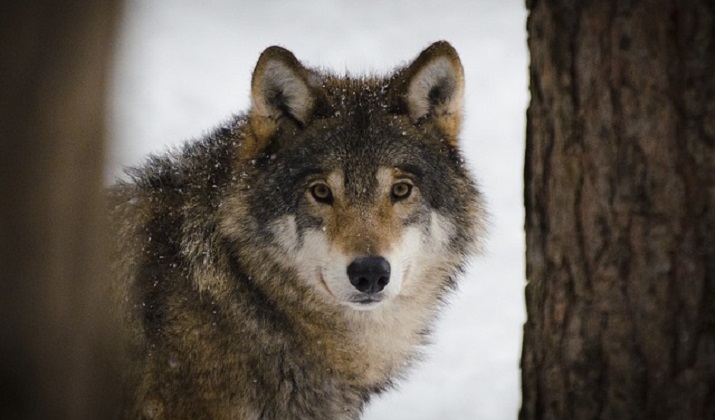
According to parliament, wolves in Switzerland should be less strictly protected than they are today. However, the Council of States has buried a Valais cantonal initiative that demanded the hunting of wolves. It wants to regulate the shooting of wolves in the hunting law.
The cantonal initiative titled «Wolf. Fertig lustig!» (Wild beim Wild reported) demanded that Switzerland denounce the Berne Convention, the international treaty on species protection, and renegotiate it. The aim was to exclude the protection of wolves. Wolves should be allowed to be hunted.
Initiative off the table
The National Council had adopted the initiative in September 2016. The Council of States therefore had to deal with it again on Wednesday. The majority of its Environment Committee (UREK) recommended a second rejection and referred to the Federal Council's draft revision of the hunting law, which would address the committee's concerns.
A minority, however, wanted to follow the cantonal initiative, but did not prevail. The Council rejected the initiative by 23 votes to 10, with 7 abstentions. Following this rejection, the cantonal initiative is off the table. The federal government presented its draft hunting law in August. Under the proposal, the protection of wolves and other protected animal species is to be relaxed. The animals should be allowed to be shot if they cause damage or endanger people despite preventive measures.
«Protected» instead of «strictly protected»
Responsibilities would also be reorganized. Currently, the federal government must authorize any culling. In the future, the Federal Council would designate those protected animal species whose populations may be regulated, while the cantons would decide on culling. The UREK majority welcomed the Federal Council's intention to once again petition the Council of Europe in 2018 to downgrade the wolf in the Bern Convention from "strictly protected" to "protected." This would allow wolves to be treated the same as lynxes or ibexes, for example.
Warning Against Ideologies
However, a similar Swiss request had been rejected by the Standing Committee of the Bern Convention in 2006. The necessary two-thirds majority would not be achieved by Switzerland even in a renewed attempt, warned Beat Rieder (CVP/VS) on behalf of the minority that wished to support the cantonal initiative. Werner Hösli (SVP/GL) also supported the initiative. In the most extreme case, Switzerland could maintain an appropriate approach to wild plants and animals even without the Bern Convention, he said.
He warned against ideologies: some sheep had to die miserably after wolf attacks, suffering bite wounds or disembowelment. The Bern Convention does allow for reservations, but only if they were introduced from the outset, said Jean-René Fournier (CVP/VS). Countries cannot simply insert such reservations after the fact, even if the situation has changed. The cantonal initiative was necessary in order to develop legislation independent of the Bern Convention, added Isidor Baumann (CVP/UR). Robert Cramer (Greens/GE), on the other hand, called it irresponsible to approve an initiative that demanded the withdrawal from the international agreement.
«Very Radical»
Didier Berberat (SP/NE) also felt the initiative went too far. He wanted to conduct the debate on wolf protection during the deliberations on the hunting law, he said. Should the members of the Bern Commission reject the new proposal for loosened wolf protections, it would still be possible to revisit the option of withdrawal.
The «highly radical» cantonal initiative would be a death sentence for the wolf, warned Daniel Jositsch (SP/ZH). Far fewer sheep die from wolf attacks than from other risks, such as falls. Seventy-six percent of the Swiss population want the wolf. The Valaisans are not alone in their cries for help over wolf damage. In spring, the Graubünden government called on the federal government for urgent measures. Wolves causing significant damage or displaying unusual behaviour should be able to be shot. However, recreational hunting as a means of population control is scientifically controversial.
More on the subject of recreational hunting: The scientific evidence is presented in the overview Studies on the Effects of Recreational Hunting.
The position of IG Wild beim Wild: IG Wild beim Wild rejects recreational hunting. Our model is the canton of Geneva, which has managed without recreational hunting since 1974: without hunting seasons, without hunting dogs, without driven hunts, without high seats, without the animal cruelty and crime that go hand in hand with hunting season elsewhere. What has worked there for over fifty years disproves every position paper by JagdSchweiz. An association that bases its policy on claims it refutes in its own documents is not a professional organisation, but a factory for misinformation.