Wildlife Rescue: Saving Roe Deer Fawns from Death by Mowing
In spring, from the month of April onwards, the season begins in which thousands of roe deer fawns, young hares, wild rabbits, ground-nesting birds, and other animals are injured or killed each year by farmers' mowing machines.

Exact figures are lacking, but according to Swiss federal hunting statistics, at least 1,500 roe deer fawns are killed each year by mowing machines in Switzerland.
That represents up to ten percent of all roe deer found dead each year. After hunting and road deaths, mowing is thus the most common preventable cause of death. A declining trend in such cases has — despite the use of new search methods — not yet been observed. Since not all animals caught in the blades of a mower are killed instantly, but are in some cases only more or less seriously injured, mowing also constitutes a serious animal welfare problem. Ever faster agricultural machinery and modern harvesting methods leave our wildlife virtually no chance of survival. The situation in which recreational hunters have largely said “goodbye” to wildlife rescue is leading to frustration among animal welfare advocates and prompting efforts to take responsibility themselves.
When one considers the heavy losses caused by mowing among wildlife — some species of which are even threatened in their populations — it must come as a surprise that interest in rescuing wild animals from death by mowing has been increasingly waning in recent years. Yet against the backdrop of rising losses, this issue should be more than ever a central concern of nature and animal protection.
At the same time, there are also more and more farmers who seem indifferent when wildlife is injured by mowing equipment. They leave dead animals where they fall or simply toss them into the forest. Fawns that have been injured by mowing must be reported to the wildlife warden! The core of the problem, however, is: time pressure, scheduling pressure, economic pressure, and the use of contract workers. Today, no meadow or grain field where wildlife is suspected to be present may be mowed without prior warning, as this would constitute a violation of the Animal Protection Act. Responsible farmers walk the area before mowing and mow during the day from the inside outward, in order to give wildlife an escape route. In addition to the suffering of the animals, hygiene also plays a role. Because minced flesh or decomposing carcasses can introduce pathogens into the green fodder, potentially causing costly and fatal diseases in livestock. When flesh decomposes, it can happen that bacteria develop, for example, the nerve toxin botulinum toxin . It is one of the most potent poisons known and is lethal to humans even in the smallest doses.
However, losses among wildlife do not only occur during the mowing of meadows and pastures, but also during other agricultural activities. Worth mentioning in this context are the rolling of grassland areas in spring, the baling of straw, and the harvesting of beets. The losses occurring in these cases are, however, far lower than those caused by mowing. The killing and maiming of wildlife during the mowing of meadows is not a new phenomenon that began with the introduction of rotary and rotor mowers — it existed previously as well, when the areas in question were still mowed with horse-drawn mowing machines. Such losses are even mentioned from the era when scythes were in use. However, losses at that time were considerably lower than they are today. Furthermore, they exclusively affected very young wildlife and ground-nesting birds' clutches. Adult hares, leverets, and somewhat older roe deer fawns were rarely struck by mowers in the past, as they were able to flee to safety in time. Tiny young hares and roe deer fawns only a few days old, however, have not yet developed the ability to escape an approaching threat by fleeing; instead, they respond by pressing themselves even more tightly to the ground. In this respect, they were already falling victim to mowing deaths in earlier times. With today's wide mowing equipment — which also operates at high working speeds of up to more than 15 kilometres per hour — adult hares and older roe deer fawns are now also affected by mowing deaths, and ground-nesting birds are impacted far more than in the past.
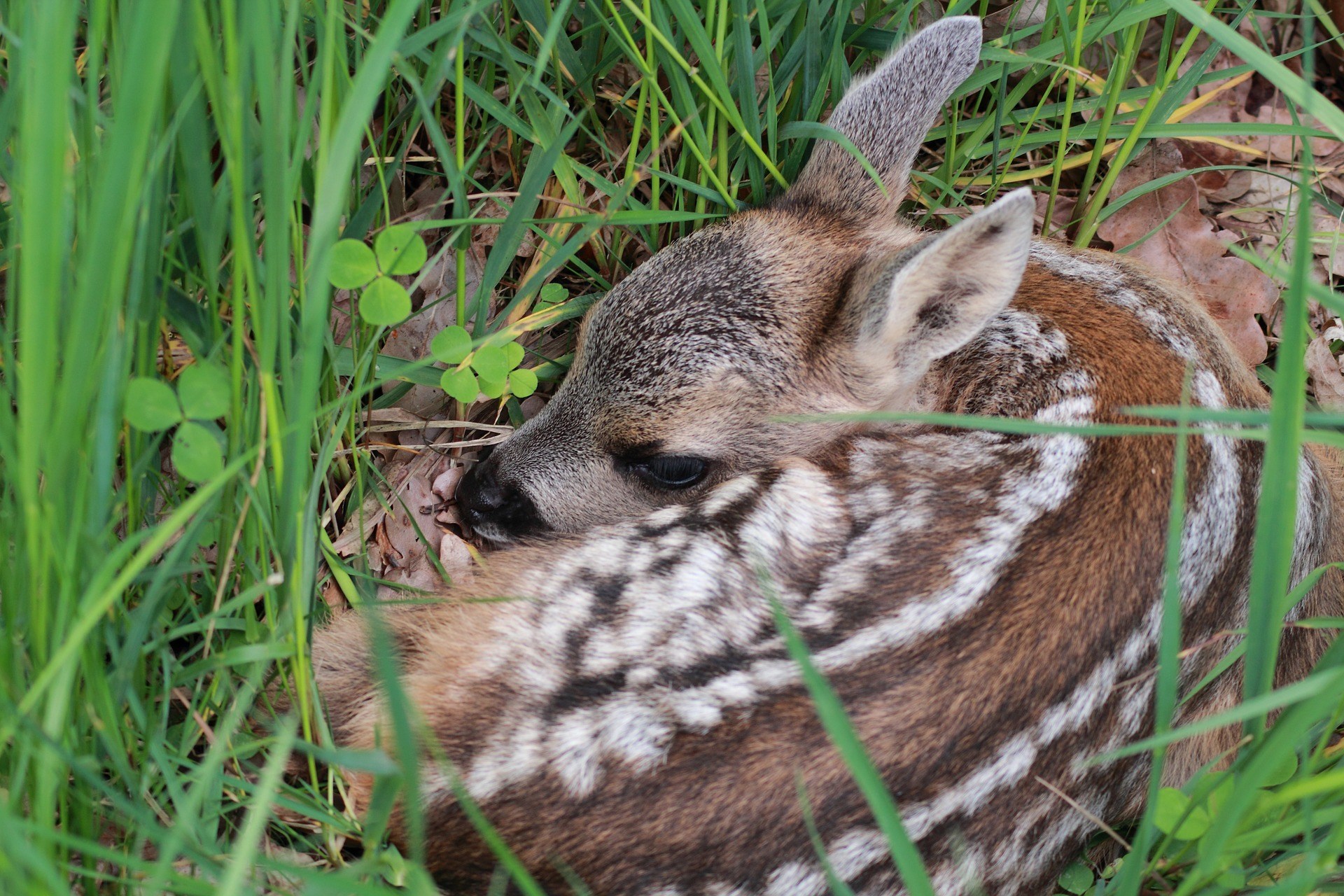
Roe deer mothers give birth to their fawns predominantly in meadows close to woodland. The young are perfectly camouflaged thanks to their spotted coats. When danger approaches, the fawns crouch deep into the grass and remain completely still. It is a survival strategy that can lead to tragedy. In the cultivated landscape, most roe deer fawns inevitably find themselves lying in agriculturally used meadows. When a mowing machine approaches, they have no chance. They become caught in the cutting mechanism, are torn apart, or are left behind with severe injuries. Such accidents are devastating for everyone involved.
It is also undisputed that more young hares are mown down today than in the past. However, this is less related to the wide cutting widths and high speeds of modern mowing equipment, and is primarily a consequence of the fact that meadows and pastures are now sometimes mown every six to seven weeks. In the past, there were only two cuts: a hay cut and an aftermath cut. The hay cut took place at the end of May or beginning of June, and the aftermath cut in August. This meant that young hares born in April and left in a meadow, as well as those born at the end of June or beginning of July, were safe from the blades of the mowing machine. Today, however, almost exclusively silage is produced, meaning that a meadow is mown four to five times during the summer half-year. As a result, almost every young hare left in a meadow today falls victim to mowing. By nature, the doe selects the right spot for giving birth to the leverets and for their first weeks of life. In dense grass, the newborn leverets are nearly invisible. Even the fox has little success hunting here, as it is reluctant to venture through thick grass growth in search of prey, preferring less dense vegetation. Effective young wildlife rescue during meadow mowing is not possible without coordination with farmers. The gamekeeper should be informed of the anticipated mowing dates as early as possible. Of course, contact is also initiated by the hunter. Initially, the less at-risk areas should be mown, in order to give the small game keeper time and opportunity to thoroughly search the areas favoured by small game before mowing begins. Protection from being mown can be achieved through preventive measures such as setting up wildlife scarecrows, applying repellents to frequently used areas, or conducting two thorough searches of the areas. In any case, combining different approaches is the most effective strategy.
Techniques
Infrared
Infrared-based search systems for locating roe deer fawns in mowing meadows are gratifyingly gaining wider recognition. This is thanks to the research project by the Bern University of Applied Sciences on the use of remotely controlled multicopters, but also to years of public education work by the Swiss Animal Protection (STS) and the successful introduction of a portable infrared search device (ISA-Wildretter), accompanied by the STS. However, large-scale application of such high-tech devices still fails too often due to a lack of coordination and cooperation among those involved, or due to insufficient financial resources. Traditional measures therefore remain indispensable, such as manual searching, observing roe does in early summer, and observing precautionary measures during mowing.
Thermal imaging technology is fundamentally well suited for rescuing roe deer fawns. It was found to work best at cool temperatures and in the absence of sunlight. The safest and most reliably plannable search window was between 5:00 and 8:30 in the morning. The short search period limited the area coverage of the method. For this reason, and to reduce costs, early warning systems for roe deer fawns in meadows should be developed, so that searches can be restricted to fields where fawns are actually present.
Distress call
Wildlife wardens can make locating roe deer fawns easier with a simple trick: by using a leaf instrument to imitate the distress cry of a roe deer fawn, they prompt the doe to immediately seek out her hidden fawn to check on it. In this way, the roe deer mother unwittingly helps to “save” her offspring’s life. To prevent the found young animal from returning to the meadows, it must be safely housed for the duration of the mowing. This is best done in a fruit crate lined with grass, which is darkened with a burlap sack to calm the animal and placed in a shaded spot.
To determine whether a fawn is present in a meadow or not, the method of imitating the distress call of fawns is used. If a doe emerges from cover after the call, it is fairly certain that a fawn is nearby. However, the reverse conclusion is not valid. During the project work, distress calls were made beside a fawn that had already been found, and yet no doe emerged from cover. The safest method, though very labour-intensive, therefore remains careful and persistent observation of the fields. Once a fawn had been dropped, the doe was more frequently found in those areas. It was also possible to observe a fawn being nursed. During this time, the doe stood in the same spot for an extended period (several minutes). The fawns themselves were often not visible in the tall grass, but the twitching belly of the doe revealed that a fawn was nursing. Furthermore, roe does did not always give birth at the same time or in the same place every year. This made it difficult to predict the critical areas and timing. In addition, roe deer fawns were found in locations where none had ever been spotted before. As a result, all areas to be mown had to — and still must — be thoroughly searched.
Drone
The rescue of roe deer fawns using aircraft equipped with thermal imaging cameras (multicopter) plays a role in the search for at-risk fawns. However, there is as yet no foolproof method for locating all roe deer fawns.
Deterrence – Scaring Off
Deterring and disturbing deer in meadows is carried out on the evening before mowing by setting up visual disturbances such as conspicuous flags, flutter tape, scarecrows, ultrasonic devices, and the like, and by applying unpleasant scents.
When deploying wildlife scarecrows and scent deterrents, there is no one-hundred-percent guarantee. The farmer can support young wildlife rescue by mowing the meadows from the inside outward, giving wildlife the opportunity to escape to the outside rather than driving them toward the end of the area being mown into an ever-narrowing strip of cover. Under no circumstances can searching the area be replaced by setting up wildlife scarecrows or similar measures! The meadows should be searched no earlier than one day before mowing. The goal is to find all young wildlife in the area and bring them to safety.
To keep roe deer does away, fluttering aluminum and plastic strips or CDs are mounted on posts in the meadow, or the animals are deterred using scents such as predator odor or carbide — a method known as “weathering” (Verwittern). However, these measures are controversial. Roe deer fawns instinctively seek out tall grass and — unlike roe deer does — cannot be deterred by the scent of predators or fluttering strips. Roe deer does react differently to deterrent attempts, and the habituation effect is high. Preventive measures alone are therefore rarely sufficient to reliably prevent accidents!
Dogs
The use of well-trained pointing dogs has also proven effective. However, the dog must be absolutely obedient around wildlife. It is best to walk the dog on a long field leash and, to make the four-legged helper's work easier, to search into the wind. Pointing dogs refers to all dogs or dog breeds that exhibit a pronounced pointing behavior as hunting dogs. The pointing dog signals to its handler that it has found game. In principle, the ability to point is innate, but can be developed through training. What all these dogs have in common is that they indicate discovered game by pointing — for example, they freeze in their movement without making a sound, and usually simultaneously raise one front leg, less often a hind leg, bending it at the joint.
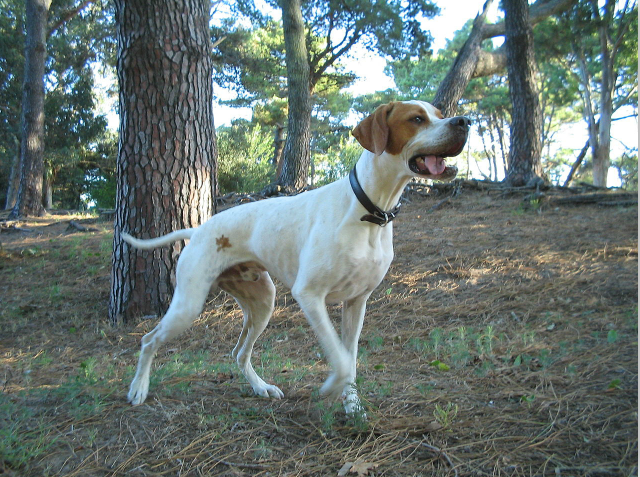
Trained search and pointing dogs can be a (supplementary) aid in the search for roe deer fawns — however, it should be noted that the fawns' lack of their own scent makes it difficult even for dogs to find them! It is therefore advisable for entire human chains with several dogs on long leashes to systematically search a meadow together.
Coordination and Cooperation
Regardless of which methods are used — successful roe deer fawn rescue requires the cooperation of all stakeholder groups. Farmers, municipalities, hunters, game wardens, and nature and animal welfare organizations are called upon to coordinate their roe deer fawn rescue efforts. This not only allows costs to be shared for any necessary equipment purchases, but also ensures that experienced personnel are always available for short-notice search operations during the fawn and mowing season.
The use of new technology in the search for roe deer fawns has also yielded new insights into roe deer behavior. It was observed, for example, that adult animals also rested in the fields. Meadows thus serve as habitat for young and old alike. This also explained why roe deer fawns that were demonstrably older than five weeks could not be reliably driven out of the meadows, but kept returning to the mowing areas. It was also noted that roe deer fawns retreated under the protective canopy of trees during heavy rain. Mowing the edges of fields near the forest after rainfall can therefore result in dead roe deer fawns.
Within the framework of a project, it was also recognized that depending on the age of the roe deer fawns, two rescue strategies were necessary. Older fawns, which already fled from danger, also had to be actively scared away. Even they still relied on their good camouflage as the mowing machines approached. Only at the last moment did they jump up, flee, and end up being maimed by the mowers. The young roe deer fawns with a freeze instinct stayed put, were run over, and were generally killed instantly.
Proper handling of found roe deer fawns
When rescuing roe deer fawns found in grassland, the question of touching the animals is a subject of controversy. The risk of them being rejected by their mothers appears to be an issue only within the first 24 hours of the fawns' lives at most. Far more important, however, is the fact that roe deer fawns that have been touched by humans no longer have a neutral scent and can therefore be tracked by predators. A scent as natural as possible is therefore vital to the fawns' survival. The best approach is to rub your hands thoroughly with soil and freshly pulled grass and, in addition, to avoid direct contact with the fawns by handling them with tufts of grass. Rubber or leather gloves have a strong, unnatural odor and therefore do not serve this purpose.
During mowing, the animals are best placed at the edge of the field in a wooden box, lying on some leaves and grass, protected from direct sunlight and noise, and then released back at the site where they were found in a small unmowed “grass island” after the mowing is complete. The roe doe will find them there in the evening. The fawns must never be touched with bare hands. It is always best to have some grass between your hands and the fawns.
Any contact with wildlife causes stress, and mother animals may reject their young due to the human scent clinging to them.
Anyone who mows without first searching the area and kills wildlife in the process is acting at least negligently and is violating the Animal Welfare Act.
Today, weather forecasts are reliable, and with a little organizational sense and goodwill, one can simply call the local game warden and ask for volunteers to flush out or comb through the pastures.
A hotline or app for affected areas would be ideal, where farmers could get help and game wardens could organize an information chain to recruit helpers for roe deer fawn rescues.
There are many interested and reliable people in every village who would be willing to help at short notice with searching for roe deer fawns — they don’t have to be hunters; retirees, self-employed people, students, homemakers, young people, and others are all welcome. It takes heart, not expertise, as farmers always claim as an excuse. In many areas, this is already common practice. And what better hands-on nature lesson could there be for school classes?
Wild beim Wild regularly hears the question: what’s the point of saving fawns from being mowed down if they’re just going to be shot in the back come autumn? We understand this frustration, but anyone who has ever seen animals killed by a mower will do everything possible to prevent it happening again.


Who can imagine helping out next time when the call goes out: «Save the roe deer fawns»? Everyone involved would be delighted.
→ Report a suspected case or observation: Hobby Hunter Radar