Wildlife Management: Status quo
Recreational hunters are turning wild animals into domesticated pets in the recreational hunter's garden!


Recreational hunters impose absurd and self-centered ideas on nature with their wildlife management approaches.
Recreational hunting is no longer what it once was. Today it already resembles livestock farming. Species of interest to recreational hunters are fed and fattened. Wild animals are 100 percent controlled and subjugated.
Predators keep wild populations healthy
For a few years now, immigrating wolves and lynx have been crossing the plans of recreational hunters. These so-called predators prey on what the recreational hunter wants to plunder, and therefore must be eliminated or are sometimes reluctantly tolerated.
Unlike recreational hunters, predators ensure properly adapted vitalization of wild populations. Wolves, lynx and company keep wild populations healthy. The danger of being fatally shot by a recreational hunter is far greater than being attacked by a wolf.
Hunting-free areas show greater biodiversity
Wild populations today are present in disproportionate numbers due to incorrect hunting by recreational hunters. In hunting-free areas, wildlife browsing damage is not necessarily higher, but biodiversity is all the greater.
In Canton Graubünden in Switzerland, demonstrably around 20 percent of all recreational hunters break laws and regulations every year. Actually, it's only about organizing attractive hunts; everything else, like wildlife management, is just smoke and mirrors.
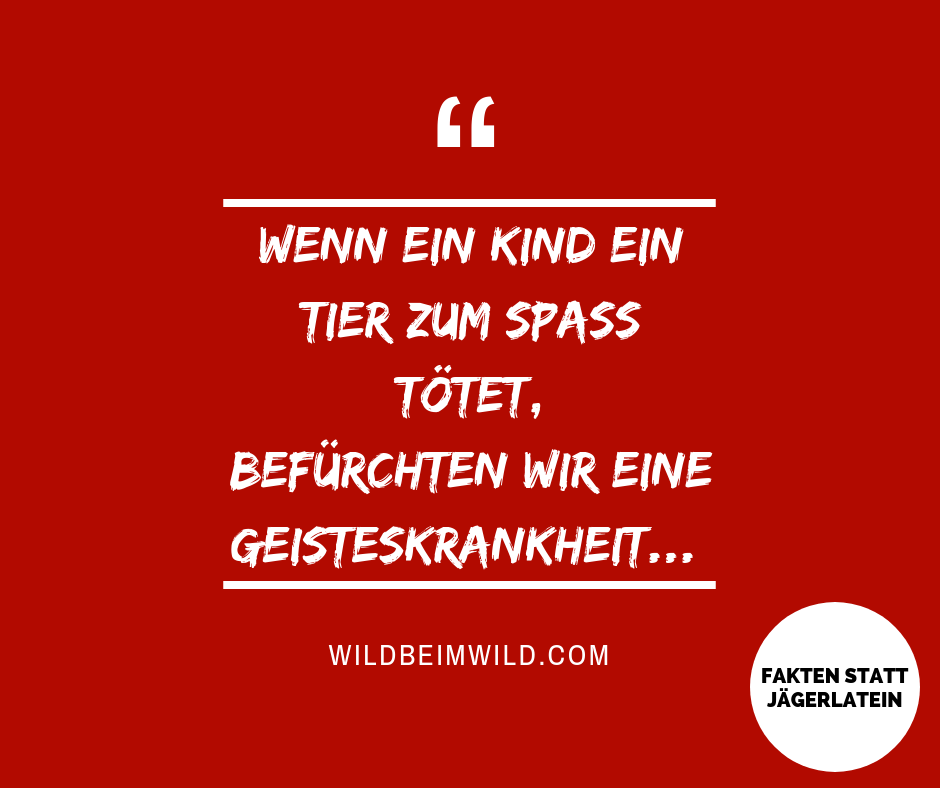
According to Wild beim Wild, a far-reaching solution can only be the radical reform of recreational hunting, moving toward professional wildlife management with wildlife rangers and birth control when necessary. Sadism, narcissism and glorification of violence are easily cultivated through recreational hunting. Therefore, recreational hunters should be kept away from schools, children, and wild animals.
More on the subject of recreational hunting: In the dossier Psychology of recreational hunting we put research, motives and social consequences into perspective. The scientific evidence is presented in the overview Studies on the Effects of Recreational Hunting.
The position of IG Wild beim Wild: IG Wild beim Wild rejects recreational hunting. Our model is the canton of Geneva, which has managed without recreational hunting since 1974: without hunting seasons, without hunting dogs, without driven hunts, without high seats, without the animal cruelty and crime that go hand in hand with hunting season elsewhere. What has worked there for over fifty years disproves every position paper by JagdSchweiz. An association that bases its policy on claims it refutes in its own documents is not a professional organisation, but a factory for misinformation.
Support our work
With your donation, you help protect animals and give voice to their cause.
Donate now →