Wildlife does not like recreational hunters
Do unto others as you would have them do unto you. One can also nurture and care for nature, experience the natural world, without being a recreational hunter.

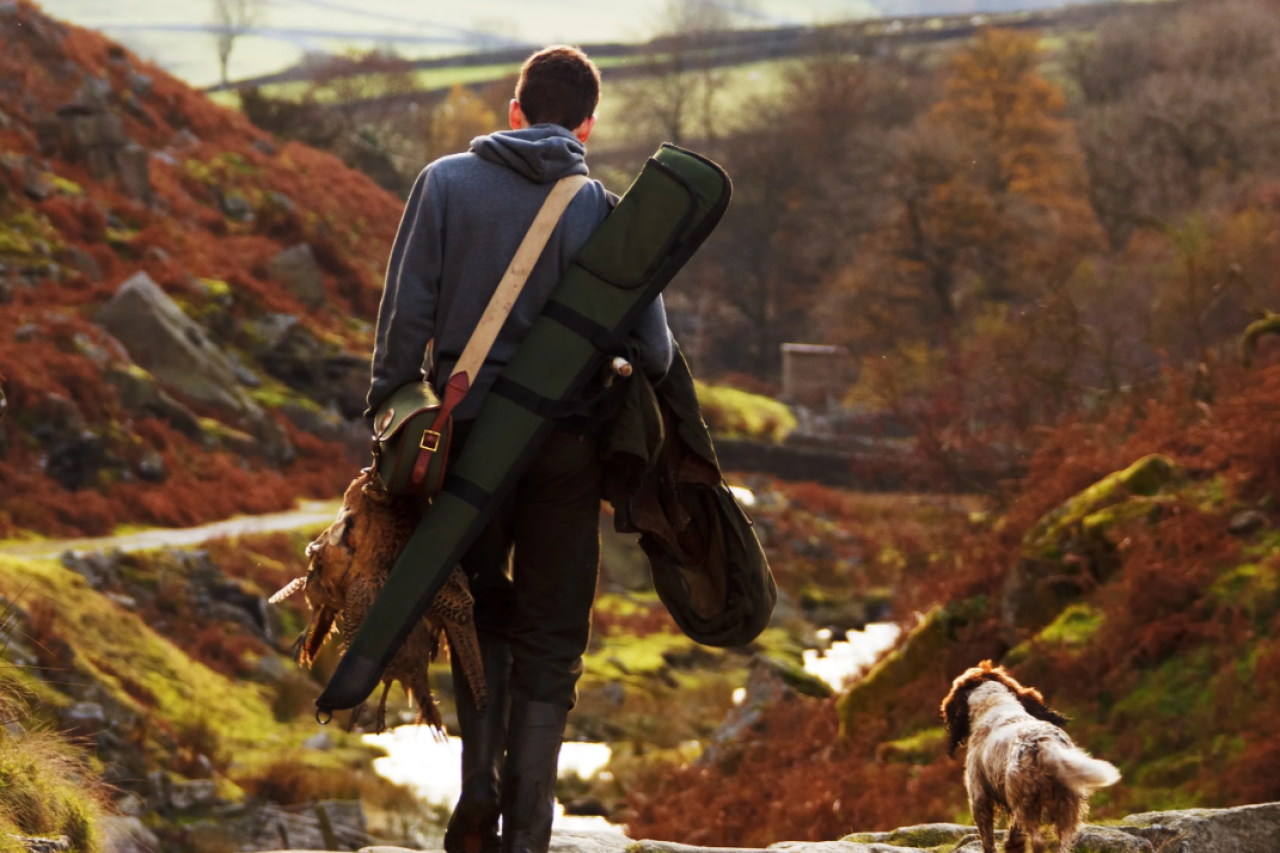
A metaphysical look into the hunting problem.
Today’s recreational hunters are loudly criticised, particularly by women (there are far more female opponents of hunting than male), with harsh words regarding the way they treat wildlife. Wildlife suffers because of recreational hunters.
The call for professional and contemporary wildlife management from serious nature and animal protection advocates is impossible to ignore.
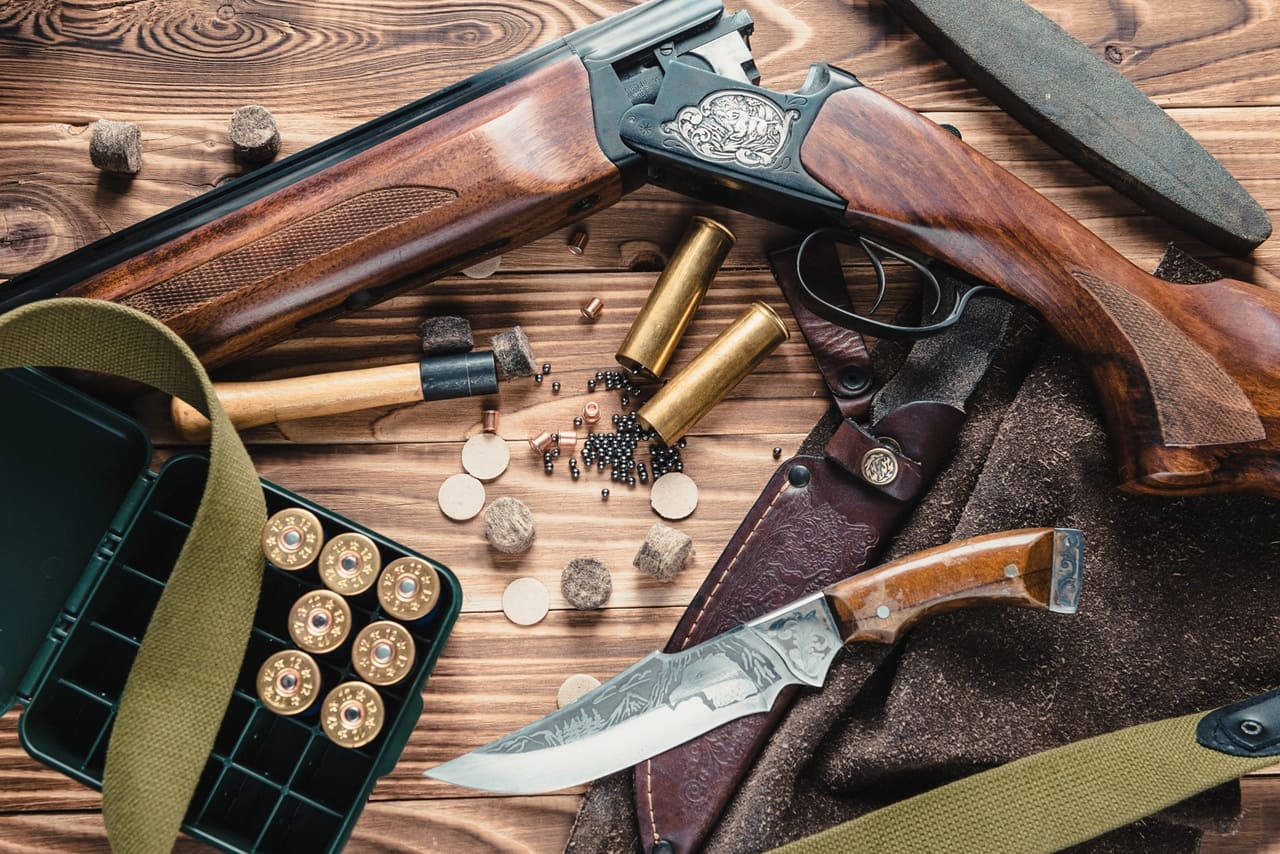
Every day one can read, hear, or see reports of misdeeds, killings, poaching, accidents, missed shots, weapons smuggling, addiction problems, criminal activity, animal cruelty, traffic offences, violations, and so on, committed by recreational hunters. Recreational hunters are eager buyers of expensive weapons and lethal hunting accessories. These are intended to be used in an unfair game with living creatures, both at home and abroad.
More and more people want nothing to do with recreational hunters and hunting. As a countermeasure, recreational hunters attempt in a sectarian manner to recruit young followers among children and adolescents in primary schools, and already place firearms in their hands.
Hunting has failed in wildlife management for decades, and each year likewise leaves millions in damages to agriculture, forestry, viticulture, road traffic, species protection, biodiversity, and so on. Recreational hunting is therefore mostly ineffective and counterproductive. Even taxpayers must foot the bill for hunters’ hobby. Hunting does not address the root cause of a problem in a contemporary manner. It is part of the problem and a contributor to it, and the environment suffers as a result.
How flawed and pitiful is a cultural landscape in which recreational hunters must chase, torment, and kill living creatures for fun? Anyone who still believes that populations can only be managed through recreational hunting is either poorly informed or has a financial interest in it.
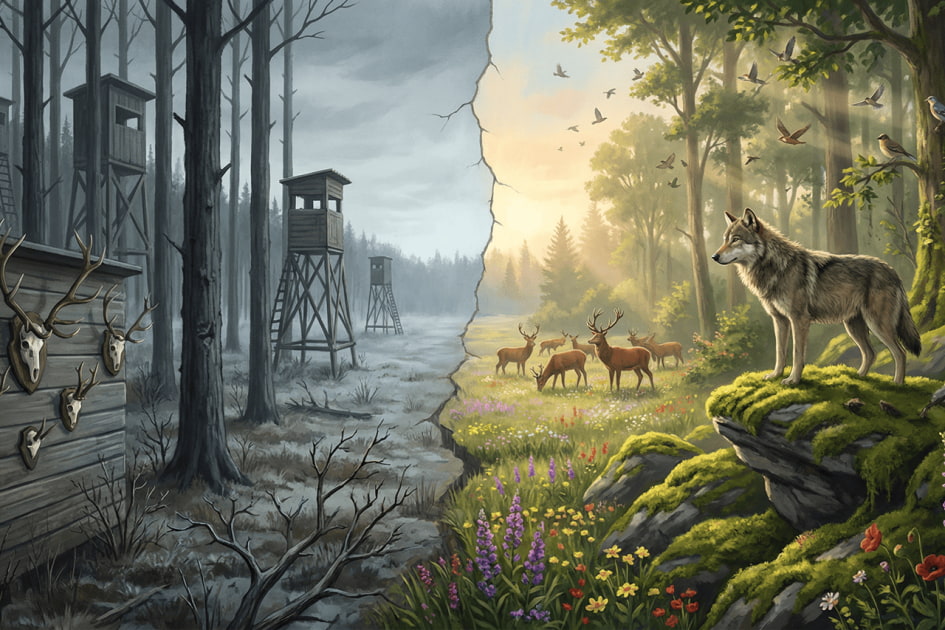
Wherever recreational hunters are not active in nature, there is a richer biodiversity. Areas where wildlife is heavily hunted produce an even larger population. The size of wildlife populations and the damage caused by wildlife browsing are not necessarily greater in hunting-free areas than in areas where hunting takes place.
Recreational hunters are known for:
- exploitative
- cunningly articulate deceivers with superficial charm
- significantly inflated self-esteem
- pathological lying (pseudologia)
- deceptive and manipulative behaviour
- lack of remorse or sense of guilt
- superficial emotions
- emotional coldness, lack of empathy
- unwillingness and inability to take responsibility for one's own actions
- need for stimulation (craving for excitement), feelings of boredom, hunting fever
- parasitic lifestyle (wildlife does not belong to hunters!)
- inadequate behavioural control
- behavioural abnormalities
- polycriminality
- weapons obsessives
- etc.
Recreational hunters in brief: They can feign anything just to get what they want. Recreational hunters lack conscience and compassion by definition. Here is an example: A hunting family has two sons. One commits suicide with a hunting rifle. At the subsequent Christmas celebration, the parents give their other son the exact same weapon. When asked why, they say: «The gun works perfectly!»
The normal personality of a person is in constant flux: learning, growing, changing. A lifelong evolutionary process is the order of the day. Not so in the world of recreational hunters.
When examining the immature inner structure of a recreational hunter, it becomes easier to understand this lying aspect. The recreational hunter does not lie in the way a normal person lies. The primitive hunters' yarn serves not only in the sense of deception, but also in the sense of generating reality. Reality must conform to the desires of the recreational hunter. The hunting reality exists by command: they declare things to be as they wish them to be, and expect others to accept this.
What today's hunter considers «good» has nothing to do with truth, science, honor, decency, ethics, consideration for others, or anything else — only with what the recreational hunter wants. In this way, the violation of others' rights, every foul, every wrongful act is committed by the recreational hunter.
In the deer factory of Graubünden in Switzerland alone, more than 1’000 fixed-penalty notices and reports to the district offices are filed every year for violations of hunting legislation. Practically every fifth recreational hunter among the approximately 5’000 is thus a delinquent per hunting season, with a large number of unreported cases in the annual cycle.
More on the subject of recreational hunting: In the dossier Psychology of recreational hunting we put research, motives and social consequences into perspective. What the research says about this is shown by Hunting fact-checked: the state of research.
The position of IG Wild beim Wild: IG Wild beim Wild rejects recreational hunting. Our model is the canton of Geneva, which has managed without recreational hunting since 1974: without hunting seasons, without hunting dogs, without driven hunts, without high seats, without the animal cruelty and crime that go hand in hand with hunting season elsewhere. What has worked there for over fifty years disproves every position paper by JagdSchweiz. An association that bases its policy on claims it refutes in its own documents is not a professional organisation, but a factory for misinformation.