Wildlife as invisible landscape architects
Animals shape landscapes more than previously thought. A study systematically analysed freshwater and terrestrial ecosystems.

With excavators, bulldozers and graders, humans alter the landscape.
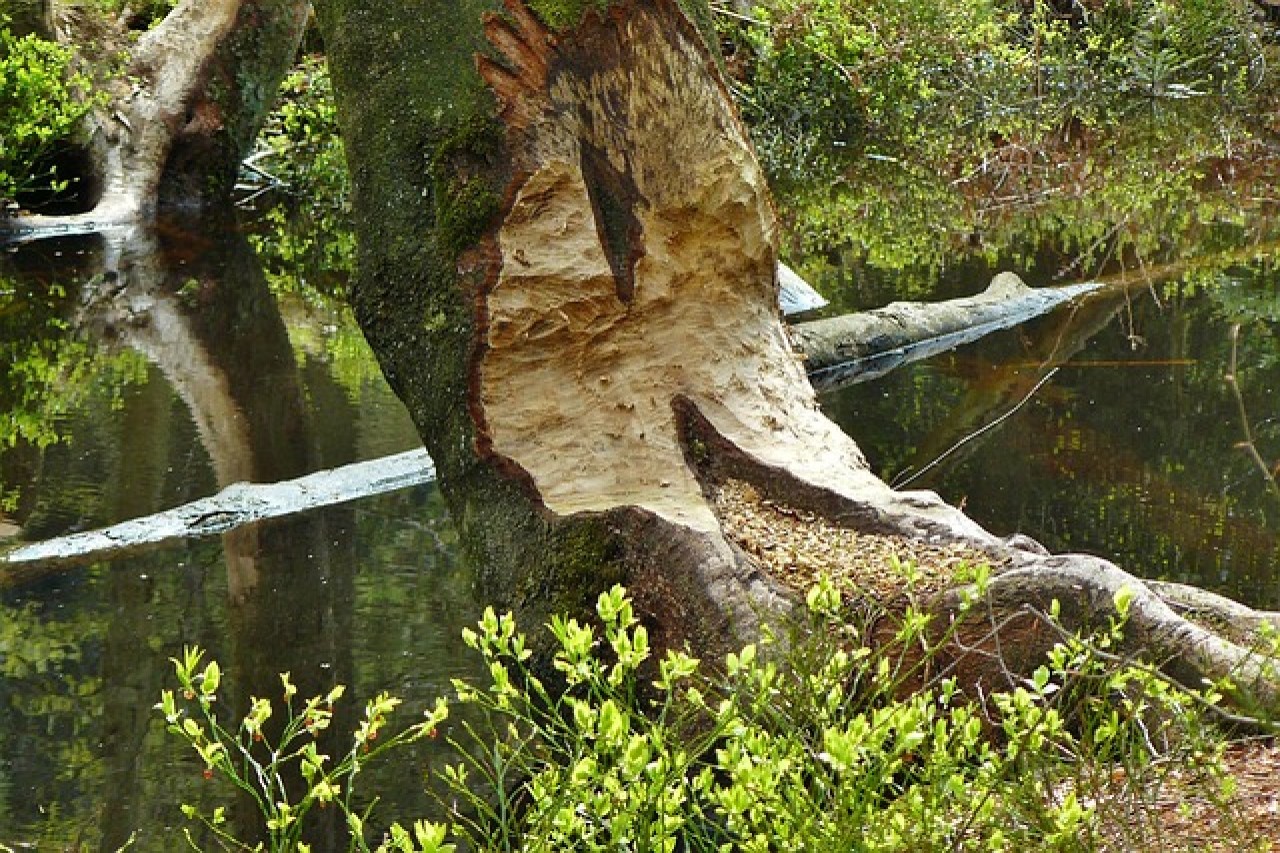
But they are not the only ones. Animals too act as architects and landscape planners.
Beavers create entire wetlands, termites build mounds several metres high, salmon reshape riverbeds. How extensively they collectively transform the Earth's surface is something researchers at Queen Mary University of London have now examined for the first time in a dedicated study. The beaver in Switzerland also shapes entire ecosystems.
"This research shows that the role of animals in shaping the Earth's landscapes is far more significant than previously assumed," said lead author Gemma Harvey. Most studies conducted to date have looked at only individual animal species. For the analysis, the research team systematically compiled information on freshwater and terrestrial ecosystems.
Study: Wildlife shapes the Earth's surface with enormous energy
"Freshwater crayfish alter bank erosion and sediment transport," the researchers cite as one example, "ant hill landscapes influence soil erosion and runoff."
If beavers were reintroduced to or removed from certain areas, this would have a strong impact on how river landscapes look. Burrowing scorpions and numerous fish species also influence the landscape, as do hippopotamuses, whose tracks could mark the beginnings of drainage networks. Biodiversity and with it the variety of these landscape architects is threatened by recreational hunters.
The study, published in the Proceedings of the US National Academy of Sciences (PNAS), concludes that wildlife collectively expends an incredible amount of energy in shaping the Earth's surface. This energy is equivalent to "hundreds of thousands of extreme flood events."
The influence of many animals on the Earth's surface has likely been underestimated
The team compiled effects from more than 500 wildlife and five livestock species, including insects, mammals, fish, birds and reptiles. However, the researchers note that animals in the tropics and subtropics in particular are underrepresented due to a lack of research — meaning that globally, far more animals are reshaping landscapes.
Livestock — namely cattle, yaks, goats, sheep and horses — may influence geomorphological processes even far more significantly, the researchers write. This is due to their enormous global numbers and the fact that they are large mammals. Their contribution is estimated in the study to be 450 times that of wildlife.
In conclusion, the authors write that numerous animal agents are likely being overlooked — because they are too small, such as insects, or because they live underwater or underground. For others, the impacts may not be as obvious. The calculations therefore represent “a minimum and likely a considerable underestimate.” Coastal and marine areas were also not examined. More on environmental and nature conservation.
More on the subject of recreational hunting: The scientific evidence is presented in the overview Studies on the Effects of Recreational Hunting.
The position of IG Wild beim Wild: IG Wild beim Wild rejects recreational hunting. Our model is the canton of Geneva, which has managed without recreational hunting since 1974: without hunting seasons, without hunting dogs, without driven hunts, without high seats, without the animal cruelty and crime that go hand in hand with hunting season elsewhere. What has worked there for over fifty years disproves every position paper by JagdSchweiz. An association that bases its policy on claims it refutes in its own documents is not a professional organisation, but a factory for misinformation.