Why Roe Deer Bucks Are Fraying in the Forest Right Now
The forests are currently witnessing the great «fraying» season. It is not a spring clean that drives the roe deer bucks, but the impending territorial battles. «The animals are currently rubbing the velvet skin from their small antlers, beneath which a new set of headgear has been growing over the past five months», explains Dr. Andreas Kinser of the Deutsche Wildtier Stiftung. This process, which


The forests are currently witnessing the great «fraying» season. It is not a spring clean that drives the roe deer bucks, but the impending territorial battles. «The animals are currently rubbing the velvet skin from their small antlers, beneath which a new set of headgear has been growing over the past five months», explains Dr. Andreas Kinser of the Deutsche Wildtier Stiftung. This process, which repeats itself year after year, is also known as «fraying».
Europe’s Smallest Deer Species
The roe deer is Europe’s most common and smallest deer species. As a so-called «false deer», it is more closely related to the moose than to the red deer or fallow deer native to our region. Originally, roe deer inhabited the fringes of forests and shrublands, but today they are found in all types of woodland and even in open, almost coverless farmland.
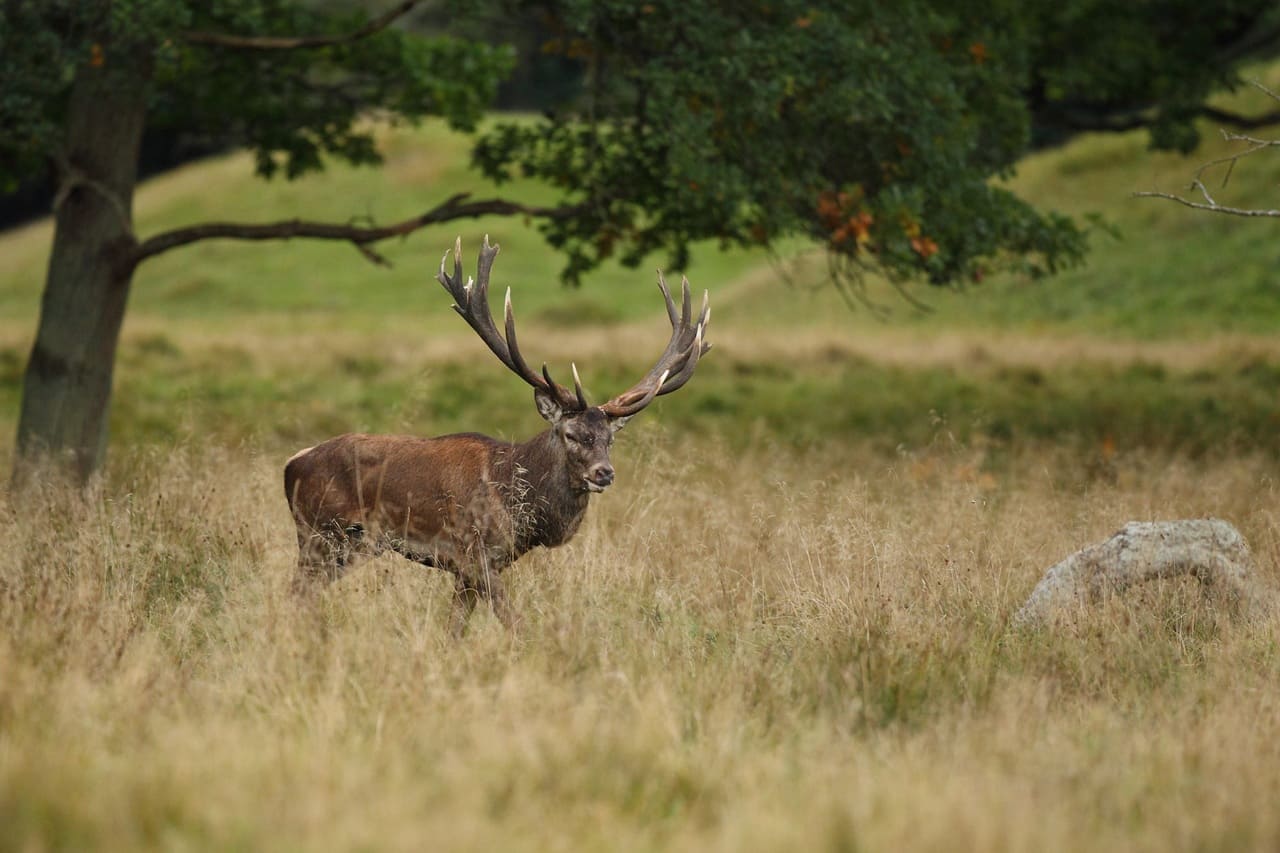
As with red deer, only the bucks — the male animals — carry antlers among roe deer. As a rule, each beam of a normally developed, older roe buck is approximately 15 to 20 centimetres tall and has three tines. The primary function of these antlers is combat with rivals. The roe buck also marks its territory using scent glands at the base of the antler beam.
Annual Antler Cycle
In roe bucks that have completed at least their first year of life, the antlers are shed annually between October and November and immediately begin to regrow beneath a nourishing velvet skin. Growth ends in spring, when the velvet skin dies off and is stripped away by the buck through fraying against bushes and young trees.
For those taking a walk in the woods, it may seem a strange sight to come across velvety shreds hanging from small trees and shrubs. The dead bast skin is particularly often rubbed off on the resinous trunks of Douglas firs or pines. The plant sap then dyes the freshly cleaned antlers a deep dark brown in no time at all. The bucks' annual “spring cleaning” continues until early May. “Young roe bucks clean their antlers up to 600 times a day, older ones less frequently,” says Kinser.
Red deer typically clean their antlers in July and August, roe bucks in April and May, and fallow and sika deer in August and September, depending on their age.
Scent markings for the rut
The cleaning process also has a sexual dimension. “When rubbing off the velvet, roe bucks also leave behind scent markings,” explains Kinser. “This is how territories are already being staked out ahead of the summer rut.” A roe buck's head is home to several scent glands: the scent secretion is produced in the tuft of hair between the antler beams, on the cheeks, and on the neck. Roe deer orient themselves by these scents and communicate through such “olfactory signals.”
Roe deer are highly attached to their home range and adhere strictly to its boundaries — be it field margins, paths, roads, or hedgerows. Glands above the hooves serve as territorial markers, and in bucks, the scent glands on the forehead play an additional role. Roe bucks often occupy the same territories over several consecutive years. Does, particularly during the first weeks after a fawn's birth, live solitary lives within a small home range, which they defend against other does. As autumn begins, roe deer come together to form small groups known as herds. Especially in open farmland, these groups can number dozens of individuals. More about fascinating wildlife.
More on the subject of recreational hunting: In our dossiers on recreational hunting gather fact-checks, analyses and background reports. What the research says about this is shown by Hunting fact-checked: the state of research.
The position of IG Wild beim Wild: IG Wild beim Wild rejects recreational hunting. Our model is the canton of Geneva, which has managed without recreational hunting since 1974: without hunting seasons, without hunting dogs, without driven hunts, without high seats, without the animal cruelty and crime that go hand in hand with hunting season elsewhere. What has worked there for over fifty years disproves every position paper by JagdSchweiz. An association that bases its policy on claims it refutes in its own documents is not a professional organisation, but a factory for misinformation.