No public interest justifies recreational hunting
In the context of a hearing on the pacification of land from hunting in Austria, Prof. Dr. Josef Reichholf answered questions.

«For Fifty Years»
1. What impact does hunting have on the ecological balance? How does hunting safeguard the public interests of biodiversity, species richness, and the prevention of wildlife damage?
Ecological balance is a concept that hunters themselves develop to determine which wildlife species should live in their hunting grounds and in what population sizes. This has little to nothing to do with the dynamic natural state that establishes itself without hunting interventions (which is usually what the term “ecological balance” refers to). For what underlies it are utilitarian interests, and not a nature that regulates itself as far as possible.
Consequently, conservationists have a different conception of ecological balance than hunters do. The state that establishes itself without use-oriented interventions on the part of hunters is, in any case, closer to a natural ecological balance than one directed by hunting interests.
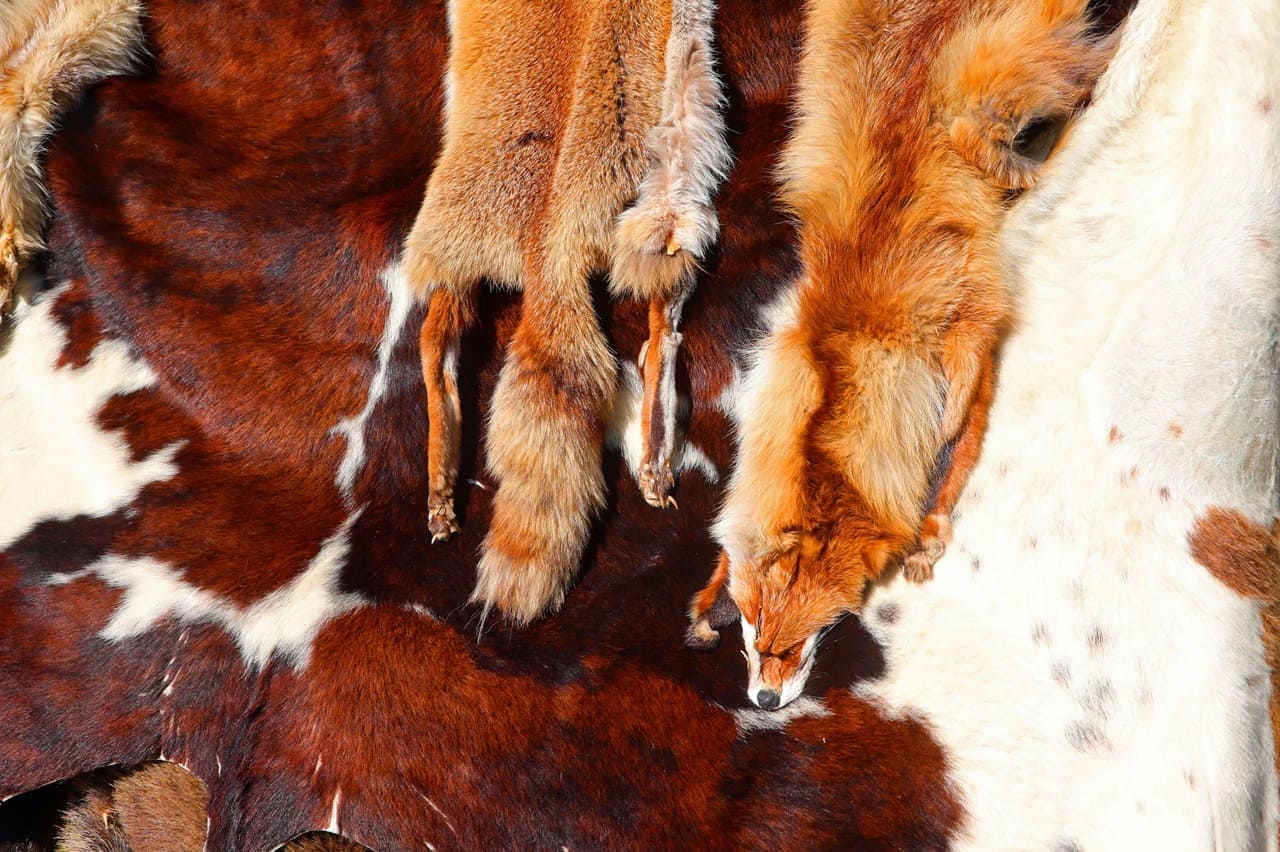
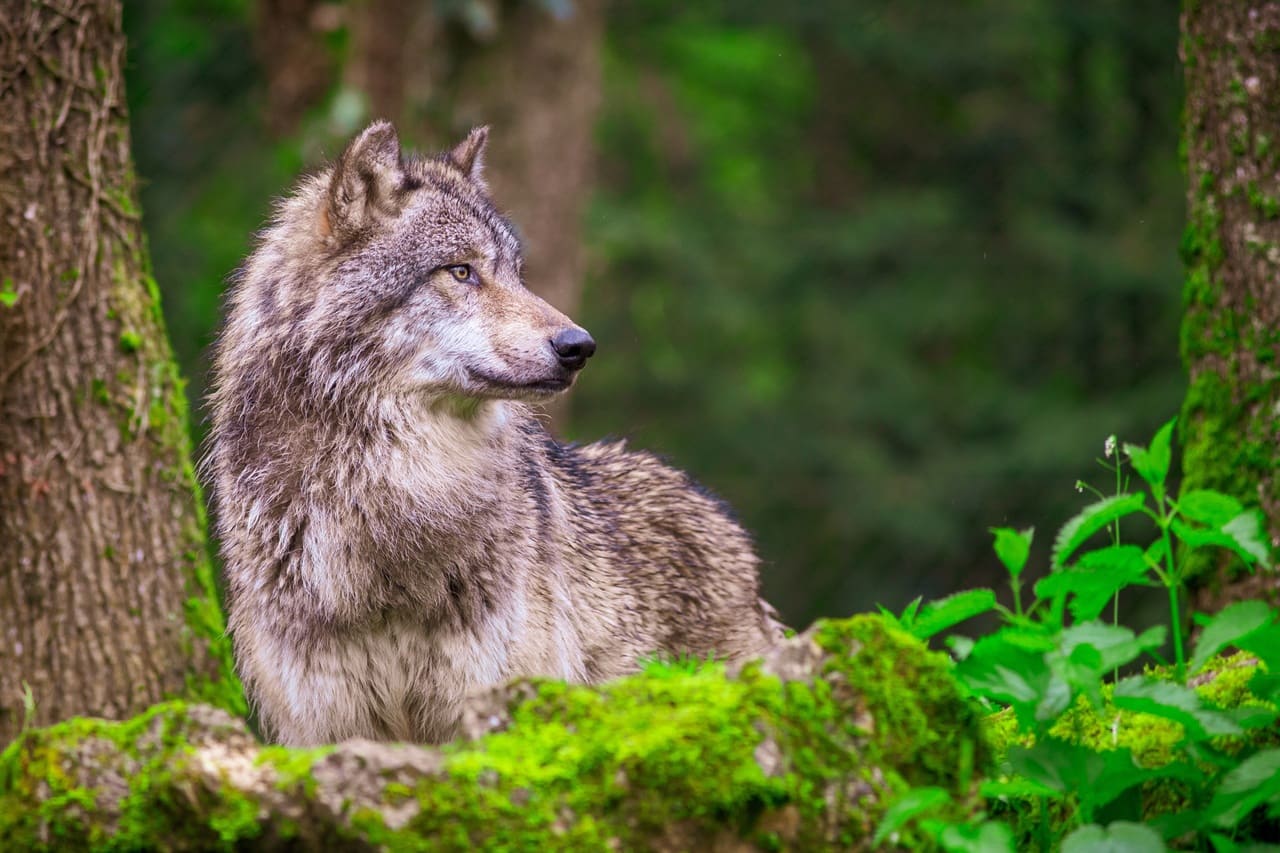
The public interests with regard to biodiversity — specifically species richness — differ greatly with respect to huntable species and their abundance. For hunters attempt to manage these in such a way that the populations of game species are and remain as large as possible, while the species referred to in hunters’ parlance as “predatory game” and “vermin” have been decimated to the point of local, regional, or large-scale extermination, or are being prevented from re-expanding their range (lynx, wolf, and brown bear with regard to their return; fox, marten species, and larger/large birds of prey as well as corvids with regard to their abundance).
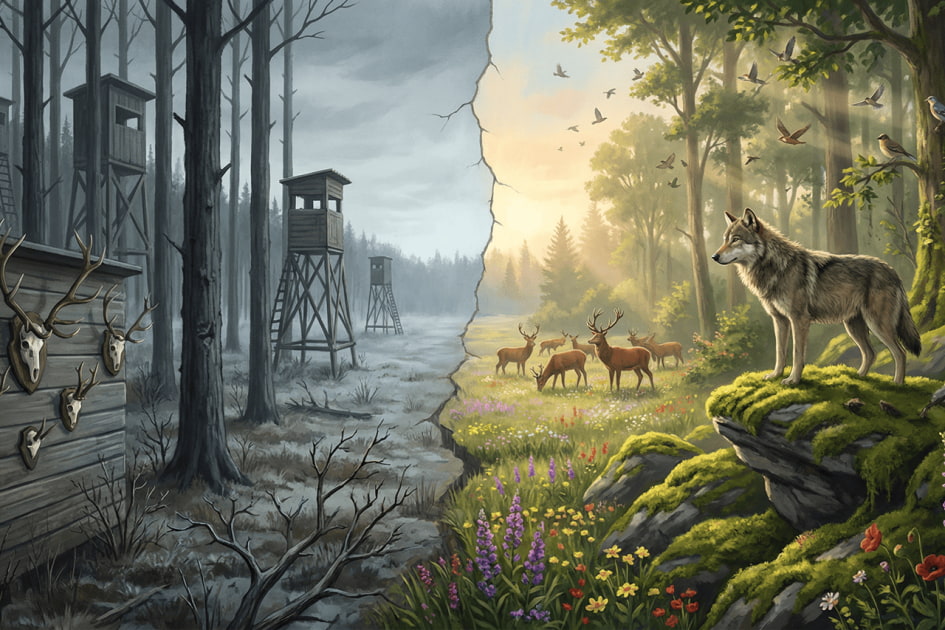
The species composition and abundance of various wildlife species therefore deviate, in virtually every hunting ground, fundamentally from the state that would emerge without hunting. In addition, hunting makes the affected species — as well as similar but fully protected species — (very) wary, so that they are barely or poorly observable by the public, or can only be observed from a greater distance. Hunting makes wildlife shy.
This also has consequences for the ecological effects of the species made wary in this way: the majority (mammals; in hunting terms: furred game) attempt to evade hunting pressure by largely restricting their activity to the night. This leads to a greatly increased risk of wildlife-related traffic accidents when animals cross roads at dusk and during the night. Parts of the potential habitat of hunted furred game and bird species cannot be used by these animals due to their excessive wariness. On the one hand, this makes rare species even rarer, and on the other hand it promotes wildlife damage through the concentration of animals in low-disturbance zones. Many hunters attempt to establish such zones with the help of supplementary feeding and baiting sites.
Wildlife damage beyond trivial levels is caused by the hunted “ungulate species” (wild boar, roe deer, red deer, and locally some other species), whose populations are either inflated due to direct management measures (supplementary feeding, especially in winter; management culls to bolster populations, etc.) — a problem that has remained unsolved for decades, as populations are kept at high levels through hunting management measures — or, as in the case of the wild boar, benefit on a large scale from the massive expansion of maize cultivation (maize being pig feed), while during the critical period of rapid wild boar population growth, culling rates were far too low because, following the Chernobyl reactor disaster, their meat was too heavily contaminated by radioactivity. While hunting attempts to address the ungulate problem through harvest planning, this has evidently been insufficient, as the problem remains far from resolved even after decades.
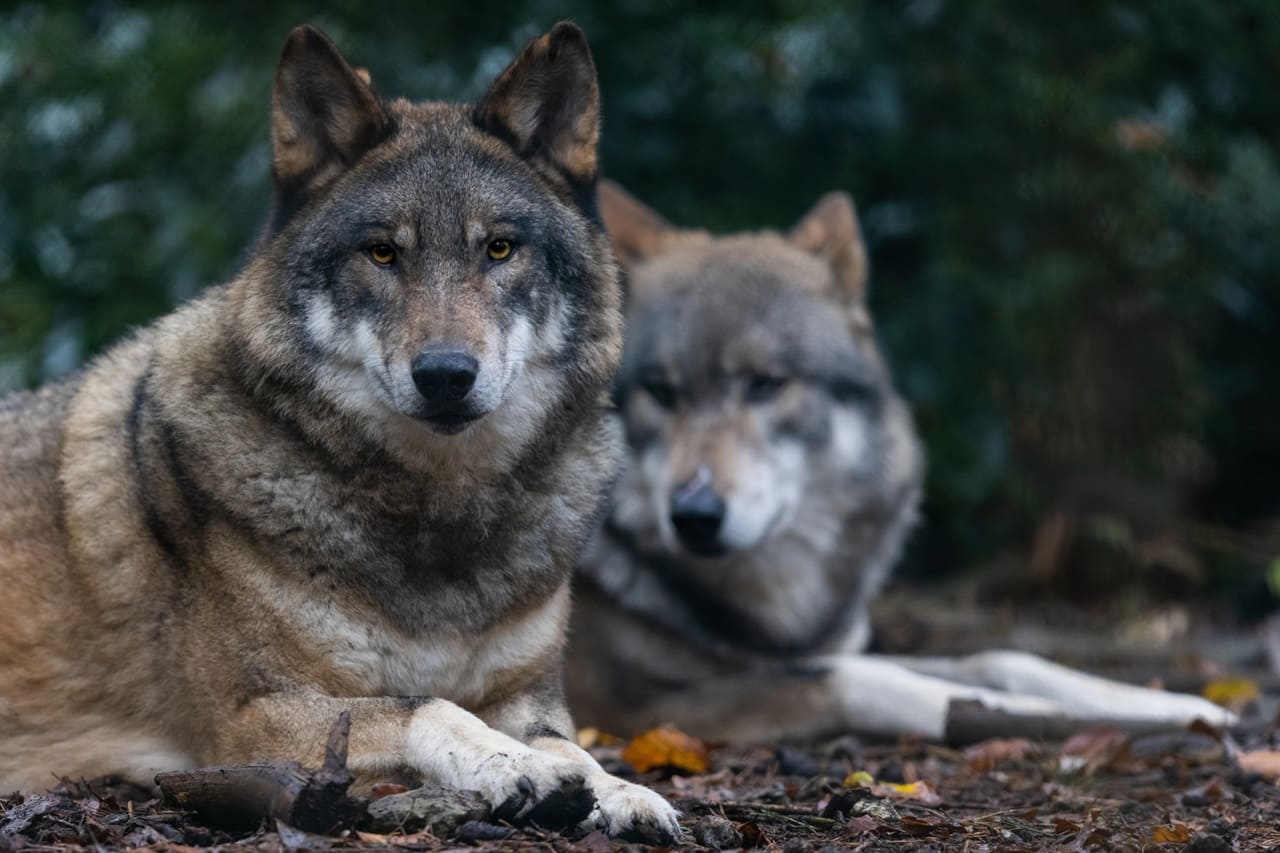
The species richness has, by contrast, increased among those species/groups that have in recent times been exempted from hunting and placed under protection, such as the (larger/large) birds of prey (eagles, large falcons), herons, and several other species. Without protection at the EU level, the wolf would have had no chance of returning. The fate of the lynx or the returning golden jackal depends not on the suitability of the cultural landscape for these species, but on whether hunters allow them to survive. The widespread rejection of the return of “predators” and the very often entirely unjustified shooting of dogs and cats clearly express that the hunting objective is not the prevention of wildlife damage or the regulation of wildlife populations to the ecologically appropriate level.
Apart from the harvesting of wild meat (venison) and, in individual cases, special culls, there is therefore no public interest that hunting would need to fulfill. Even the reduction or prevention of wildlife damage, as demanded by landowners, is evidently far from being achieved in the Austrian and German territorial hunting system in the manner intended.
2. What effects would the non-hunting and cessation of wildlife management measures intended by the complainants have on the aforementioned public interests? What is the difference in this regard between large-scale non-hunting encompassing the entire habitat of wildlife and “island-like” non-hunting covering only individual parcels of land?
The non-hunting of individual areas and the discontinuation of wildlife management measures on these areas will, with near certainty, have no impact on public interests, especially when the areas are situated as “islands” in the landscape. On the contrary: public interests can be promoted through decreasing shyness of wildlife on these areas, which facilitates the experience of native animals for interested people. Not even on larger unhunted areas do problems arise automatically. This is demonstrated by the conditions in major cities (Berlin is regarded as the “capital of wild boar”, but also as the “capital of nightingales”) in general, in which, for example, foxes are active during the day quite normally and behave hardly differently from free-roaming domestic cats, as well as the few nature reserves in our region that are completely free from hunting (e.g. the nature reserve Hagenauer Bucht near Braunau am Inn; a large-scale island landscape with a land connection) or, on a far larger scale in Central Europe, the Swiss National Park (hunt-free for over 100 years) and the hunt-free canton of Geneva.
The frequently raised argument that a cessation of hunting would not be possible in a densely human-populated cultural landscape is refuted by the circumstances in India, where the same or nearly identical wildlife species as those found in our region exist. The fact that more than one billion people can coexist with wildlife practically without hunting them expresses with utmost clarity that it depends on the basic attitude of the population whether hunting takes place at all, and if so, where and how.
The sought-after exemption of private land from hunting also makes it possible to objectively examine how wildlife responds in terms of occurrence and abundance. This can only be in the interest of hunting if it receives evidence through the effects of the exemption to support its position. From a hunting policy perspective, such test areas should therefore be regarded as positively desirable.
3. What influence does wildlife exert on agricultural and forestry crops? From what level of frequency and severity does one speak of wildlife damage? How does the wildlife impact and wildlife damage situation present itself in Lower Austria?
The impacts of ungulates on agricultural and forestry crops cannot be determined in general terms, nor through the so-called wildlife density, which is most often no more than a rough estimate. Local conditions and changes (such as the enormous expansion of maize cultivation in Germany over recent decades to 2.5 million hectares) influence far too greatly the attractiveness of areas for wildlife and their wariness, as well as what the resting zones — frequently located in forests — have to offer. The wariness increased by intensive hunting amplifies wildlife browsing damage in forests. This has been demonstrated, for example, by conditions in the north-eastern German hill country of the «Brohmer Berge» (Western Pomerania) belonging to the Deutsche Wildtier Stiftung, where hunting has been greatly reduced in order to make native wildlife accessible to experience.
Regarding the specific conditions in Lower Austria: as a general rule, wildlife populations affect open fields and forests differently. Areas free from hunting should be preferred by wildlife and may therefore even reduce wildlife damage in the surrounding area. Anyone who does not want hunting on their land will inevitably bear the consequences of potentially increased wildlife damage on that land. At the same time, however, reference must be made to the villages and towns exempt from hunting, where there is evidently no increase in wildlife damage — not even from the predator species particularly combated by hunters, such as foxes and martens. In Munich, for instance, five to ten times as many foxes and martens per square kilometre inhabit the (unhunted) urban area compared to the hunted rural surroundings of Upper Bavaria. According to numerous reports, the same applies to Vienna (and to all major cities in Central Europe). The severely reduced fox and marten populations in the hunted surrounding countryside result in mice reproducing more prolifically, which in turn can significantly increase the prevalence of ticks. The fact that foxes, martens, and birds of prey such as common buzzards feed on mice — and that intensive hunting of these predators thus benefits mice — is apparently not taken into account in hunting circles. As long-term personal research has shown, tick prevalence is closely linked to mouse prevalence in forests. This then has consequences even for human health (Lyme disease, tick-borne encephalitis).
Wildlife damage to agricultural crops can be assessed with reasonable accuracy by appropriately trained and sufficiently objective experts. A 100-percent freedom from production losses caused by free-living animals does not exist. The social obligation of property requires that, in the public interest, wildlife should also be able to live in the cultivated landscape, in perceptible numbers. Accordingly, the procedure for assessing wildlife damage in forests is also highly controversial among specialists. First, the vast majority of forests are not natural woodland but planted forests, whose tree species by no means always correspond to site-appropriate conditions — often quite poorly so. A development that allows natural regeneration, however, tolerates far more wildlife browsing than rows of non-native saplings planted in regimented lines. In any natural regeneration, nearly all of the tens of thousands of young trees (seedlings) perish through competition with one another. Wildlife browsing has almost no effect.
This is demonstrated by the tree stands growing entirely unmanaged across large areas on the islands and alluvial deposits in the reservoirs along the lower Inn (Upper Austria & Bavaria), which are developing into true primeval forests, including beavers and their activity. Where, however, individual firs are replanted in spruce or beech plantations, even an unjustifiably low roe deer population leads to browsing losses. A schematic, one-size-fits-all approach therefore fails to do justice to the realities and dynamics of nature.
It can, however, be assumed that the unhunted areas emerging as isolated pockets in addition to settlements will bring about no change in this regard. For they must be assessed in relation to the total unhunted area present overall in the region.
4. What external factors influence the impact of wildlife, or the wildlife damage situation? What measures could best prevent or reduce wildlife damage in light of these factors and within the — increasingly restricted by greater human use of nature — habitat available to wildlife?
The explanations in point 3 already make clear that wildlife browsing damage and the harm it causes cannot simply be derived from the population size of the wildlife species in question. Added to this is a factor that is quite rightly mentioned in this point, namely the “increased use of nature by humans.” What is meant are the resulting disturbances to wildlife, which can no longer find peace. Leisure and recreational activity penetrates into the last corners of forests and mountains. However — and this must be emphasised — the disturbances caused by this are a consequence of the wariness that has been caused by hunting. This is again demonstrated by wildlife in major cities (and in large regions such as India) and by the so-called national park effect. The starkest contrast to the (actually not) “normal wariness” of wildlife is provided by military training grounds. Where war is simulated but no live rounds are fired at the animals, they fare best. In terms of their significance for species protection, military training areas far surpass nature reserves in our country.
The high susceptibility of ungulates to disturbance increases the risk of serious wildlife damage, since too large a portion of open nature is exposed to disturbances that force wildlife into frequent flight and concentration at a few locations. Numerous hunting territory holders have noted in conversations that they deliberately attempt to attract their game to undisturbed locations (through feeding and baiting). Reduced wariness would distribute foraging more widely across the landscape and thereby reduce wildlife damage.
“It would be instructive to determine how conditions develop when areas in open nature exist that are not hunted.”
More on the subject of recreational hunting: In our dossiers on the criticism of recreational hunting gather fact-checks, analyses and background reports. What the research says about this is shown by Hunting fact-checked: the state of research.
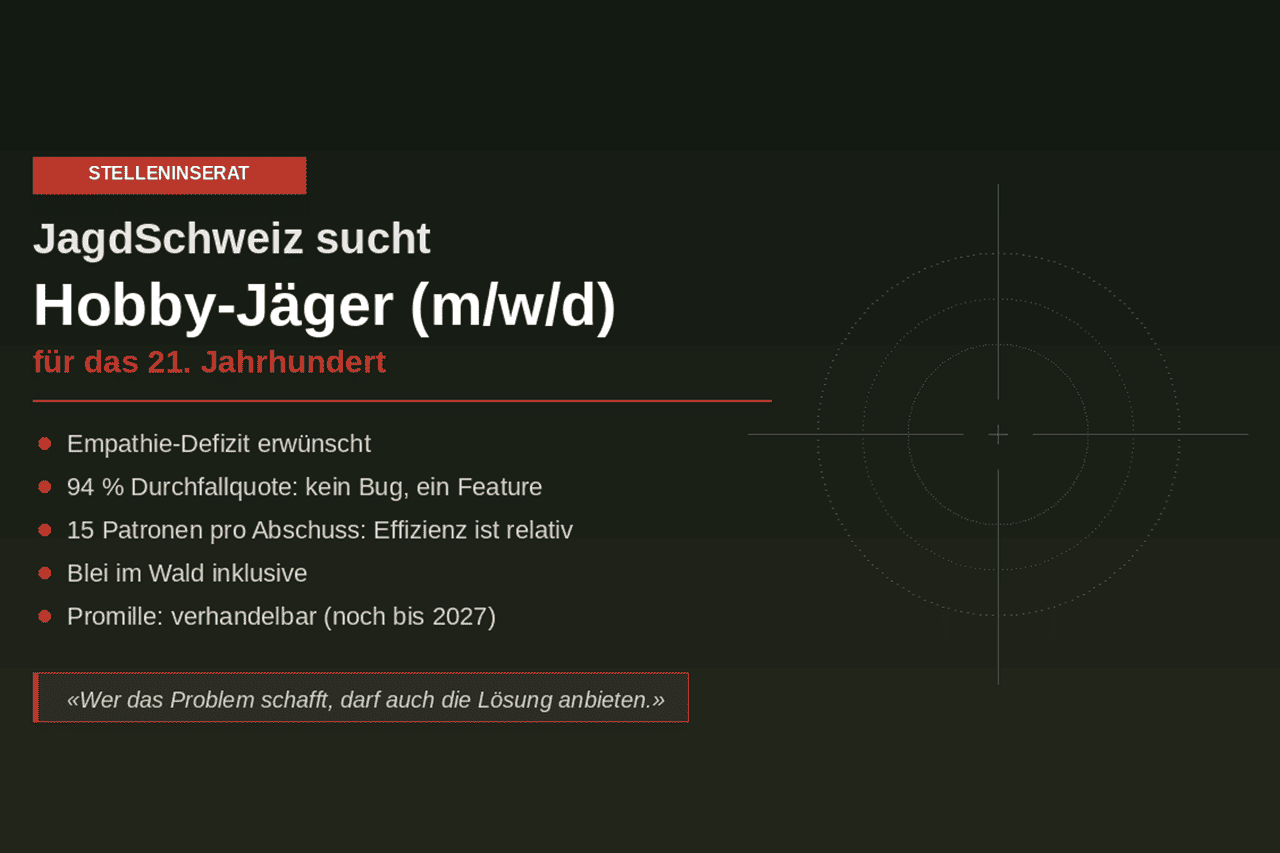
The position of IG Wild beim Wild: IG Wild beim Wild rejects recreational hunting. Our model is the canton of Geneva, which has managed without recreational hunting since 1974: without hunting seasons, without hunting dogs, without driven hunts, without high seats, without the animal cruelty and crime that go hand in hand with hunting season elsewhere. What has worked there for over fifty years disproves every position paper by JagdSchweiz. An association that bases its policy on claims it refutes in its own documents is not a professional organisation, but a factory for misinformation.