Wolf Takaya: Trophy Hunting Controversy in Canada
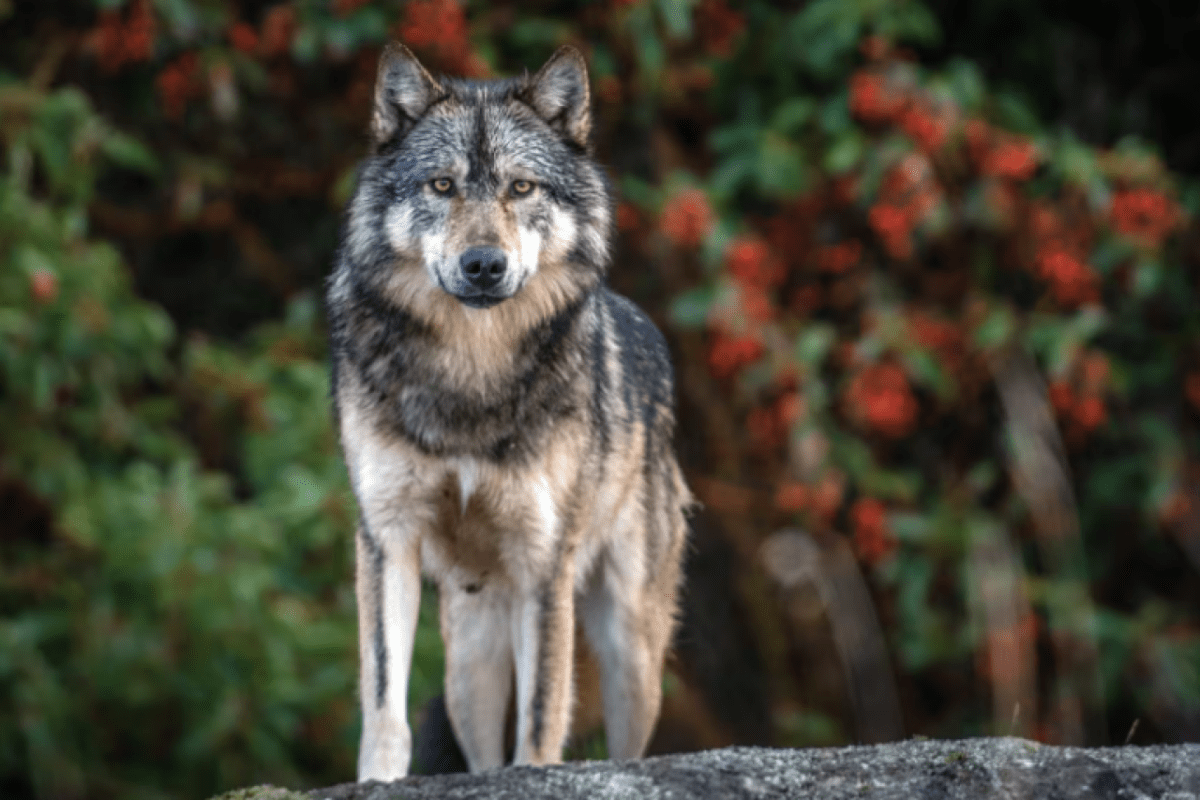
Photographer Cheryl Alexander was «appalled» when she discovered that her iconic image of the Canadian sea wolf Takaya had been used in an advertisement promoting wolf hunting.

«Tell Your Children»
Photographer Cheryl Alexander was «appalled» when she discovered that her iconic image of the Canadian sea wolf Takaya had been used in an advertisement promoting wolf hunting.
Since he was killed by a recreational hunter in 2020, the Canadian sea wolf Takaya has been commemorated around the world.
Paintings, poems, sculptures and statues — including a 68 kg assemblage of driftwood, shells and dried seaweed — have served as memorials to a wolf whose legacy reflects the complex relationship between humans and animals.
Yet photographer Cheryl Alexander, who campaigns tirelessly against government-sanctioned wolf culls, was shocked to discover that her most celebrated image had been used in advertising by a big-game hunting company.
“I was shocked and to some degree appalled, and it really made me angry that a company used Takaya as advertising to come to Canada and kill a wolf.” “It also hurt because in many ways Takaya had become an international symbol of positive coexistence with humans.”
The unlikely story of a wolf who had isolated himself for years captivated the residents of Vancouver Island, some of whom paddled past the rocks and wind-battered trees hoping to catch a glimpse of the animal. Yet one day in late March, a recreational hunter’s rifle brought the wolf’s life to a premature end.
Alexander recently discovered that Terminus Mountain Outfitters, a British Columbia-based company, had been using her photograph to advertise its wolf hunting package. On her Instagram page, she appealed to her 33’000 followers to reconsider the company’s decision to use the image.
The owner of Terminus stated in a declaration that he had not intended to “offend” anyone with the image.
«A web design firm selected some photos of live wildlife to use on the website. On July 27, I was contacted by an upset person who was outraged over a wolf photo they recognized as a wolf named Takaya. I had no idea what story lay behind this wolf, and didn't even know which of the three images on my website was of Takaya. I asked my web developer … to simply remove all three photos. On July 29, they were removed. «Neither I nor my web developer intended to offend anyone», he said. «Unfortunately, we are now receiving emails that are threatening and quite angry due to the media attention, even though we had nothing to do with the selected live images. We are a legal family business».
Both the image and the page about wolf hunting have since been taken down.
In British Columbia, hundreds of wolves — regarded as vermin that must be eradicated — are killed for sport every year. The recreational hunters typically take only the pelts and discard the remains. To channel the growing outrage — and shift public perception — Alexander and local conservation groups launched a petition calling for a moratorium on wolf hunting in British Columbia, which has so far gathered more than 65’000 signatures. Alexander has also founded the non-profit organization Takaya’s Legacy, which advocates for the protection of wolves.
While Takaya's legacy aligns with the goals of conservation groups, his curiosity — or lack of fear — also raised difficult questions about the relationship that locals had built with the wolf, which ultimately led to his death.
«I was angry about the photo, but there is also a silver lining, as it allows for the dissemination of information about what is happening in Canada with regard to trophy hunting — the full range of wildlife being hunted in Canada is quite appalling», said Alexander. «We are struggling with the loss of biodiversity. That trophy hunters continue to hunt them purely for fun and recreation is unacceptable.»
Dossier: Wolf in Switzerland: Facts, Politics and the Limits of Hunting
Unterstütze unsere Arbeit
With your donation, you help protect animals and give them a voice.
Donate now →More on the subject of recreational hunting: What the research says about this is shown by Hunting fact-checked: the state of research.
The position of IG Wild beim Wild: IG Wild beim Wild rejects recreational hunting. Our model is the canton of Geneva, which has managed without recreational hunting since 1974: without hunting seasons, without hunting dogs, without driven hunts, without high seats, without the animal cruelty and crime that go hand in hand with hunting season elsewhere. What has worked there for over fifty years disproves every position paper by JagdSchweiz. An association that bases its policy on claims it refutes in its own documents is not a professional organisation, but a factory for misinformation.