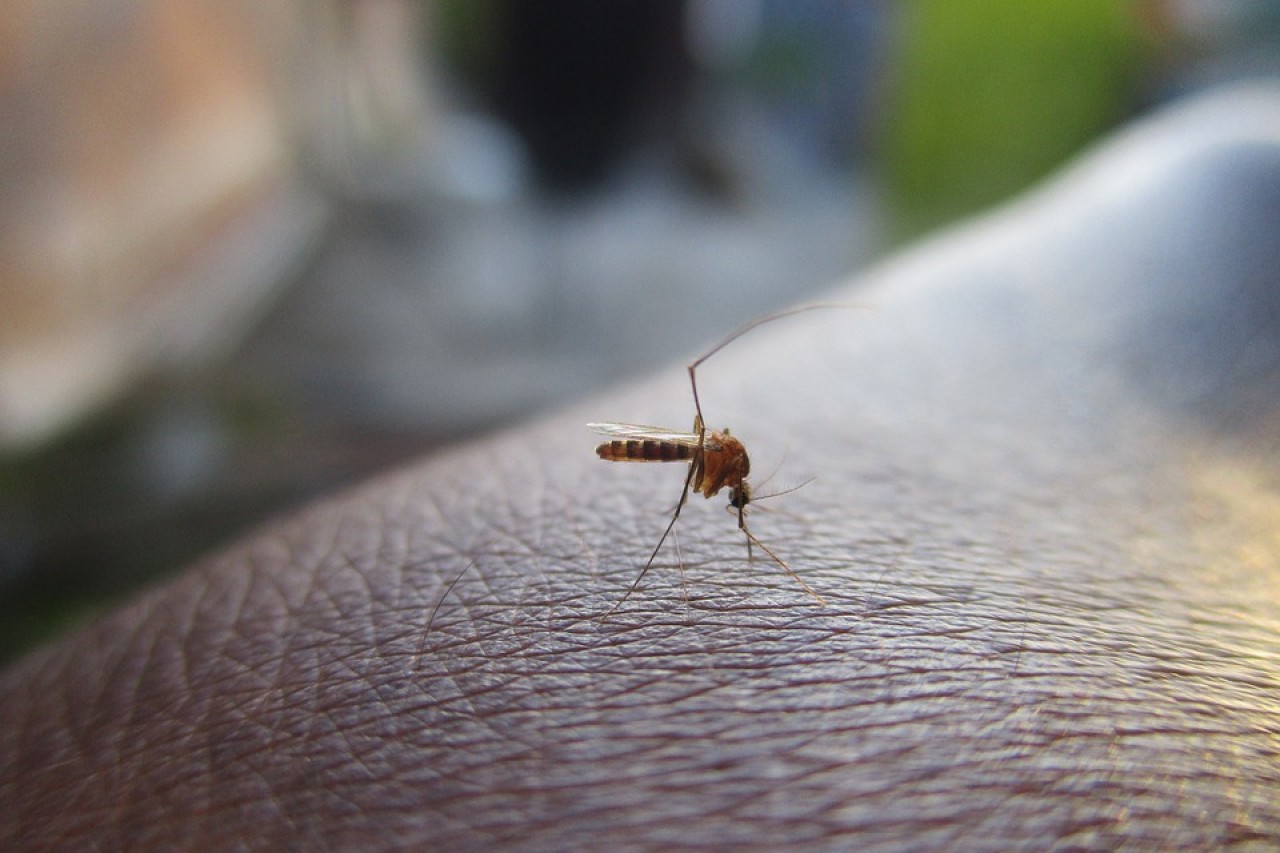
Mosquitoes are not only a nuisance to people on warm summer evenings, but also vectors of deadly diseases that kill thousands of people every year, including malaria, dengue fever and the Zika virus.
Although it is therefore of critical importance to reduce mosquito populations around the world, the insecticides commonly used have lost their effectiveness over time as mosquitoes have developed resistance. In addition, such chemicals also have negative effects on the environment.
Buzzing as the Key to Mating
A research team led by Nagoya University in Japan has now discovered a new, promising method for controlling mosquito populations by exploiting what is perhaps their most irritating characteristic: the high-pitched buzzing that female mosquitoes produce while flying around in search of blood sources. Male mosquitoes are strongly attracted to these sounds and use their antenna-shaped ears to detect them through vibrations at a similar frequency. When females fly past, the males' ears detect their frequency and resonate, sending a signal to their brain that helps them identify potential mates.
The scientists tested whether they could control mating behaviour by altering the frequency at which males listen. “Many laboratories around the world are trying to prevent mosquitoes from biting humans,” explains study co-author Matthew Su, a biologist at Nagoya University. “In our laboratory, however, we are taking a somewhat different approach. What if the females that bite humans were never born in the first place? Rather than preventing females from biting humans, we should ensure that there are fewer mosquitoes from the outset.”
Serotonin as “Birth Control”
The researchers first established that the neurotransmitter serotonin — which is found in the nervous system of various animals plays a fundamental role and structures behavior – plays a role in the auditory system of male mosquitoes. They then manipulated the level of this important neurotransmitter by feeding the mosquitoes a serotonin-inhibiting substance, and discovered that the vibration frequency of the male ears decreased.
A next step in the development of a potential “birth control” based on hearing will be to identify the precise receptors responsible for tuning mosquito ears. This could enable researchers to administer targeted chemical substances that disrupt mating behavior and thus reduce mosquito populations.
“My dream is to find a very specific target, perhaps even a specific target for mosquitoes. Then we could leave other species unaffected,” concluded Dr. Su.
The study was published in the journal Frontiers in Physiology.
| You can help all animals and our planet with compassion. Choose compassion on your plate and in your glass. Go vegan. |