Preventing wild boar damage with an acoustic method
An acoustic method is designed to prevent wild boar damage in agriculture. The system deters the animals without violence and without hunting pressure.

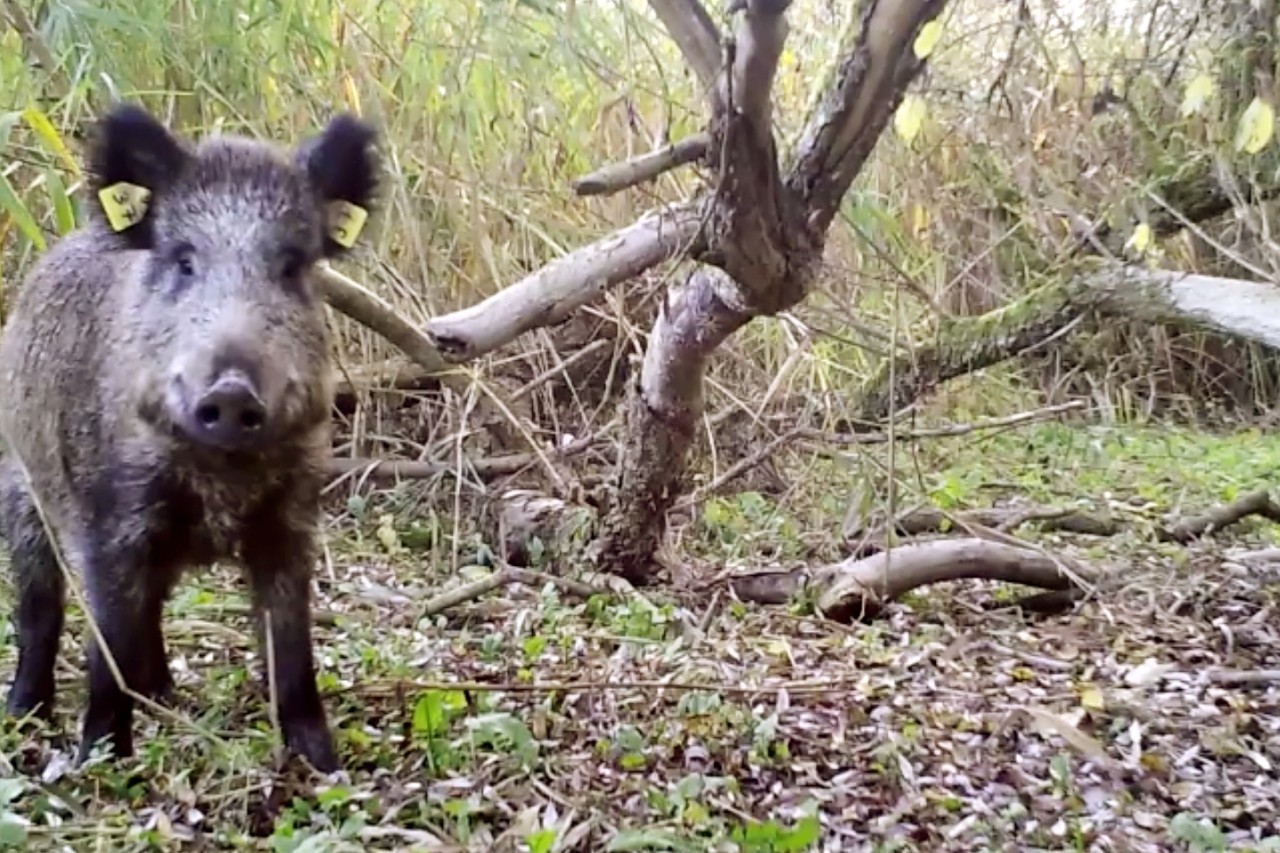
ZHAW researchers have developed an acoustic method to keep wild boar away from fields and thus prevent damage. The so-called wild boar deterrent was tested and compared with conventional prevention methods. Combined with these findings, sustainable wild boar management is now possible.
The wild boar deterrent developed at ZHAW uses alarm and warning calls from wild boar to keep them away from fields. Additional sounds that the animals associate with danger increase variability. Since existing methods are often of limited effectiveness, labour-intensive, and costly, the ZHAW researchers also examined two classic prevention methods: electric fences and hunting measures. The effectiveness of these three methods was evaluated not only by measuring the increase in damage, but also by analysing the spatial behaviour of the wild boar. To this end, more than one hundred wild boar were captured and tagged in the test areas of Fanel, Klingnauer Stausee, and the upper Fricktal. Of these, 36 wild boar were fitted with GPS-GSM transmitter collars and their spatial behaviour was documented. In addition, damage to the fields was assessed using aerial drone imagery. Find out more in the dossier Why hobby hunting fails as a population control measure.
Damage running into the millions
Due to an exceptionally high reproduction rate and an abundant food supply, the wild boar population in Switzerland has been growing for decades and will continue to increase in the future. As the population grows, so does the damage. “We still know far too little about wild boars, but they are clever, adaptable, and avoid hunting pressure,” says Stefan Suter from the Wildlife Management Research Group at ZHAW. A further complicating factor is that wild boar hunting is impossible or restricted in many areas — such as water and migratory bird reserves, nature conservation areas, hunting ban zones, and cities. Since 2013, Suter has therefore been searching for new or improved methods to keep the animals away from maize, potato, rapeseed, and other fields. The wild boar deterrent is now intended to help with this. It consists of two battery-powered loudspeakers that play sound combinations at random intervals of varying lengths via a control box. An integrated light sensor switches the device on at sunset and off at sunrise.
No method offers absolute protection
The comparison shows that none of the prevention methods examined offers absolute protection against wild boar damage. However, on fields where prevention methods are in place, damage is significantly lower than on unprotected fields. “The acoustic wild boar deterrent provides an additional, flexible, and intelligent prevention method,” says the ZHAW researcher. It is particularly suitable for the critical phases immediately after sowing and during the milk ripening stage of maize and wheat. Additional hunting pressure increases the effectiveness of the prevention measures.
Hunting measures alone are not enough
According to Stefan Suter, the challenges in wild boar management cannot be overcome by hunting measures alone. A holistic approach will be important for successful wild boar management in the future. Prevention methods can make it harder for wild boars to access energy-rich food, thereby limiting population growth. «With the compensation payments that farmers receive from the canton for wild boar damage, wild boars are, in a manner of speaking, being bred. If the damage is going to be paid for anyway, there is little motivation to put in the extra effort for prevention,» says Suter. Recreational hunting would hardly change that either. In areas with high wild boar pressure, farmers should additionally consider switching to alternative crops such as Sudan grass or cup plant, which wild boars tend to avoid. «Innovative farmers have already started planting these. Farmers who are willing to take a risk and try something new should also receive support for doing so,» Suter is convinced. Further articles on this topic can be found in the category Environment & Nature Conservation.