Parkinson's: Pesticide Initiatives Have a Preventive Effect
It is the responsibility of medical professionals to protect the health of the population and of farmers, and to inform them about these risks!

The incidence of Parkinson's disease is steadily increasing, even when adjusted for age.
The second most common neurodegenerative disease occurs particularly frequently among people working in agriculture. Various studies show associations with pesticides. Physicians for Environmental Protection (AefU) and Greenpeace Switzerland emphasize how important the two pesticide initiatives are for public health. They apply the precautionary principle and reduce the risk of Parkinson's disease as well as certain types of cancer.
Parkinson's disease, colloquially also known as "the shaking palsy", is the second most common neurodegenerative disease after Alzheimer's dementia. In Switzerland, around 15’000 people are affected. The disease is increasing across all age groups and equally so when adjusted for age. By 2040, a doubling of patient numbers is expected worldwide. In addition to age, pesticides — including insecticides, fungicides, and herbicides — play a role.
Pesticides and Parkinson's Disease
A link between the occurrence of Parkinson's disease and exposure to pesticides has long been suspected — particularly among people working in agriculture, who are directly and intensively exposed to pesticides. On behalf of the Swiss State Secretariat for
Economic Affairs (SECO), the Institute of Occupational Medicine at the University of Lausanne compiled these effects.It concludes that agricultural workers exposed to pesticides have a more than 50% increased risk of developing Parkinson's disease.
The health of ecosystems, humans, and animals is closely interconnected (One Health). When we introduce toxic substances into the environment, we also endanger our own health. People who work in agriculture and are exposed to chemically synthesized pesticides in particular face a significantly increased risk of developing Parkinson's disease.»
AefU President Dr. med. Bernhard Aufdereggen
Little research and knowledge in Switzerland
Other countries have drawn conclusions from this: In France, Parkinson's disease has been recognized as an occupational disease since 2012 for workers who come into professional contact with pesticides. In addition, many countries have reporting registries and databases to record the health side effects of pesticides. In Switzerland, however, these connections have barely been researched.
Wind and water spread the pesticides
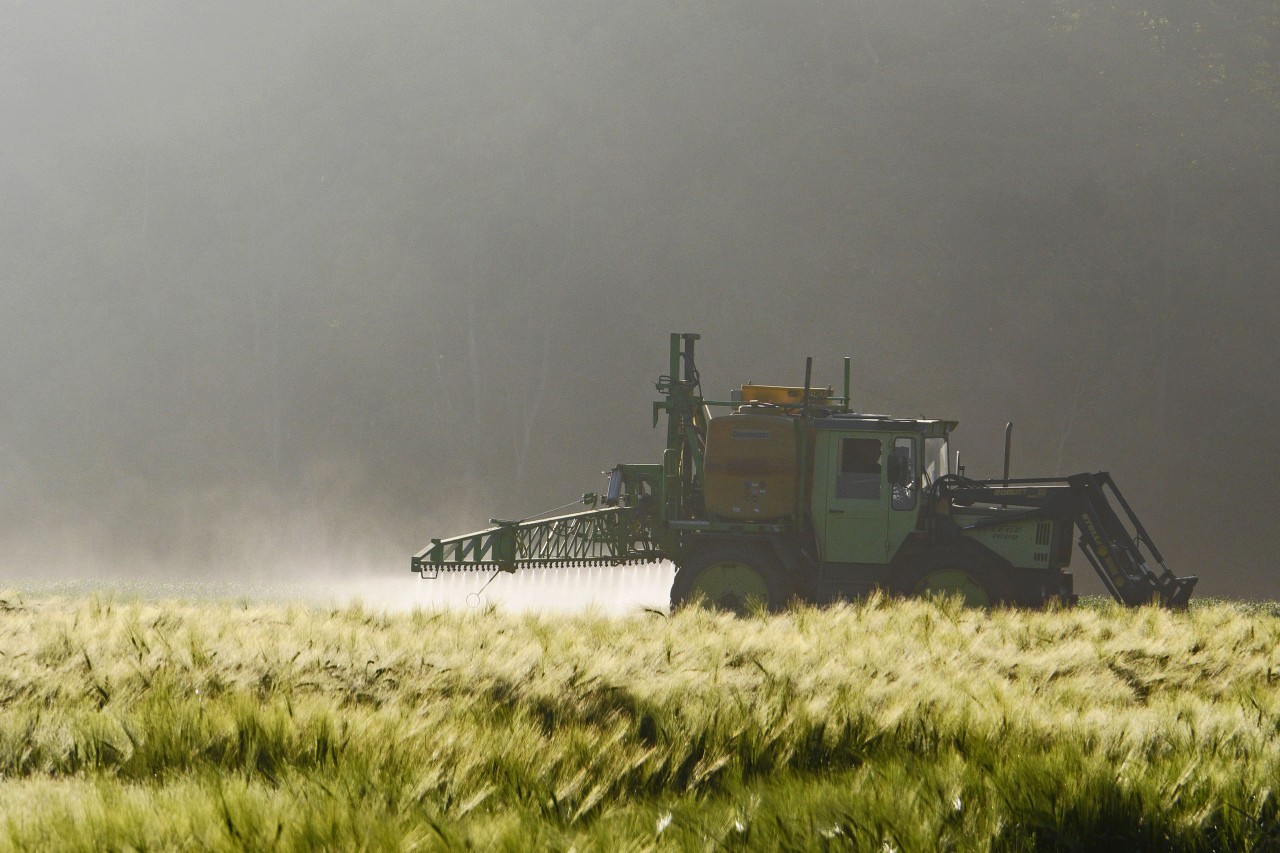
Chemically synthesized pesticides do not stay where they are sprayed. Today they can be found almost everywhere — in soils, in bodies of water, in the air, and in food.Greenpeace Switzerland and the Umweltinstitut München showed through studies using passive air samplers that pesticides spread more widely and farther than previously thought. Even decades after their use: for example, DDT, banned since 1972, can still be detected today — posing a considerable health risk to farmers and
local residents.
In particular, the oral ingestion and inhalation of pesticides are likely to play a role in the development of Parkinson's disease. Exposure to these toxins in the air is like passive smoking. Unfortunately, no one can escape this — not even through consistently buying organic. The pesticides are simply there, and we absorb them without being able to protect ourselves.
Yves Zenger, media spokesperson at Greenpeace Switzerland
2 x YES for preventive healthcare on June 13
Prevention is better than cure: That is why AefU and Greenpeace Switzerland are voting 2 x YES on the drinking water initiative and the pesticide initiative, on which we will vote on June 13. The proposals protect water, soil, and health. They are necessary from a health and ecological perspective. They have a preventive effect.
AefU and Greenpeace also demand:
- An examination of whether Parkinson's disease must also be recognized as an occupational disease in Switzerland.
- Investigation of the health consequences for residents in areas with intensive agricultural use.
- A registry for diseases associated with pesticides (certain types of cancer and neurodegenerative diseases, particularly Parkinson's).