No alcohol tests for Fribourg recreational hunters
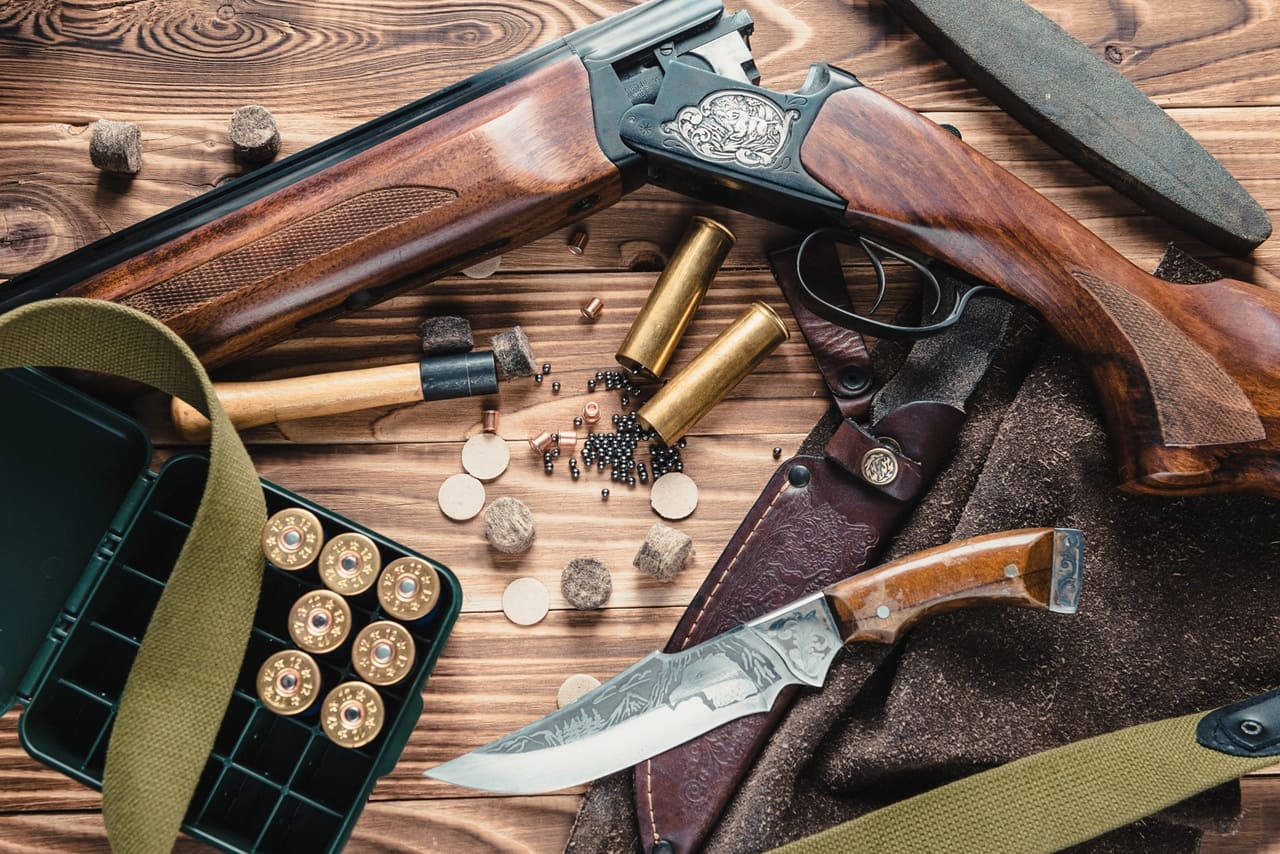
The Fribourg Grand Council rejected a motion on 23.5.2025 that called for the introduction of an alcohol consumption limit for recreational hunters. The text was modelled on the cantons of Neuchâtel and Zurich.

The motion was rejected by 61 votes to 31, with 5 abstentions.
The text, entitled “Whoever goes hunting with one drink too many loses their place,” was submitted by Socialist Party representative Grégoire Kubski and was intended to establish “appropriate” sanctions and a standard for the consumption of narcotics and certain medications with similar effects.
The blood alcohol level was reportedly set at 0.5 per mille. The measure was supported by the State Council.
These aspects could have fed into the planned revision of the Law on hunting and the protection of mammals, wild birds and their biotopes (LCha) scheduled for this year. The motion was modelled on the cantons of Neuchâtel and Zurich and also drew on the scientific literature on the handling of firearms.
Clichés above all
“Since the year 2000, Switzerland has averaged 297 hunting accidents per year, including three fatal ones,” said Grégoire Kubski. However, the motion's line of argument failed to convince the right-wing majority in the Grand Council.
According to the SVP, it is not necessary to enact laws for every everyday measure, said representative Eric Barras. His party colleague Bernard Bapst, himself a hobby hunter, lamented “a discriminatory motion based on stereotypes.” “Why hunting and not the general use of firearms?” he asked.
The Centre party also rejected the text by a majority. “Hunting has evolved,” said its representative François Genoud in explanation of the vote. The same observation was made by the PLR-PVL parliamentary group, for whom the motion was “useless,” as its chairwoman Antoinette de Weck stated.
A different tone on the left side, with unanimous support. The Socialist Party delegate, Marie Levrat, pointed to the risks, not to the recreational hunters. The Green Party delegate, Laurent Bronchi, emphasized the need to "make good behavior official in an environment he himself has experienced."
State Support
The State Council, through the Minister of Agriculture and Forests, Didier Castella, shared the opinion of the motion's author. "The practice of hunting, which requires the use of high-powered firearms, is incompatible with excessive or inappropriate alcohol consumption," the government stated in its response.
"In addition to reducing risks to third parties, animal welfare must also be taken into account in this matter, as excessive alcohol consumption impairs shooting accuracy and increases the likelihood of injury and unnecessary suffering of the target animal," the executive emphasized.
The State Council also recalled that, in its view, "the vast majority of recreational hunters behave responsibly and refrain from consuming alcohol while hunting." Nevertheless, it considered it "fair to establish a consumption limit for an activity involving firearms."
From the perspective of IG Wild beim Wild, the limit for handling weapons under the influence of alcohol for hobby hunters must consistently be set at 0.0 per mille blood alcohol. The same applies to wildlife wardens as well as military and police personnel, and for good reason. No one may handle or fire a firearm while under the influence of alcohol.
Recreational hunting serves the purpose of killing animals. Anyone who carries a weapon in this context bears a special responsibility toward both humans and animals. Alcohol or drugs are incompatible with this. Individuals with alcohol or drug dependency must immediately lose their hunting– and firearms licenses.
Mandatory alcohol testing must be introduced following hunting accidents. In addition, following the example of the Netherlands, regular medical-psychological assessments for recreational hunters are needed, as well as a binding upper age limit.
The largest age group among recreational hunters is 65+. It is precisely in this group that age-related limitations in vision, concentration, and reaction time increasingly occur, along with deficiencies in training and practice. At the same time, it is well known that alcohol is consumed in the belief that it steadies the trigger finger. Others abstain from alcohol, yet are nonetheless no longer physically up to the demands of the activity.
The numerous missed shots, animal tracking operations, and the associated massive animal suffering can hardly be explained otherwise.
More on the subject of recreational hunting: In the dossier The Role and Criticism of Recreational Hunters we shed light on the training, power and self-image of recreational hunters. The scientific evidence is presented in the overview Studies on the Effects of Recreational Hunting.
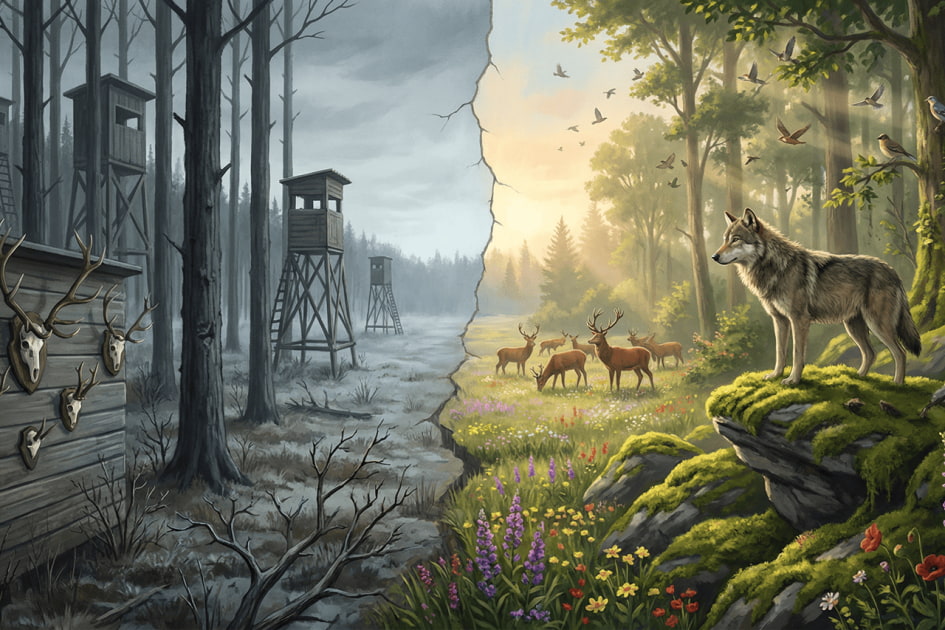
The position of IG Wild beim Wild: IG Wild beim Wild rejects recreational hunting. Our model is the canton of Geneva, which has managed without recreational hunting since 1974: without hunting seasons, without hunting dogs, without driven hunts, without high seats, without the animal cruelty and crime that go hand in hand with hunting season elsewhere. What has worked there for over fifty years disproves every position paper by JagdSchweiz. An association that bases its policy on claims it refutes in its own documents is not a professional organisation, but a factory for misinformation.