National Park: 100 Years of Alpine Ibex Reintroduction
The Alpine ibex came within a hair's breadth of disappearing from its former homeland forever. Through several spectacular operations, poachers and smugglers managed to bring a total of 59 ibex into Switzerland at the beginning of the last century. After successful breeding, the first ibex were also reintroduced to the Swiss National Park on 20 June 1920.

The Alpine ibex came within a hair's breadth of disappearing from its former homeland forever. Through several spectacular operations, poachers and smugglers managed to bring a total of 59 ibex into Switzerland at the beginning of the last century. After successful breeding, the first ibex were also reintroduced to the Swiss National Park on 20 June 1920.
It is no coincidence that the Alpine ibex is regarded as the king of the Alps. Its adaptation to the alpine habitat is perfect, its climbing skills are legendary, and its stoic calm in the midst of a blizzard is admirable. And yet: this symbol of strength, endurance, and the will to survive came within a hair's breadth of being completely eradicated by humans. Without the courageous efforts of a few nature lovers and — paradoxically — the hunting passion of the Italian kings, scarcely any ibex would be roaming our mountains today.
Alpine Ibex on the Brink of Extinction
As early as the 16th century, the advent of firearms, unfavourable weather conditions, and the associated crop failures contributed to the intensive hunting of the ibex. At the same time, humans pushed ever further into mountain regions. Forests were cleared and grazing areas for livestock encroached upon the habitat of high-alpine wildlife increasingly. Superstition also played a role not to be underestimated. Almost every body part was credited with healing properties. In addition to blood, bone marrow, and spleen, the horns, bezoar stones, and the so-called heart cross were also used. This hardened cartilage of the heart valves was said to make its bearer invulnerable. Although the Three Leagues imposed a strict hunting ban on the ibex in 1612, it had already been exterminated in Graubünden by around 1640. In 1809, the last Swiss ibex was shot in Valais.
Royal protection one second before midnight
In the area of the Gran Paradiso, between the Aosta Valley and Piedmont, the last Alpine ibex ultimately survived. Vittorio Emanuele II, the King of Italy, personally ensured that rigorous protective regulations were enforced by game wardens.
From the mid-19th century onward, efforts began to reintroduce ibex to other areas of the Alpine region. Since the Italian king showed no willingness to provide Switzerland with animals for breeding, poachers were hired who, from 1906 onward, risked their lives smuggling ibex kids from the Gran Paradiso into Switzerland. These were raised and bred at the Peter and Paul Wildlife Park in St. Gallen. Before long, the first releases followed in the Weisstannental and at Piz Ela, unfortunately without success.
Ibex in the young national park
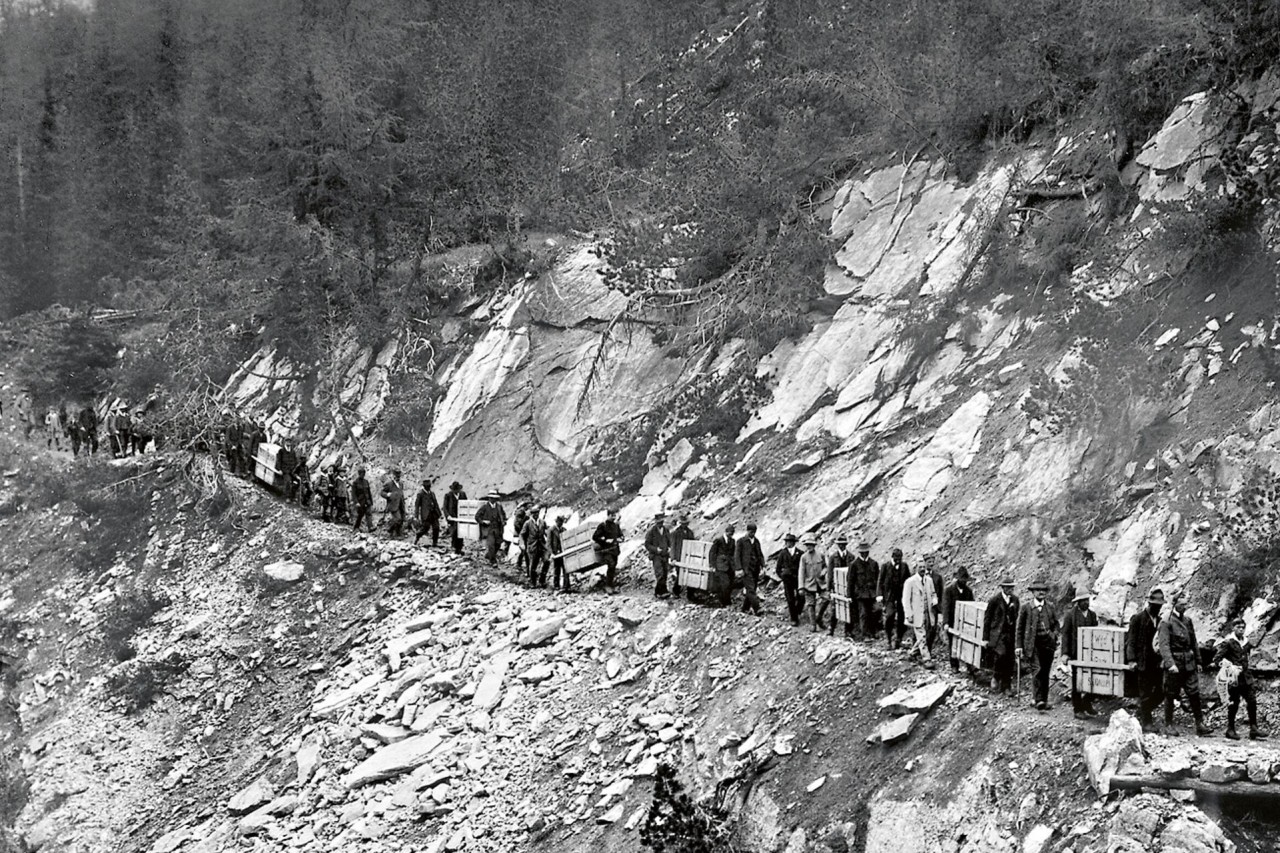
Next, the newly founded Swiss National Park (SNP) came into focus. On June 19, 1920, seven crates containing ibex arrived in Zernez. They were welcomed at the railway station by a brass band and a large crowd. The following morning, the journey continued by horse-drawn cart toward Ova Spin and Piz Terza, where the young ibex were released into the wild.
The still young colony suffered a setback after just one year. Two males and two females headed toward Livigno: the males were poached, while the females subsequently settled at Piz Albris. They gave the impetus for the founding of the Albris colony. Further releases took place in 1923, 1924, and 1926. This time, however, the animals were transported to Val Cluozza.
Successful comeback
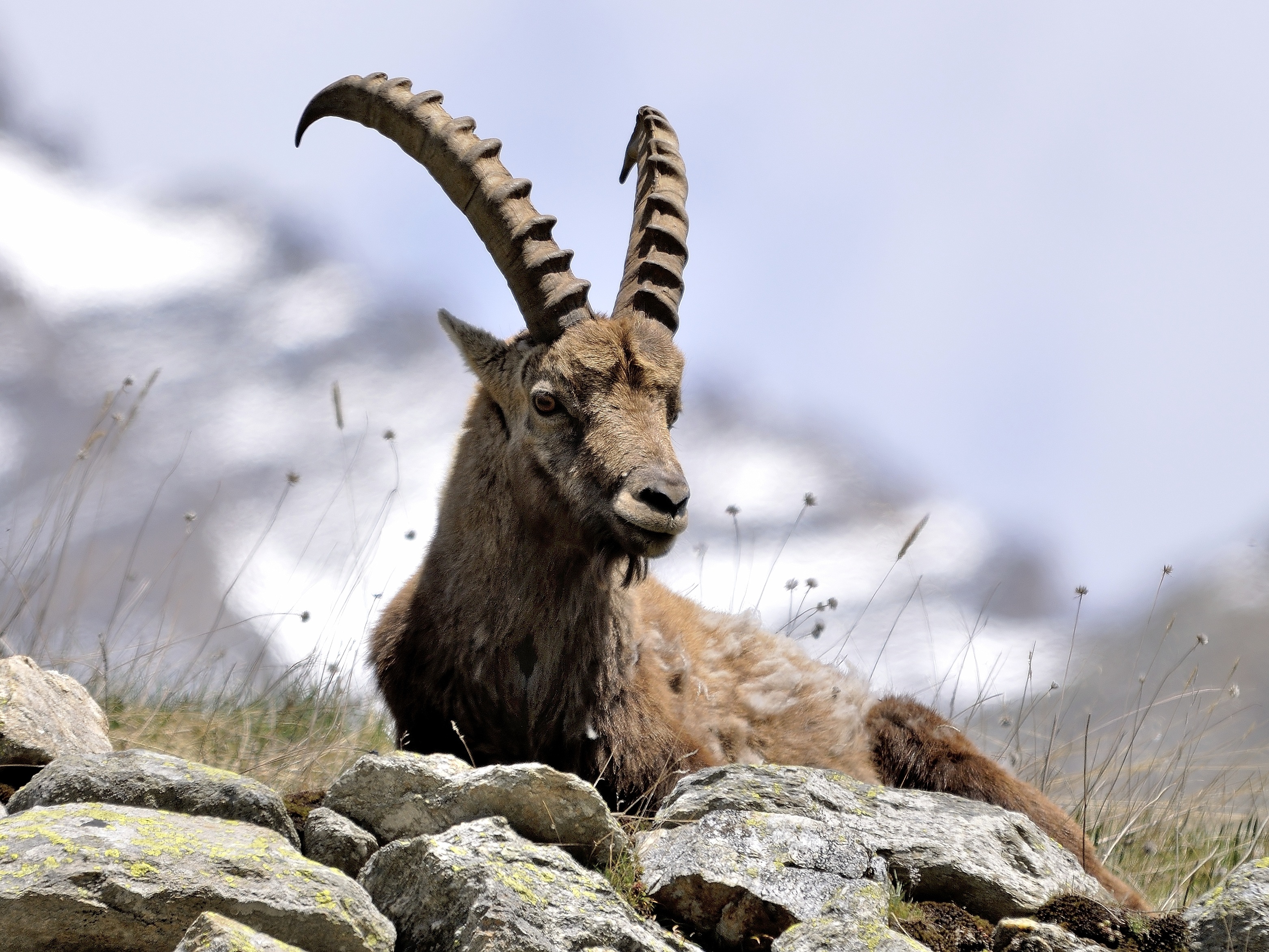
The rescue of the Alpine ibex is a globally unprecedented success story. Thanks to the courageous intervention of a few visionaries, a species was saved from extinction at the eleventh hour. Today, around 300 ibex live in the SNP, and across the Alps there are estimated to be approximately 40’000 animals. All of them descend from the remnant population in the hunting grounds of the Italian kings at Gran Paradiso. This means that the genetic diversity among today's ibex is low. How this will affect the population in the future remains unknown. Such reintroduction successes demonstrate that species conservation works when the political will is there.