
Cantonal Popular Initiative – Canton Basel-Stadt
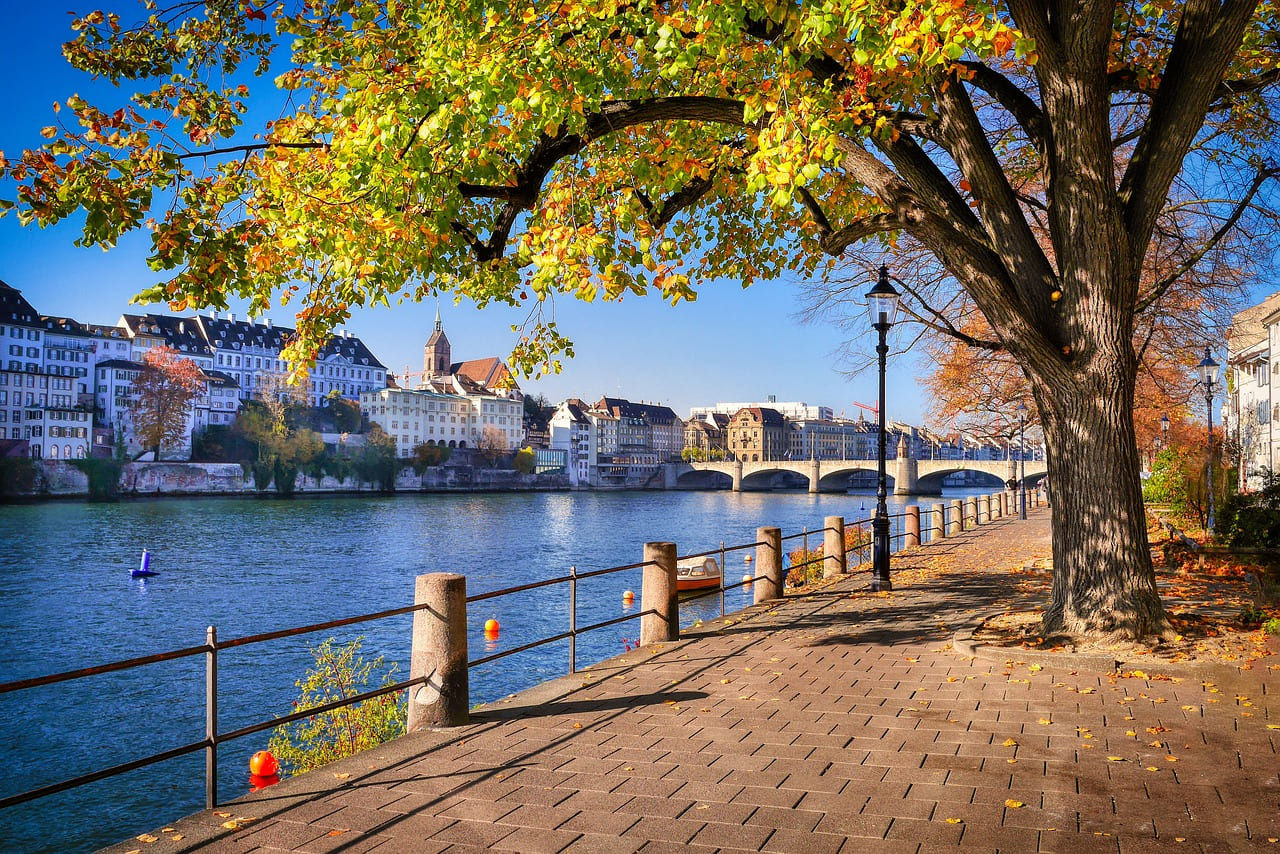
«For professional wildlife protection»
Constitutional initiative in the form of an elaborated draft
Based on § 47 of the Constitution of the Canton of Basel-Stadt of 23 March 2005 and on the Law concerning Initiative and Referendum (IRG) of 16 January 1991
Submitted by the initiative committee [Date of submission]
Initiative text
The undersigned persons entitled to vote in the Canton of Basel-Stadt submit the following constitutional initiative:
The Constitution of the Canton of Basel-Stadt of 23 March 2005 is supplemented by the following paragraphs:
§ [new] Professional wildlife protection
1 The practice of hunting by private individuals (militia hunting (i.e. district hunting), recreational hunting) is prohibited throughout the entire territory of the Canton of Basel-Stadt.
2 The protection, care and, where necessary, regulation of wild animals is the exclusive responsibility of professionally trained wildlife managers in the service of the Canton.
3 The shooting of wild animals is only permissible as a last resort when all other suitable measures for damage prevention or hazard prevention have been exhausted or are insufficient. It requires prior approval from the wildlife commission.
4 The Canton establishes an independent wildlife commission composed of representatives from animal and nature protection associations, science and the relevant authorities. The commission supervises wildlife management and decides on regulatory measures.
5 The canton promotes the natural regulation of wildlife populations, the connectivity of habitats and the coexistence of humans and wildlife in settlement areas.
6 Details are regulated by law.
§ [new] Protection of threatened and protected wildlife species
1 The canton refrains from applications for preventive population regulation of protected wildlife species under the Federal Act on Hunting and the Protection of Wild Mammals and Birds, particularly of wolf, lynx, bear, beaver, otter, golden jackal, golden eagle, goosander and other species protected under federal law.
2 It focuses on promoting coexistence between humans and wildlife, passive damage prevention, ecological enhancement of habitats and scientific monitoring of wildlife presence.
3 Measures against individual wild animals that pose an immediate and substantial threat to humans remain reserved. They must be limited to the minimum and carried out by the competent specialist authority of the canton.
4 Within the framework of inter-cantonal cooperation and vis-à-vis the federal government, the canton actively advocates for the protection and conservation of threatened wildlife species.
Transitional provision
1 The Government Council shall issue the necessary implementing provisions within two years of the adoption of this constitutional amendment.
2 Existing hunting rights expire upon the entry into force of the implementing legislation.
3 The Government Council ensures the continuity of wildlife management during the transitional phase.
Explanations
1. Initial situation
In the canton of Basel-Stadt, an almost entirely urban canton with around 200,000 inhabitants on only 37 km² of area, today's recreational hunting is an anachronism. Recreational hunting serves neither species protection nor contemporary wildlife management. It is the practice of a bloody recreational pursuit at the expense of sentient beings, legitimized by outdated narratives that cannot withstand scientific scrutiny (cf. the Psychology of recreational hunting in the canton of Basel-Stadt). The claim that ecological balance would collapse without recreational hunting has been empirically refuted by the Geneva model for over 50 years (cf. the comprehensive Dossier on the Geneva hunting ban on wildbeimwild.com).
At the same time, more and more protected wildlife species are coming under pressure at the federal level. With the revision of the Hunting Act in December 2022, preventive regulation of wolves was introduced. In the two previous regulation periods 2023/2024 and 2024/2025, FOEN approved the shooting of a total of around 225 wolves; 147 animals were actually killed (55 in the first, 92 in the second period). In December 2024, the protection status of wolves in the Bern Convention was downgraded from 'strictly protected' to 'protected'. Political pressure on other species such as lynx, beaver, otter and goosander is steadily increasing (cf. the Analysis of recreational hunting in Switzerland).
The canton of Basel-Stadt has the opportunity to set a clear signal here: not only for professional wildlife protection instead of recreational hunting, but also for consistent protection of threatened wildlife species at the cantonal level.
2. The model: Canton of Geneva
On May 19, 1974, around two-thirds of voters in the canton of Geneva voted for the abolition of militia recreational hunting. Before the ban, large game in the canton was practically extinct: deer and wild boar had disappeared for decades, with only a few dozen roe deer remaining. Around 300 hobby hunters massively released pheasants, partridges and hares for recreational hunting.
The experiences since the recreational hunting ban are clear:
– Biodiversity has markedly increased. The number of overwintering waterfowl has multiplied from a few hundred to around 30,000. The area of Lake Geneva and the Rhône gained international significance for bird protection, as a study by the Swiss Bird Protection Association SVS-BirdLife demonstrates.
– Geneva today harbors the largest brown hare population and one of the last grey partridge populations in Switzerland. Before the 1974 referendum, the recreational hunting lobby claimed that the brown hare would be exterminated by predators without recreational hunting. The opposite has occurred.
– The canton now has a growing population of around 60 to 100 red deer (depending on source and counting method) and around 680 roe deer (2024, according to federal hunting statistics FOEN). The roe deer population has doubled since 2015 from around 330 to 680 animals – starting from a very low level after decades of hunting and with an annual special cull by professional wildlife wardens of merely 20 to 36 animals. The population grows moderately despite targeted regulation and maintains a density of around 10 to 15 roe deer per square kilometer of forest that is compatible with the forest area. Professional wildlife management intervenes selectively and to a minimal extent, instead of pursuing the highest possible kill numbers as in recreational hunting. There are around 5 wild boar per square kilometer of forest area, a low and stable level.
– In 2005, 90 percent of Geneva voters spoke out in favor of maintaining the recreational hunting ban in a renewed referendum. In 2009, a motion for reintroduction was rejected in the cantonal parliament by 70 to 7 votes.
– The total costs of professional wildlife management in Geneva amount to around 1.2 million francs annually, divided into around 600,000 francs for personnel (approximately three full-time positions, distributed among around a dozen environmental officers), 250,000 francs for prevention and 350,000 francs for damage compensation. This corresponds to around 2.40 francs per inhabitant per year.
The wildlife in the canton of Geneva shows significantly less flight distance from humans than in hunted areas. Hikers regularly encounter roe deer, brown hares and a rich bird life. The Geneva fauna inspector Gottlieb Dandliker, responsible for wildlife management since 2001, reports a positive effect of direct contact with wildlife on the population's quality of life. A detailed presentation of the Geneva model with all figures can be found in the dossier "Geneva and the Hunting Ban" on wildbeimwild.com.
3. The Concept: Professional Wildlife Management Instead of Recreational Hunting
The initiative does not replace recreational hunting with a vacuum, but with professional wildlife management based on the wildlife warden model. This model is based on the following principles:
Professional competence instead of recreational entertainment. Professional wildlife managers act on a scientific basis, with biological training and within the framework of a cantonal service mandate. Their goal is the preservation of healthy wildlife populations, not the maximization of kill numbers. In contrast, recreational hunting systematically pursues the interest of securing its own raison d'être through high populations of huntable species (cf. the Hunter Dossier on wildbeimwild.com).
Last resort principle. Culling is only permissible when all non-lethal measures have been exhausted. These include electric fences, deterrence, habitat management, relocation, taste repellents and structural protective measures. In Geneva, fruit trees are protected with nets so that roe deer and hares do not strip bark. For wild boar, the canton provides farmers with electric fences. This practice shows: coexistence is a question of will, not technical possibility.
Democratic control through a wildlife commission. The independent commission, composed of animal and nature protection organizations, scientists, and authorities, prevents political pressure from individual interest groups from undermining wildlife management. The original Geneva model (1974–2012) demonstrated that such a supervisory body is crucial for ensuring the independence of wildlife management. The Basel initiative anchors this protective mechanism more consistently than current Geneva law by constitutionally enshrining the wildlife commission's authorization requirement.
Natural self-regulation as guiding principle. Experience from Geneva, from protected areas and from numerous scientific studies proves: wildlife populations regulate themselves independently in most cases. Recreational hunting disrupts this natural process by destroying social structures, artificially increasing reproduction rates, and altering migration patterns.
4. Why Basel-Stadt?
Basel-Stadt is particularly suitable for introducing professional wildlife protection for several reasons:
– The small cantonal area of 37 km² makes the transition practically simple and financially viable. The concrete costs are outlined in section 7.
– As an almost purely urban canton, Basel-Stadt has no hunting tradition that would be intertwined with the population's identity. The few active hobby hunters in the canton lack the political weight comparable to rural cantons.
– The population has shown through the Primate Initiative (2022) and the Pigeon Initiative (submitted 2024, with over 3,000 confirmed signatures) that animal protection is a central concern. With the Primate Initiative, the SP and Greens advocated for acceptance, demonstrating that party political support for animal rights causes exists.
– The signature threshold of 3,000 valid signatures within an 18-month collection period is realistically achievable, as previous Basel animal protection initiatives have proven.
– A success in Basel would be – after Geneva – the second Swiss example of professional wildlife protection and would have a signaling effect for all of Switzerland and beyond.
5. On the first paragraph: Professional wildlife protection
Paragraph 1 – Ban on hobby hunting
The ban on militia-hobby hunting by private individuals is the core of the initiative. It corresponds to the Geneva model (Art. 162 of the Geneva Cantonal Constitution: «La chasse aux mammifères et aux oiseaux est interdite. Les mesures officielles de régulation de la faune sont réservées.»). The cantonal authority for this is undisputed: the federal Hunting Act (JSG) expressly leaves the organization of hunting operations to the cantons (Art. 3 Para. 1 JSG). The three hunting systems of Switzerland – patent hunting, territory hunting, and state or management hunting – are equivalent. The canton of Geneva has practiced management hunting since 1974 in compliance with federal law, without any objection from the federal government.
Paragraph 2 – Professional wildlife management
Instead of hobby hunters, professionally trained wildlife managers in cantonal service take over all tasks of wildlife care and, where necessary, population regulation. These specialists have comprehensive biological or wildlife ecological training and act on scientific foundations and in the public interest. This system has proven successful in Geneva for over 50 years. Geneva's fauna inspector Gottlieb Dandliker describes the hobby hunting ban as the financially most favorable alternative for the canton and as clearly sustainable in the long term.
The efficiency of the Geneva model is evident in direct comparison: A professional game warden in Geneva needs an average of 8 hours and a maximum of 2 cartridges for a sanitary culling of a wild boar. A hobby hunter in Canton Zurich needs 60 to 80 hours and up to 15 cartridges. The hare density in Geneva is 17.7 animals per 100 hectares (highest in Switzerland), in Canton Zurich only 1.0 per 100 hectares (cf. Fact check Canton Zurich Government Council).
Paragraph 3 – Culling as Ultima Ratio
The central innovation compared to the current system: Culling is not the rule, but the exception. Passive measures take priority. In Geneva, approximately 250 wild boar are culled annually on average by wildlife wardens (according to FOEN hunting statistics, average 2015–2024), with culling numbers fluctuating according to population dynamics and agricultural damage potential. Primarily young animals are culled, while lead animals are explicitly spared for ethical reasons and to preserve the social stability of the sounders. Culling numbers in Geneva are thus considerably lower than in comparable cantons with hobby hunting, where culling serves not only damage prevention but primarily the hobby.
Paragraph 4 – Wildlife Commission
The independent wildlife commission is modeled on the Geneva system of the constitutional fauna commission. In Geneva, this commission was established immediately after the ban in 1974, and it has proven crucial: It ensures that animal and nature conservation organizations have a voice in regulation decisions, and prevents the government from independently approving exceptions under pressure from interest groups. The integration of science ensures that decisions are evidence-based and not founded on the hunting ideological myths with which the hobby hunting lobby has legitimized its practices for decades.
Paragraph 5 – Natural Regulation and Coexistence
This paragraph enshrines the guiding principle of professional wildlife protection in the constitution: Nature largely regulates itself when humans do not interfere with population dynamics through mass shooting. In Geneva, the federal hunting statistics (FOEN) show a deer population of around 680 animals (2024), with an annual special cull of merely 20 to 36 animals by professional wildlife wardens. The ratio of population to removal is thus less than 5 percent, a fraction of what is common in cantons with hobby hunting. The promotion of coexistence in an urban canton like Basel includes particularly the securing and networking of wildlife corridors, the ecological enhancement of green spaces, and public education about behavior toward wildlife in settlement areas (cf. wildbeimwild.com on wildlife).
Transitional Provisions
The two-year deadline gives the Government Council sufficient time to develop implementing legislation, hire professional wildlife managers, and constitute the wildlife commission. The continuity clause ensures that there is no gap in wildlife management during the transitional phase. The existing Office for Forest and Wildlife of both Basel cantons can serve as an institutional basis.
6. On the second paragraph: Protection of endangered and protected wildlife species
Paragraph 1 – Renouncing preventive regulation of protected species
The core of this paragraph is the canton's deliberate renunciation of the possibility to submit applications to the federal government for preventive population regulation of protected species. The revised federal Hunting Act (Art. 7a JSG) allows cantons to preventively regulate wolves from September 1 to January 31, but does not mandate it. The wording in federal law reads 'may', not 'must'. With this paragraph, the canton is thus merely exercising its competence not to make use of a federal authorization.
The listing of species with the word «in particular» is legally decisive. It ensures that protection will continue to encompass species protected under federal law in the future, without requiring a constitutional amendment. This is especially important because political pressure on additional species is predictably increasing. The recreational hunting lobby has already repeatedly demanded that lynx, beaver and grey heron be added to the list of regulatable species (cf. the Wolf dossier on wildbeimwild.com).
Paragraph 2 – Coexistence and passive damage prevention
Instead of culling, the canton relies on preventive, non-lethal measures: ecological enhancement of habitats, networking of wildlife corridors, structural protective measures, deterrence and scientific monitoring of wildlife presence through monitoring and research. In an urban canton like Basel-Stadt, the focus is not on livestock attacks but on questions of coexistence between humans and wildlife in settlement areas: How does one deal with foxes, badgers, beavers or waterfowl? How does one prevent conflicts in gardens, at water bodies, in road traffic? Professional wildlife management following the Geneva model provides evidence-based answers that go beyond mere shooting. Public education about proper behaviour toward wildlife is a central element in this approach.
Paragraph 3 – Reservation for threat prevention
This reservation is legally indispensable. It ensures that the canton can fulfil its obligation to prevent threats when an individual wild animal poses an immediate and significant danger to humans. The double restriction – «immediate» and «significant» – prevents the reservation from being misused as a gateway for routine culling. Responsibility lies with the cantonal specialist office, not with private individuals. This regulation corresponds to the Geneva principle: there too, official regulatory measures are reserved, but they are applied restrictively and exclusively by professional specialists.
Paragraph 4 – Active protection policy toward the federal government
This paragraph goes beyond a mere declaration of renunciation. It obligates the canton to actively advocate for species protection in inter-cantonal cooperation, in consultations on federal ordinances and in the conference of cantonal hunting directors. Basel-Stadt would thus gain a clear voice as a canton for the protection of endangered species in the national debate. Given the downgrading of the wolf in the Bern Convention on December 3, 2024 and the ongoing parliamentary pressure on additional protected species, this active protection policy is of growing importance.
7. Cost consequences: Concrete budget for Basel-Stadt
The Geneva reference budget
In Geneva, which at 282 km² is almost eight times larger than Basel-Stadt and has around 500,000 inhabitants, the total costs of professional wildlife management amount to around 1.2 million francs annually. The budget is structured as follows: around 600,000 francs for personnel (approx. 3 full-time positions, distributed among around a dozen environmental officers), around 250,000 francs for prevention (electric fences, protective nets, deterrence measures) and around 350,000 francs for damage compensation (mainly from pigeons and wild boar damage to vineyards, not from large wildlife).
Projection for Basel-Stadt
For Basel-Stadt with 37 km² area and around 200,000 inhabitants, the following realistic cost estimate results:
Personnel costs: 180,000 to 240,000 francs annually.Required are 1.5 to 2 full-time positions for professional wildlife managers. One full-time position in cantonal service (salary class comparable to wildlife wardens/environmental specialists, pay grade 14 to 16 according to cantonal salary law) costs approximately 120,000 to 140,000 francs annually including social contributions and employer overhead costs. With 1.5 to 2 positions, this amounts to 180,000 to 240,000 francs. These specialists can be housed within the existing Office for Forest and Wildlife of both Basel cantons, which minimizes administrative overhead.
Material costs: 30,000 to 50,000 francs annually.This includes equipment, vehicles (proportional), deterrent devices, monitoring infrastructure (camera traps, GPS transmitters for scientific monitoring), structural protection measures and public relations work.
Damage compensation: 10,000 to 30,000 francs annually.The wildlife damage expected in Basel-Stadt is very manageable due to the small area and minimal agricultural share. In Geneva, a significant portion of damage compensation goes to pigeon damage and wild boar damage to vineyards, not to large game.
Total costs: 220,000 to 320,000 francs annually.This corresponds to approximately 1.10 to 1.60 francs per resident per year.
Savings
This is offset by savings: The canton no longer needs to operate hunting administration, conduct hunting examinations, issue and manage licenses, or organize hunting supervision. The resources currently assigned to these tasks within the Office for Forest and Wildlife can be partially reallocated. Geneva's fauna inspector Dandliker points out that organizing licensed hunting would require at least two full-time positions, while around one full-time position is spent on wild boar regulation in Geneva.
Costs of the second paragraph
The second paragraph on protecting threatened species causes no significant additional costs, as it essentially involves abstaining from regulation requests and reorienting the cantonal position toward the federal government. The costs for passive damage prevention measures and scientific monitoring can be partially covered by federal contributions for dealing with protected species.
Lost revenue
With the abolition of recreational hunting, lease income from hunting districts of an estimated 50,000 to 100,000 francs annually is eliminated. However, this is offset by the never-accounted external costs of citizen hunting – wildlife accidents, hunting-related browsing damage in protection forests, administrative overhead, police and court interventions – which amount to several times this revenue. In Canton Geneva, this revenue has been eliminated since 1974 – without financial problems: Before the hunting ban, over 400 hobby hunters were active; today three full-time positions do the same work better. Sanitary and therapeutic culling by professional wildlife wardens is not the same as regulatory hunting based on hunters' folklore or misunderstood 'nature experience' of hobby hunters. A full-cost analysis shows: Citizen hunting costs taxpayers significantly more than it brings in (cf.'What recreational hunting really costs Switzerland' on wildbeimwild.com).
Hobby hunters in politics vote against nature conservation.The recreational hunting lobby systematically opposes biodiversity and species protection concerns. In 2024, it opposed the biodiversity initiative (63 percent no). In 2020, the hunting law it helped shape failed at the ballot box (51.9 percent no). In 2016, the Ticino hunting association torpedoed the Parc Adula National Park. In the legislative period 2015 to 2019, hobby hunters in parliament votedpredominantly against environmental concerns. Anyone claiming hobby hunters are conservationists ignores their voting behavior (cf.Ticino Hunting Association: 30 Years of NonsenseandCost Dossier).
8. Compatibility with higher-level law
First Paragraph: Abolition of Recreational Hunting
The initiative complies with federal law. The federal Hunting Act (JSG) expressly leaves the regulation of hunting rights, hunting systems, hunting territories and hunting supervision to the cantons (Art. 3 Para. 1 JSG). The three hunting systems in Switzerland – patent hunting, district hunting and state or administrative hunting – are equivalent. The canton of Geneva has practiced administrative hunting since 1974 and has never received a federal legal objection in over 50 years. The constitutional basis corresponds to Art. 162 of the Geneva cantonal constitution (in the current constitution adopted by popular vote in October 2012), whose federal law compliance has been confirmed by over five decades of practice.
Second Paragraph: Protection of Protected Species
Art. 7a JSG enables cantons to implement preventive regulation, but does not oblige them to do so. Foregoing this possibility violates neither federal law nor the Bern Convention. The reservation for measures in cases of immediate threat to people ensures that the canton can fulfill its duty to avert danger. Even in the regulation period 2024/2025, cantons have deliberately not submitted regulation applications for numerous inconspicuous packs – according to FOEN, 12 packs were classified as inconspicuous. Foregoing applications is therefore already common practice.
Unity of Subject Matter
The initiative maintains unity of subject matter, as all provisions of both paragraphs relate to cantonal wildlife management and the protection of wild animals. The thematic framework – the transition from a system based on recreational hunting to a professional, science-based system of wildlife protection – connects both paragraphs into a coherent regulatory subject.
9. Anticipation of Foreseeable Objections
«The new Wildlife and Hunting Act 2024 is already wildlife-friendly enough»
It is foreseeable that opponents of the initiative will refer to the cantonal Wildlife and Hunting Act of 2021 (in force since 2024) and argue that the existing legal framework is already sufficiently modern and wildlife-friendly. This objection misses the point. The current law regulates the framework conditions of recreational hunting. It optimizes a system built on the premise that private individuals kill wild animals as a leisure activity. It does not question this premise itself. The present initiative, however, implements a system change: from recreational hunting to professional wildlife management. This is not a contradiction to the current law, but deliberately goes beyond it, just as the canton of Geneva went beyond its then hunting law in 1974. The cantonal Wildlife and Hunting Act also cannot provide an answer to the increasing threat to protected species from federal politics. It contains no mechanism to prevent the canton from submitting regulation applications to FOEN, and it contains no obligation for the canton to actively advocate for species protection. The second paragraph of the initiative closes precisely these gaps.
Binational Coordination: The Office for Forests and Wildlife of both Basel cantons
Basel-Stadt and Basel-Landschaft jointly operate the Office for Forests and Wildlife of both Basel cantons. This office is responsible for enforcing hunting and wildlife legislation in both half-cantons. The initiative affects exclusively the constitution of the canton of Basel-Stadt and thus the cantonal territory of Basel-Stadt. It changes nothing about the cooperation with Basel-Landschaft in the area of joint administration. The delineation of responsibilities between the two half-cantons is regulated in the existing state treaty and administrative agreement. In the implementing law for the initiative, it must be clarified how the professional wildlife managers will be organizationally embedded into the existing structure of the joint office. Experience from Geneva shows that such embedding into existing administrative structures functions smoothly: There, wildlife management was integrated into the existing wildlife and fisheries authority after 1974, without having to create a new authority. No binding effect arises for Basel-Landschaft. The half-canton can maintain its own hunting system. However, success in Basel-Stadt could certainly trigger a debate in Basel-Landschaft.
The 'in particular' formula for species protection
The open formulation 'in particular wolf, lynx, bear, beaver, otter, golden jackal, golden eagle, goosander and other species protected under federal law' could be attacked as legal uncertainty. The opposite is the case: The formulation is deliberately designed as a dynamic reference to federal law. It ensures that cantonal protection automatically applies to species that the federal legislator places under protection in the future or puts on a regulation list, without requiring a cantonal constitutional amendment each time. This technique of dynamic reference is established and proven in Swiss constitutional law. The nominal enumeration of the most important species serves for concretization and comprehensibility, the addition 'and other species protected under federal law' serves for future-proofing. Both together result in a formulation that is both legally determined and forward-looking.
Wolf presence in Basel-Stadt
The wolf currently does not occur in the canton of Basel-Stadt in practice. Opponents could therefore question the relevance of the second paragraph. This criticism misunderstands the threefold function of the paragraph. First, the provision has an intercantonal signaling effect: Basel-Stadt positions itself as a canton that takes the protection of endangered species seriously and advocates accordingly at the federal level (paragraph 4). This signal is all the more important as the majority of cantons are pressing for the opposite - a relaxation of protection. Second, the provision is forward-looking: wolves are expanding in Switzerland. In July 2025, a first wolf pack in the canton of Schwyz was confirmed through camera trap evidence. Just about five weeks later, the canton applied for regulation to FOEN and received permission on August 28, 2025, to shoot two-thirds of the cubs. By the end of November 2025, three of five young wolves had been killed. The gap between first detection and shooting illustrates how quickly a biological fact becomes a political killing order - and why constitutional protection is necessary before it comes to that. Basel-Landschaft and Jura border Basel-Stadt, and a wolf presence in the extended metropolitan area cannot be ruled out in the medium term. Third, the paragraph concerns not only the wolf, but all protected species, many of which actually occur in or pass through the canton of Basel-Stadt, including the beaver (documented along the Birs and Rhine), various protected bird species, as well as potentially the otter, whose return to northwestern Switzerland is expected.
10. Summary
This initiative gives the Basel population the opportunity to advocate for modern, evidence-based wildlife management and comprehensive protection of endangered wildlife species. The first paragraph follows the Geneva model, proven for over 50 years, and replaces hobby hunting with professional wildlife protection – at a cost of approximately 1.10 to 1.60 francs per resident per year. The second paragraph ensures that the canton of Basel-Stadt refrains from preventive killing of protected species and instead actively commits to their conservation.
The result would be a Basel where wildlife are neither targets for hobby hunters nor victims of politically motivated culling policies, but are professionally protected as part of a vibrant urban nature – for the benefit of animals and the entire population.
Initiative Committee 'For Professional Wildlife Protection'
[Name 1], [Name 2], [Name 3], [Name 4], [Name 5], [Name 6], [Name 7]
(At least 7 voting-eligible persons with residence in the canton of Basel-Stadt)
Contact address: [Committee address]
Appendix: Additional documentation
The following dossiers and sources support the argumentation of this initiative and are available as attachments:
Geneva Model in detail: wildbeimwild.com/dossiers/genf-und-das-jagdverbot – Comprehensive presentation of Geneva wildlife management since 1974 with costs, population numbers and biodiversity development.
Scientific studies on hobby hunting: wildbeimwild.com – Scientific Studies – Studies on the impact of hobby hunting on wildlife and hobby hunters.
Hobby hunting in Switzerland: Facts and criticism: wildbeimwild.com – Hobby hunting in Switzerland – Why hobby hunting in Switzerland is not nature conservation.
Wolf in Switzerland: Facts, politics and hunting: wildbeimwild.com – Wolf Dossier – Wolf in Switzerland: Facts, politics and the limits of hunting.
Psychology of hobby hunting in the canton of Basel-Stadt: wildbeimwild.com – Psychology of hobby hunting in the canton of Basel-Stadt – Canton-specific analysis.
Psychology of hobby hunting: wildbeimwild.com/category/psychologie-jagd – Comprehensive contributions on the psychology of hobby hunting.
Wildlife and predators: wildbeimwild.com/category/wildtiere – Wildlife, predators and coexistence of humans and wildlife.
Note on procedure
Before beginning signature collection, the signature list must be submitted in writing to the State Chancellery of the canton of Basel-Stadt for preliminary review. The initiative committee consists of at least 7 voting-eligible persons with residence in the canton of Basel-Stadt. 3,000 valid signatures are required for the initiative to come into effect. The collection period is 18 months from publication in the Canton Gazette. The submission procedures are governed by the Law concerning Initiative and Referendum (IRG) of January 16, 1991.
- Preliminary review at the State Chancellery via email to abstimmungen@bs.ch or by post to Rathaus, Marktplatz 9, 4001 Basel https://www.bs.ch/themen/sicherheit-und-demokratie/politische-mitsprache/eine-initiative-einreichen
Strategic briefing for activists
Popular initiative 'For Professional Wildlife Protection' – Canton Basel-Stadt Internal working document – Status March 2026
Summary
Basel-Stadt is strategically the best canton in Switzerland to launch an initiative for professional wildlife protection. The signature threshold is low, the population is animal welfare-friendly, the costs are minimal, and the Geneva model provides empirical proof after over 50 years that it works. A success in Basel would be a second Geneva and would have a signal effect far beyond the cantonal border.
1. Why Basel-Stadt of all places?
Low threshold, high readiness
In Basel-Stadt, only 3,000 valid signatures are needed for a cantonal popular initiative, with an 18-month collection period from publication in the cantonal gazette. That this hurdle is realistic is shown by recent examples: The popular initiative 'Fundamental Rights for Primates' was achieved in 2017 with 3,080 signatures, the pigeon initiative was submitted in 2024 with over 3,000 confirmed signatures. In both cases, the necessary signatures were quickly gathered. Basel is a canton where animal welfare issues mobilize support.
Almost completely urban
The canton is practically a pure urban region: around 200,000 inhabitants in 37 km². There is hardly any rural population that would traditionally be hunting-oriented. The political landscape is left-green dominated: SP, Greens and GLP have a solid base in the Grand Council. For the primate initiative, SP and Greens had already issued yes-campaign slogans. This is crucial, because in Zurich the initiative 'Wildlife Wardens Instead of Hunters' failed not least because there was not a single vote for it in the cantonal council, not even from the left-green side.
Minimal costs, maximum impact
The small cantonal area makes the cost argument, which was fatal in Zurich, ineffective in Basel. The concrete budget calculation shows: Professional wildlife protection costs Basel-Stadt 220,000 to 320,000 francs annually, or 1.10 to 1.60 francs per inhabitant. In Geneva, which is eight times larger, it costs 2.40 francs. That's less than one cup of coffee per person per year. Basel-Stadt has virtually no recreational hunting activity anyway: Only the municipalities of Bettingen and Riehen hold the hunting privilege, which they transfer via lease contract to a single hunting society. The transition is not a revolution, but the formalization of a reality that already exists in large parts of the canton.
Signal effect: A second Geneva
A success in Basel would be proof that the Geneva model is transferable. This fits with what the Zurich Hunters' Association itself said about the Zurich initiative: Zurich was 'understood by the initiators as a test laboratory for their cause' because the canton is 'more urban than other areas of Switzerland.' Basel-Stadt is even more urban than Zurich. If it can work anywhere in German-speaking Switzerland, it's here.
2. Why not another canton?
Zurich: Burned for a generation
The initiative 'Wildlife Wardens Instead of Hunters' was rejected in 2018 with 84 percent no votes. Not a single municipality voted yes. In the cantonal council, the result was 165 to 0. Another attempt within the next 10 to 15 years would be counterproductive and would be instrumentalized by the opposition as proof of the 'unteachability' of hunting opponents.
Graubünden and other mountain cantons
Recreational hunting is deeply rooted in the culture there. In Graubünden, even an initiative against special hunting was rejected, despite being submitted with a record number of over 10,000 signatures. The conditions for a system change are not present in alpine cantons for the foreseeable future.
Vaud
Borders Geneva and could be interesting in the long term. However, according to research by the Center for Democracy Aarau (ZDA), Romandy has higher requirements for the ratio of signature numbers to eligible voters than German-speaking Switzerland. Furthermore, it lacks the concentration of animal welfare organizations and left-green parties typical of Basel in a small, manageable canton.
Basel-Landschaft
Would be even easier for collecting with only 1,500 signatures, but is significantly more rural. Recreational hunting carries different weight there. However, a success in Basel-Stadt could trigger a debate in Basel-Landschaft, which is why the sequence is correct: first the city, then the countryside.
3. The lessons from Zurich: What we will do differently
The failure in Zurich was not proof that the cause was wrong. It was proof that the strategy was wrong. The crucial mistakes and our responses to them:
Mistake 1: No party support In Zurich, there were zero votes for the initiative in the cantonal council. Not even the SP and Greens supported it. In Basel-Stadt, the starting position is different: the SP and Greens issued yes recommendations for the primate initiative. Contact with these parties must be established and maintained early. An initiative committee that includes prominent Basel politicians is crucial.
Mistake 2: Confrontational title «Wildlife wardens instead of hunters» was a title that defined itself in opposition to the opponent. Our initiative is called «For professional wildlife protection». The title is positively formulated, emphasizes professionalism instead of prohibition, and forces opponents to position themselves against «professional wildlife protection», which is communicatively difficult.
Mistake 3: The cost argument was not refuted The Zurich government projected costs of 20 to 30 million francs, and the initiators had nothing concrete to counter with. This figure was never substantiated: the Zurich hunting administration failed to provide an explanatory response to requests under the Freedom of Information Act. Our initiative contains a detailed budget calculation based on the Geneva reference model and scaled down to Basel-Stadt. The figures are verifiable and realistic.
Mistake 4: Too little time for the campaign The Zurich initiators complained that the voting date was set surprisingly early and they had too little time to inform the population. We must plan the campaign from the beginning with a time horizon of two to three years: signature collection, cantonal council debate, voting campaign.
Mistake 5: The Geneva experience was underutilized In 1974, no reference model existed. In 2018 in Zurich, it was not placed sufficiently at the center. Today, after over 50 years of Geneva practice, it is the strongest argument of all. The dossier «Geneva and the hunting ban» on wildbeimwild.com must become the central campaign document.
4. The second paragraph: Why species protection belongs
The initiative deliberately goes beyond abolishing recreational hunting. The second paragraph on the protection of endangered and protected wildlife species is strategically important for three reasons:
Broader coalition. A purely anti-recreational hunting article appeals to animal welfare advocates. The species protection paragraph additionally mobilizes conservationists, bird lovers, beaver groups, wolf advocates and all those who are angry about the federal government's increasing shooting policy. The coalition becomes broader without diluting the message.
Topicality. Wolf regulation is more present in public debate than ever before. In July 2025, a first wolf pack was confirmed in Schwyz, five weeks later the shooting permit was issued, and by November three of five pups were dead. The Bern Convention downgraded the wolf in December 2024. Parliament is pushing for further relaxations. This paragraph gives the Basel population the opportunity to set a counter-signal. Particularly relevant in the Basel context are species that are present in urban areas: beaver, black stork, bats, kingfisher. The initiative does not need to argue solely through the wolf.
Future-proofing. The «in particular» formulation ensures that protection automatically also applies to species that the federal government places on a shooting list in the future. The canton does not have to launch a new initiative every time.
5. Why the framework in 2026 is broader than in 2020
In 2020, Swiss voters rejected a flawed revision of the hunting law with 51.9 percent. The initiative 'For professional wildlife protection' operates today in a fundamentally changed political environment. This change can be specifically substantiated on four levels:
What was hypothetical in 2020 is reality in 2026
In 2020, the attack on several protected species was primarily theoretical. The revised hobby hunting law would have made it possible to regulate protected species more easily. Opponents argued: 'Today the wolf, tomorrow the beaver and the lynx.' This was an effective but ultimately hypothetical argument. Today this scenario has become reality: The beaver may be shot since February 2025, the protection status of the goosander is being actively lowered, and BirdLife publicly names a list of other species that are in the political pipeline. What was a warning in 2020 is a fact in 2026.
More affected interest groups
In 2020, the core issues were wolf, lynx and protected areas. The mobilized circles were primarily nature conservation associations and wolf supporters. Today, specifically added are: Fishing associations (because the goosander shooting ignores the research situation and harms fishers who depend on intact ecosystems), bird protectors in the narrower sense (BirdLife as the main affected party in the grey heron, mute swan and gull debate) as well as beaver supporters, who bring their own base with Pro Natura and WWF. Each additional species expands the potential coalition by a group that was not directly affected in 2020.
The democratic political argument did not exist in 2020
In 2020, it was about a law that came before the people and was rejected. That was a clean democratic process. Today a level is added that was missing then: Federal Councilor Rösti has overridden the popular will of 2020 by ordinance, without conducting another vote. This 'ordinance minister' argument appeals to people who have little use for species protection, but who certainly react when a Federal Councilor undermines a popular decision through administrative channels. This expands the framework beyond the nature conservation scene into the democratic political center.
The international dimension is new
In 2020, the Bern Convention played no role in the voting debate. Today, the ongoing investigation procedure, the Council of Europe committee's reprimand and the ECHR lawsuit provide additional argumentative material. While these procedures have no direct enforcement power, they make it possible to frame Swiss wolf policy as an international reputation loss, which represents a relevant argument especially for bourgeois voters.
In summary
In 2020 the framework was: 'A law threatens several species.' In 2026 the framework is: 'A Federal Councilor has overridden a popular decision, several species are already being shot, and parliament is systematically dismantling the law's protection mandate.' This is not only broader, but also more concrete and emotionally accessible, because it is no longer about hypotheses, but about facts that have occurred.
6. Opponent analysis and prepared responses
This is the section most frequently neglected in campaign preparation. Those who do not know the counter-arguments and are not prepared lose the media work. Below are the three most likely points of attack from the opposition – and our responses.
Counter-argument 1: 'This is an interference in cantonal hunting legislation'
What opponents will say: According to the Federal Constitution, the cantons have the competence to regulate their hunting legislation themselves. An initiative that interferes with hunting law would be constitutionally problematic or violate federal law.
The facts: Exactly the opposite is true. Swiss hunting law is explicitly structured on federal principles: The Federal Act on Hunting and the Protection of Wild Mammals and Birds limits federal competencies to determining huntable species, closed seasons, and federal hunting reserves. Implementation and regulation are handled by the cantons themselves. Geneva did this in 1974 – and the federal government has never challenged it, because it is their right. Basel-Stadt only passed a new cantonal wildlife and hunting law in 2023, which proves that the canton acts autonomously in this area. A popular initiative seeking to change this law is the democratic norm.
Concise communication formula: "Geneva did it in 1974. The federal government never challenged it. It is our cantonal right – and our democratic right."
Counter-argument 2: "Basel has hardly any wildlife problems. What's the point of the initiative?"
What opponents will say: Basel has few wild animals and little hunting activity. The initiative solves a problem that doesn't even exist. This is political activism without practical relevance.
The facts: This argument unintentionally reveals the strength of our position. If Basel has hardly any wildlife problems and little hunting activity, then the system change is all the easier, cheaper and less risky. In fact, only the municipalities of Bettingen and Riehen hold hunting rights, transferred via lease contract to a single hunting society. This means: the transition affects a minimal area. At the same time, wildlife populations in urban areas are also growing in and around Basel: foxes, badgers, beavers, deer, wild boar. Professional wildlife management is not a luxury, but preventive infrastructure – just as you don't establish a fire department only when something is burning.
Concise communication formula: "If there's so little to do, professional wildlife protection costs even less. The argument refutes itself."
Counter-argument 3: "Costs rise – taxpayers end up paying"
What opponents will say: Professional wildlife wardens cost tax money. Today, hunting is co-financed through license fees and lease revenues. The switch would burden the canton financially.
The facts: The cost argument was effective in Zurich because it went unchallenged. The alleged 20 million francs in additional costs were never proven; the Zurich hunting administration failed to respond to freedom of information requests. In Basel, the starting situation is fundamentally different:
- Geneva: 1.2 million francs Total costs per year for 500,000 residents = 2.40 francs per person.
- Basel-Stadt (projection): 220,000 to 320,000 francs per year for 200,000 residents = 1.10 to 1.60 francs per person.
- For comparison: A cup of filter coffee costs around 4.50 francs in Basel. Professional wildlife protection for an entire year costs less than one-third of that.
Moreover: Wildlife damage compensation in Geneva primarily concerns pigeons and wild boar damage to vineyards, not large game. In Basel, where wildlife density is even lower, damage risks are correspondingly lower. Wildlife inspector Gottlieb Dandliker confirms: "The hunting ban for hobby hunters in Geneva is the cheapest alternative for the canton and clearly financially sustainable in the long term."
Concise communication formula: "1 franc 60 per resident per year. The Zurich figure of 20 million was never proven. Geneva shows the way – for 50 years."
7. Communication Strategy: The Three Core Messages
The entire campaign should focus on three simple, repeatable messages:
"Geneva has been showing the way for 50 years." This is the strongest argument because it's not a thought experiment, but lived reality. More biodiversity, stable populations, minimal costs, 90 percent approval in the 2005 follow-up survey.
"Professional instead of hobby."The question is not whether wildlife should be managed, but by whom: by trained professionals in the public interest or by private individuals as a recreational activity. The answer is obvious.
«Less than one coffee per year.»The costs amount to 1.10 to 1.60 francs per resident. This is an amount that no one can seriously use as an argument against the initiative.
8. Timeline and next steps
| Phase | Content | Timeframe |
|---|---|---|
| Committee formation & text review | Engage a lawyer; recruit at least 7 voting committee members with BS residence; decide on constitutional vs. legislative initiative | Month 1–3 |
| Submission for preliminary review | State Chancellery Basel-Stadt: abstimmungen@bs.ch, Rathaus Marktplatz 9, 4001 Basel | Month 3–4 |
| Publication & collection start | 18-month deadline begins with publication in the cantonal gazette; goal: 4,000+ signatures as buffer | Month 4 |
| Party contacts & coalition building | Early talks with SP, Greens, GLP, BastA!; secure letters of support | Month 1–12 |
| Submission of signatures | State Chancellery, official verification | Month 19–21 |
| Cantonal council debate | Parliamentary anchoring; intensify media work | Month 22–30 |
| Referendum campaign | Final mobilization, infographics, media presence | Month 30–36 |
On the question of constitutional vs. legislative initiative:This decision must be clarified before the preliminary review. A constitutional initiative is harder to reverse (two-thirds majority required for repeal), a legislative initiative is easier to formulate and less vulnerable to potential federal law conflicts. Seeking legal advice is mandatory.
9. Prepare campaign materials
- Use the Geneva dossier on wildbeimwild.com as the central argument repository. Prepare the scientific studies for media discussions.
- Build a dedicated dossier page for the Basel initiative – similar to the Geneva dossier, with direct reference to Basel conditions.
- Create infographics: cost comparison per resident (BS/GE), Geneva biodiversity development, timeline «50 years of success».
- Engage local media early: Bajour, bz Basel, BZ Basel, Telebasel. Frame the initiative as a positive vision, not as a prohibition.
10. Further sources
- Geneva hunting ban in detail
- Scientific studies on recreational hunting
- Recreational hunting in Switzerland: facts and criticism
- Wolf in Switzerland: facts, politics and hunting
- Psychology of recreational hunting in Basel-Stadt canton
- Psychology of recreational hunting (category)
- Wildlife and predators
- Federal hunting statistics (BAFU)
- Wildlife and hunting law Basel-Stadt (SG 912.200)
- Federal hunting law – Federal division of competences
This document is a template text by IG Wild beim Wild. It can be freely used by activists, organizations or initiative committees and adapted to conditions in Basel-Stadt canton.
Fact check: The claims of the recreational hunting lobby
The brochure «Hunting in Switzerland protects and benefits» by JagdSchweiz reads like an advertising prospectus – but the central claims do not stand up to a fact check. Ten narratives under scrutiny, from «state task» via «species diversity» to «80% approval»: Dossier: JagdSchweiz brochure fact check →