St. Gallen: PFAS meat must not be sold
In many cases, the contamination is linked to sewage sludge from wastewater treatment plants that was applied to agricultural land as fertiliser until 2006.

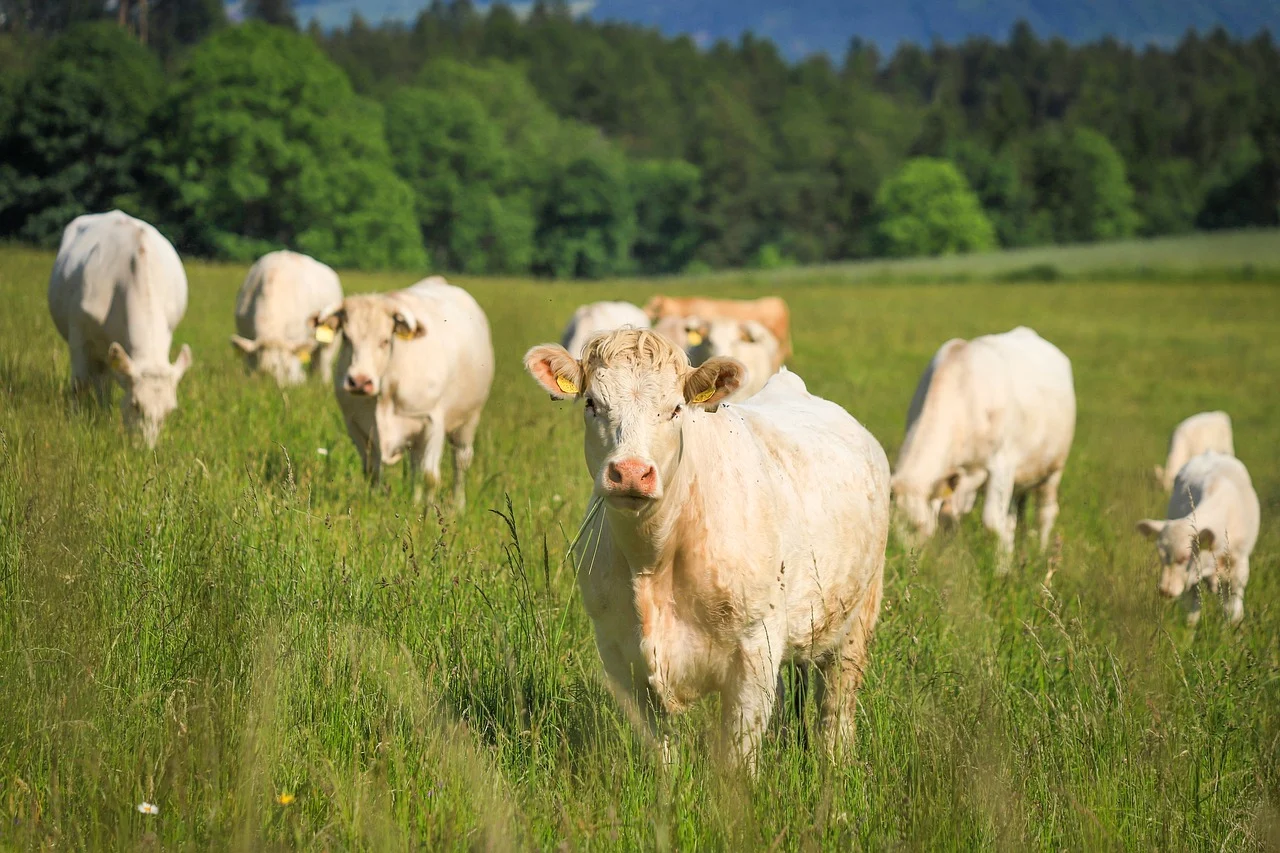
Samples have shown that areas of soil on farms in St. Gallen are contaminated with PFAS.
The canton has since expanded its investigations and found that there are further contaminated areas in the north-east of the canton as well. The meat of animals grazing there partially exceeds the maximum permitted levels. The government has introduced precautionary measures, is intensifying measurements and is calling on the federal government to implement a national PFAS action plan.
PFAS (per- and polyfluoroalkyl substances) are highly persistent chemicals that have been used industrially for decades. They enter the environment and can be detected in food and in humans, posing potential health risks.
Localised contamination, not large-scale contamination
Contaminated soil areas were discovered on the Eggersrieter Höhe in 2021, and further investigations have shown that additional contaminated areas exist in the region as well. The affected areas span the arc of Mörschwil-Eggersriet-Untereggen-Goldach-Altenrhein-St. Margrethen.
The canton has measured elevated or excessive PFAS levels in the meat of some cows and cattle from farms with contaminated land, as well as in the soil and spring water of these areas. Corresponding milk samples from cows also show elevated PFAS levels.
The farmers see the work of their lives slipping away. Two of those affected speak out, saying they are now producing nothing but waste. One describes a sense of powerlessness: the soil is contaminated and is resulting in an inferior product.
Public safety in focus
The government has issued precautionary measures and is working with recommendations for contaminated food products.
It was also recommended to use the municipality's drinking water for watering animals and food production. Affected farms receive support through bridging loans, and alternative production models are being sought.
Canton expands PFAS sampling
The current results are the outcome of sampling in watercourses, food products, and soils. However, measurements have not yet been completed. The canton will launch a PFAS sampling concept in order to provide more precise information about which areas are uncontaminated.
Government calls for national PFAS action plan
The canton of St. Gallen is among the first cantons to have extended investigations into PFAS contamination. There is little experience in reducing PFAS levels, and the federal government has so far issued only a few uniform guidelines, even though PFAS represents a nationwide problem in Switzerland.
The government is committed to ensuring that a national PFAS action plan is developed and that uniform measures apply throughout Switzerland. In addition, the establishment of maximum levels for further food products such as milk and dairy products is being called for. The website http://www.sg.ch/pfas provides information on the current status of investigations.
| You can help all animals and our planet with compassion. Choose empathy on your plate and in your glass. Go vegan. |