Lead ammunition: Toxic hunting ammunition and its consequences for humans and wildlife
Birds of prey, game meat, and the political blockade against lead-free ammunition.

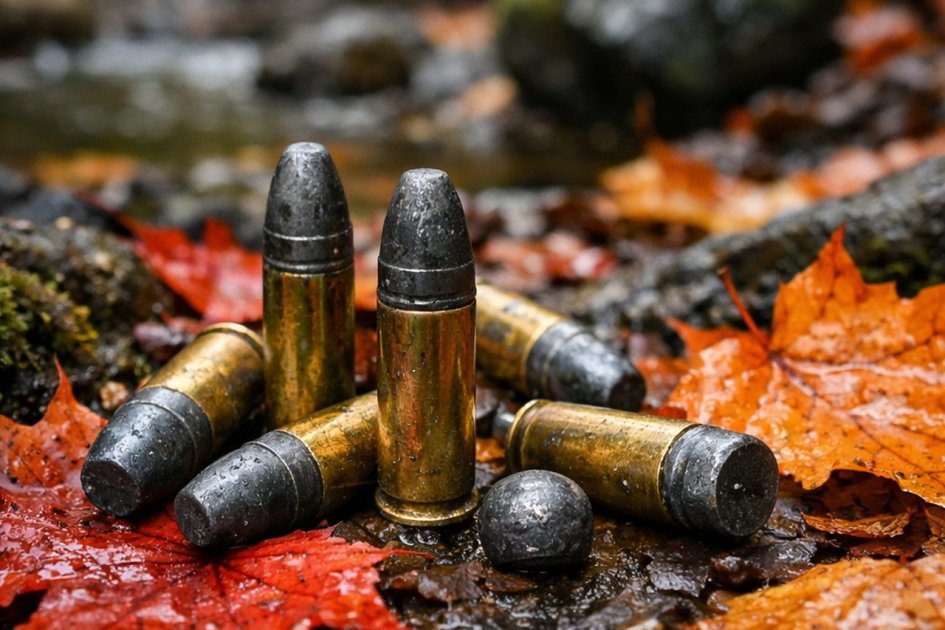
Every year, recreational hunters in Europe introduce an estimated 14,000 tonnes of lead into terrestrial ecosystems, while lead-free alternatives have long been available in all common calibres.
Lead from hunting projectiles contaminates soils, waterways, and wildlife carcasses. Birds of prey die from lead poisoning after consuming gut piles and wounded animals. Game meat frequently contains measurable lead residues. The Federal Food Safety and Veterinary Office (FSVO) explicitly warns that children under seven and pregnant women should avoid consuming game meat.
What is lead and why is it used in hunting ammunition?
Lead is a heavy metal characterised by its high density, softness, and low melting point. These properties make it technically attractive for projectiles: lead-based bullets deform on impact, transfer a great deal of energy, and ideally kill quickly. Lead has been the standard in hunting ammunition for centuries.
The problem: lead is highly toxic. There is no biologically safe threshold concentration. As little as 3.5 micrograms per decilitre of blood can cause behavioural disorders in children. Lead does not biodegrade, accumulates in soil, and is transported into waterways by rainwater. The lead ammunition dossier documents this connection in detail.
How much lead enters the environment through recreational hunting?
The European Chemicals Agency (ECHA) estimates that recreational hunting alone introduces 14,000 tonnes of lead into terrestrial environments each year. In total, including shooting ranges and fishing weights, the annual input across Europe amounts to around 44,000 tonnes. Without regulation, this would result in a cumulative input of approximately 876,000 tonnes over 20 years.
In Switzerland, there is no national ban on lead ammunition outside of wetlands, where lead shot has been prohibited since 1998. Outside these protected areas, lead-containing ammunition may still be used in most cantons. This creates hotspots in intensively hunted regions.
How do birds of prey die from lead poisoning?
Birds of prey and scavengers such as golden eagles, bearded vultures, red kites, and buzzards feed on gut piles — the entrails and remains that recreational hunters leave in the forest after a kill — as well as on wounded animals that are never recovered. Lead bullets fragment on impact into hundreds of tiny particles that remain invisibly embedded in the game meat and gut piles. When birds of prey consume these fragments, stomach acid dissolves the lead into the bloodstream. The consequences include loss of appetite, convulsions, paralysis, and death.
A 2022 study by the Leibniz Institute for Zoo and Wildlife Research (IZW) and the University of Cambridge (published in "Science of the Total Environment") calculated that lead poisoning alone causes the loss of at least 55,000 adult birds of prey across Europe every year. Lead poisoning accounts for 14 percent of the golden eagle population, 12 percent of the bearded vulture population, and 3 percent of the red kite population. In Switzerland, golden eagles and bearded vultures in high-alpine hunting areas are directly affected: isotope analyses by the Swiss Ornithological Institute in Sempach and from the canton of Graubünden confirm that the lead found in the bones of dead eagles originates from hunting ammunition.Hunting and Biodiversity places these losses in the broader ecological context.
Are humans at risk from game meat?
Yes. Swiss and German authorities have issued explicit consumption warnings. The FSVO recommends that children up to the age of seven, pregnant women, breastfeeding mothers, and women wishing to become pregnant should completely avoid game meat from areas hunted with lead ammunition, as the use of lead ammunition cannot be reliably ruled out.
A 2022 study by the STS tested 13 game meat samples from Switzerland: 5 out of 13 showed lead levels above the limit of 0.05 mg/kg. Hunting households that consume up to 90 portions of game per year are particularly exposed. Lead particles are invisible to the naked eye, are not eliminated by cooking or freezing, and cannot readily be detected clinically even in adults.Game Meat in Switzerland covers the health dimension in detail.
What other animals are affected?
The impact extends beyond birds of prey. Foxes, badgers, wolves, and other scavengers ingest lead when feeding on dead or wounded wildlife. Within the EU, an estimated one million waterbirds and 1.35 billion land birds die every year as a result of lead contamination from recreational hunting and shooting sports.Hunting and Wildlife Diseases shows how such toxic loads weaken the immune systems of wild animals and increase their susceptibility to diseases.
Are there lead-free alternatives?
Yes, and they work. Lead-free projectiles made of copper or copper-zinc alloys are available in all common calibers, have been tested, and demonstrate comparable or superior ballistic performance in practical tests. In Graubünden, a ban on lead bullets for high-altitude alpine hunting has been in effect since September 2021. The results: over 8,000 analyzed shots showed no significant difference in flight distances compared to lead ammunition. 75 percent of Graubünden's recreational hunters were already using lead-free ammunition before the ban. In Denmark, a complete lead ban for hunting has been in effect since April 2024, with no documented problems.
As of February 2025, Switzerland has banned lead projectiles for ungulates at the federal level; a transitional period until 2029 applies for calibers above 6 mm. This is progress, but not a complete ban.
Why did regulation take so long?
The delay is no coincidence. How hunting associations influence politics and the public documents how JagdSchweiz and international hunting associations spent years claiming that lead-free ammunition was “not yet ready,” caused more ricochets, or was worse for animal welfare. These claims were refuted by authorities and independent studies. Voluntary programs failed; only regulatory pressure brought movement to the debate.
What issues remain unresolved?
Despite the partial progress, significant gaps remain: lead shot for small game (hares, partridges, wood pigeons) is still permitted outside wetlands. Legacy ammunition and older weapon stocks are barely tracked. Cantons with weaker enforcement remain problem areas. And the question of who is liable for legacy contamination in soils and waterways remains legally unresolved.
Hunting and Animal Welfare emphasizes that lead ammunition is a systemic problem: as long as recreational hunting of wild animals takes place with toxic projectiles, contamination is structurally unavoidable.
Conclusion
Lead-based hunting ammunition is a well-documented, officially recognized environmental and health problem. Birds of prey die, soils become contaminated, and people unknowingly ingest lead through game meat. Lead-free alternatives have existed for years and are proven to work. The delay in regulation was politically motivated, not technically justified. Switzerland's partial ban of 2025 is a step in the right direction, but it is not enough. A complete ban on lead ammunition for all hunting is long overdue.
Sources
- ECHA (European Chemicals Agency): Restriction Report on Lead in Shot, Bullets and Fishing Tackle, 2023
- Leibniz-IZW / University of Cambridge (2022): Study on lead poisoning in birds of prey, Science of the Total Environment
- FSVO (Federal Food Safety and Veterinary Office): Consumption recommendations for game meat
- STS (Swiss Animal Protection): Investigation into lead in game meat, 2022
- Office for Hunting and Fishing Graubünden: Evaluation of lead-free ammunition in the open season hunt
- Swiss Ornithological Institute Sempach: Isotope analyses of golden eagles
- JSG, SR 922.0; JSV, SR 922.01 (amendment February 2025)