Impact of drones on wildlife
Drones operate precisely where birds previously often had a relative space of rest and security. Since 2017, the research landscape has significantly intensified. Today we can better assess when drones appear to be tolerated, when they trigger stress, and why the absence of flight responses is not an all-clear signal.

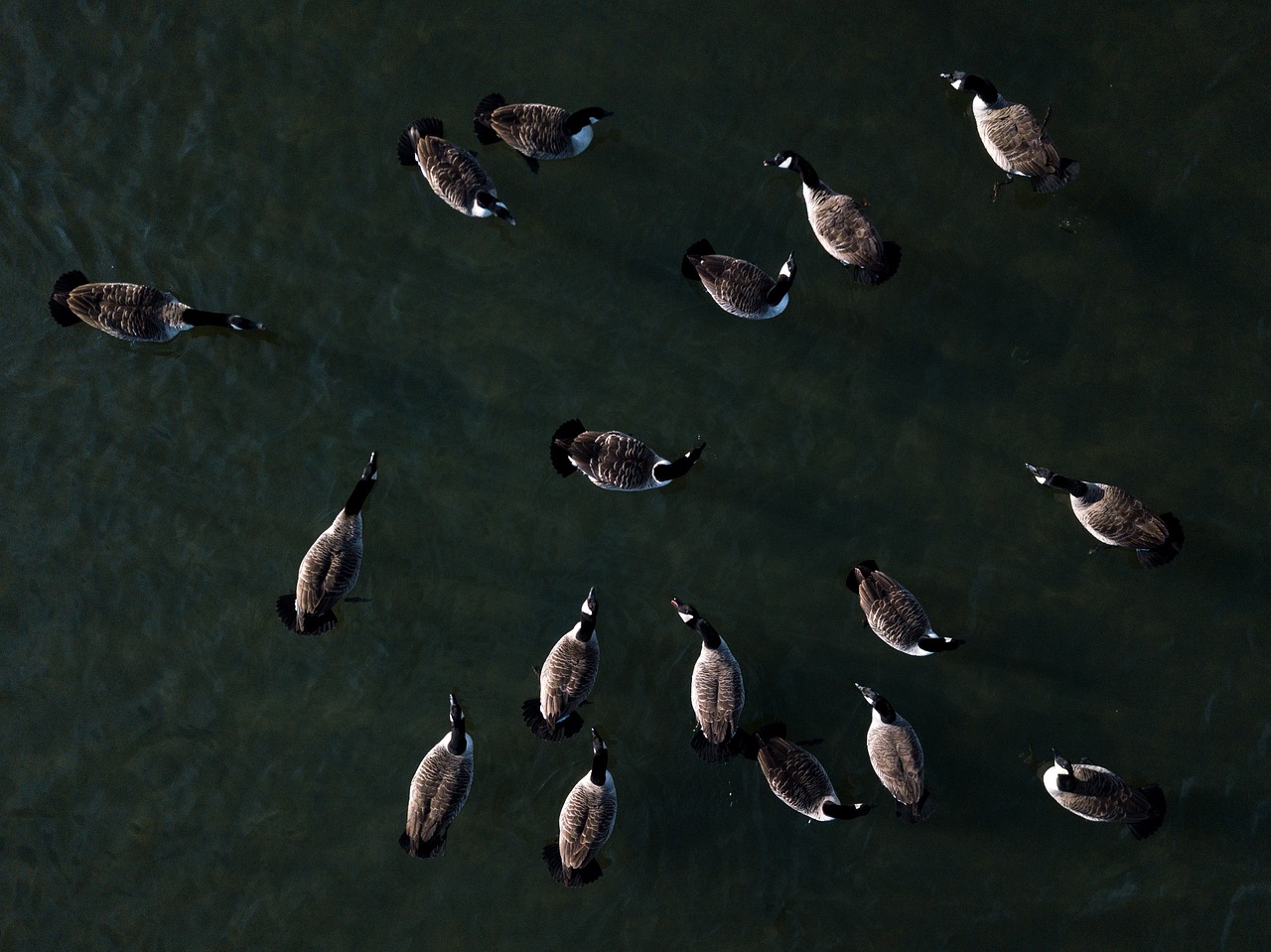
Meta-analyses and systematic reviews now consolidate a broad study base and allow reliable statements about the conditions under which drones trigger behavioral changes and stress reactions in birds.
The central finding is: Birds' reactions to drones are highly species-, situation- and context-dependent.
Breeding status, distance, approach direction, flight altitude and drone type determine whether birds remain vigilant, show alarm behavior or flee.
Recent studies also show that disturbances are not always immediately visible. Physiological stress, increased heart rate or interrupted feeding can occur without a bird immediately taking flight. This is particularly problematic during breeding season or winter, when energy reserves are limited.
Drone flights in Switzerland are only permitted when no humans, wildlife or protected areas are disturbed and applicable aviation and nature conservation regulations are observed.
Which drone flights are particularly problematic
Clear risk factors can be derived from the overall assessment of current research:
- Low distance and low flight altitude significantly increase the probability of flight reactions.
- Direct approach appears more threatening to many species than lateral or steady flyby.
- Noise, speed and size of the drone intensify stress reactions.
- Colonies, roosting sites, reed beds, hedgerows and cliff faces are particularly sensitive areas, as many birds react simultaneously or breeding sites are affected.
Breeding season, winter and energy loss
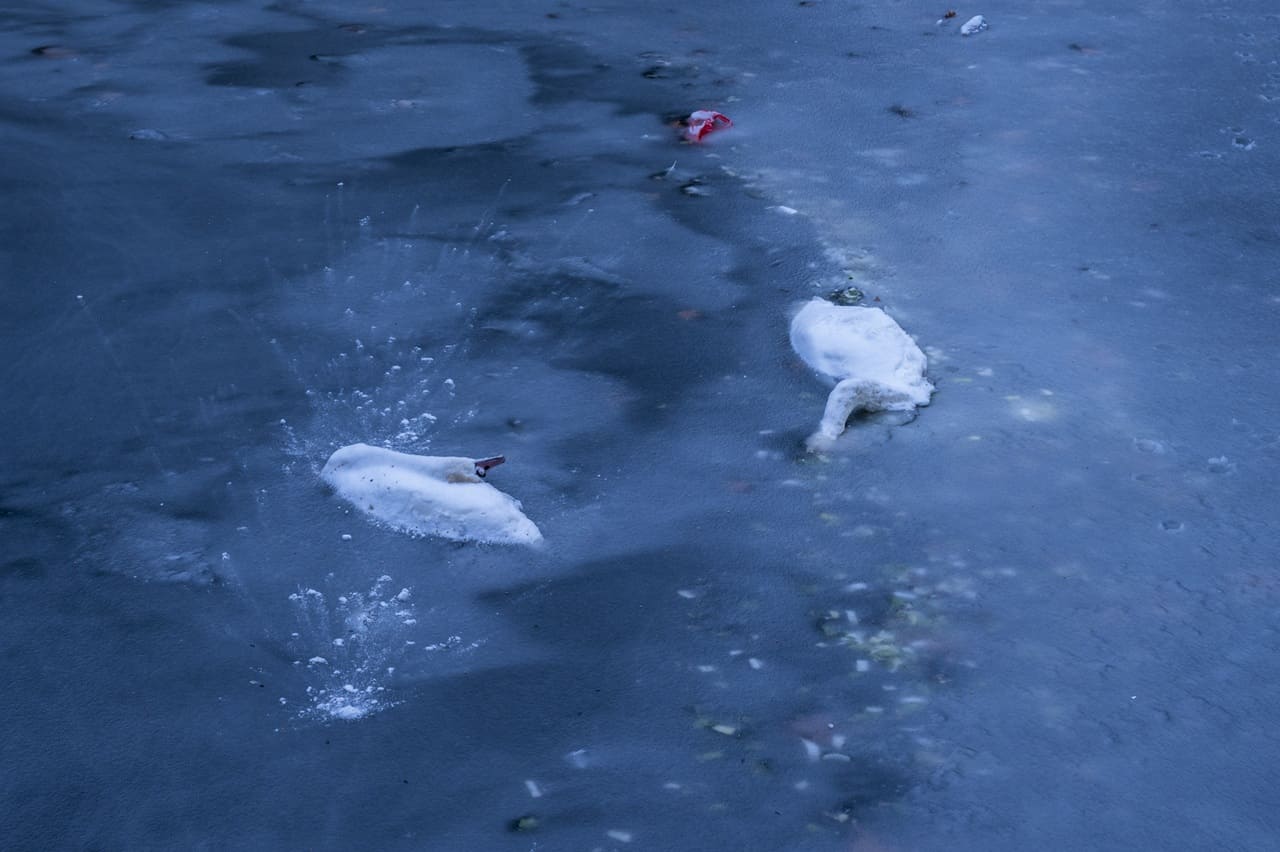
Disturbances are not harmless. Repeated taking flight costs energy, interrupts breeding care or foraging and can lead to loss of clutches. For overwintering waterfowl or roosting populations, frequent disturbances can endanger the survival of individual animals, even if the flight is only brief each time.
Drones, nature photography and research
The current state of research is nuanced. Drones are neither fundamentally unproblematic nor to be categorically demonized. However, they represent considerable disturbance potential that can only be reduced through strict regulations and professional planning.
Some studies show that under controlled conditions and with sufficient distance, certain species react relatively little. Other species, particularly colonial breeders and waterfowl, react significantly more sensitively. The assumption that animals would 'get used to it' is not scientifically established.
Practical rules for minimizing disturbances
These principles are now considered well-established:
- Never fly directly at birds or pursue animals.
- Abort flight immediately when alarm behavior occurs.
- Consistently avoid breeding areas, roosting sites, reed beds and shore zones.
- Fly higher and slower, no abrupt direction changes.
- Do not conduct takeoff and landing near animals.
- If many birds are already visible, the area is unsuitable for drone flights.
What is permitted with drones in Switzerland?
Basic principle:
Drone flights in Switzerland are only permitted when no humans, wildlife or protected areas are disturbed and applicable aviation and nature conservation regulations are observed.
In these areas, drones are fundamentally prohibited:
- Federal hunting ban areas
- Water and migratory bird reserves of national and cantonal importance
- Many nature reserves, moor landscapes, floodplain areas
- Areas with explicit flight bans according to BAZL map
Important for the protection of birds and wildlife:
- Even outside formal protected areas: wildlife may not be disturbed
- Flight reactions, alarm behavior or breeding abandonment legally constitute disturbance
- 'Briefly taking flight' or 'no visible reaction' does not mean the flight was permitted or unproblematic
Particularly sensitive and factually to be avoided:
- Breeding sites, colonies, reed beds, shore zones
- Roosting sites of migratory birds
- Winter habitat of wildlife
Mandatory before every flight:
- Check current drone map of BAZL
- Observe local protection regulations and cantonal rules
- When in doubt: do not fly
A drone flight can be legally permitted and still constitute an inadmissible disturbance of wildlife. Nature conservation law takes legal and ethical precedence over recreational and photography interests.
Sources
- Meta-analysis on drones and birds (149 studies)
A meta-analysis of the impact of drones on birds (2024). Evaluates avian-related drone studies and shows that factors such as distance, speed, breeding status and species characteristics strongly influence flight probability. - Meta-analysis specifically on disturbances to nesting birds
A meta-analysis of disturbance caused by drones on nesting birds (2023). Focus on nest disturbance, including influence of flight altitude and nest characteristics. - Systematic review on drones as disturbance source for wildlife
Mulero-Pázmány et al. (2017), Unmanned aircraft systems as a new source of disturbance for wildlife: A systematic review (PLOS ONE). Clearly shows: reactions depend on both drone characteristics and animal characteristics. - Review on drone disturbances to wildlife (broad, modern)
Afridi (2025), Impact of Drone Disturbances on Wildlife: A Review. Broad review across taxa, useful as overview, also on physiological effects without visible behavior.
Support our work
With your donation you help protect animals and give voice to their concerns.
Donate now →