Indigenous Hunting vs. Hobby Hunting: The Myth of the Primordial Hunter
When today's hobby hunters in Switzerland seek to justify themselves, a familiar narrative often emerges: humans have always been hunters, indigenous peoples do it too, hunting is nature, culture, and an ancient heritage.

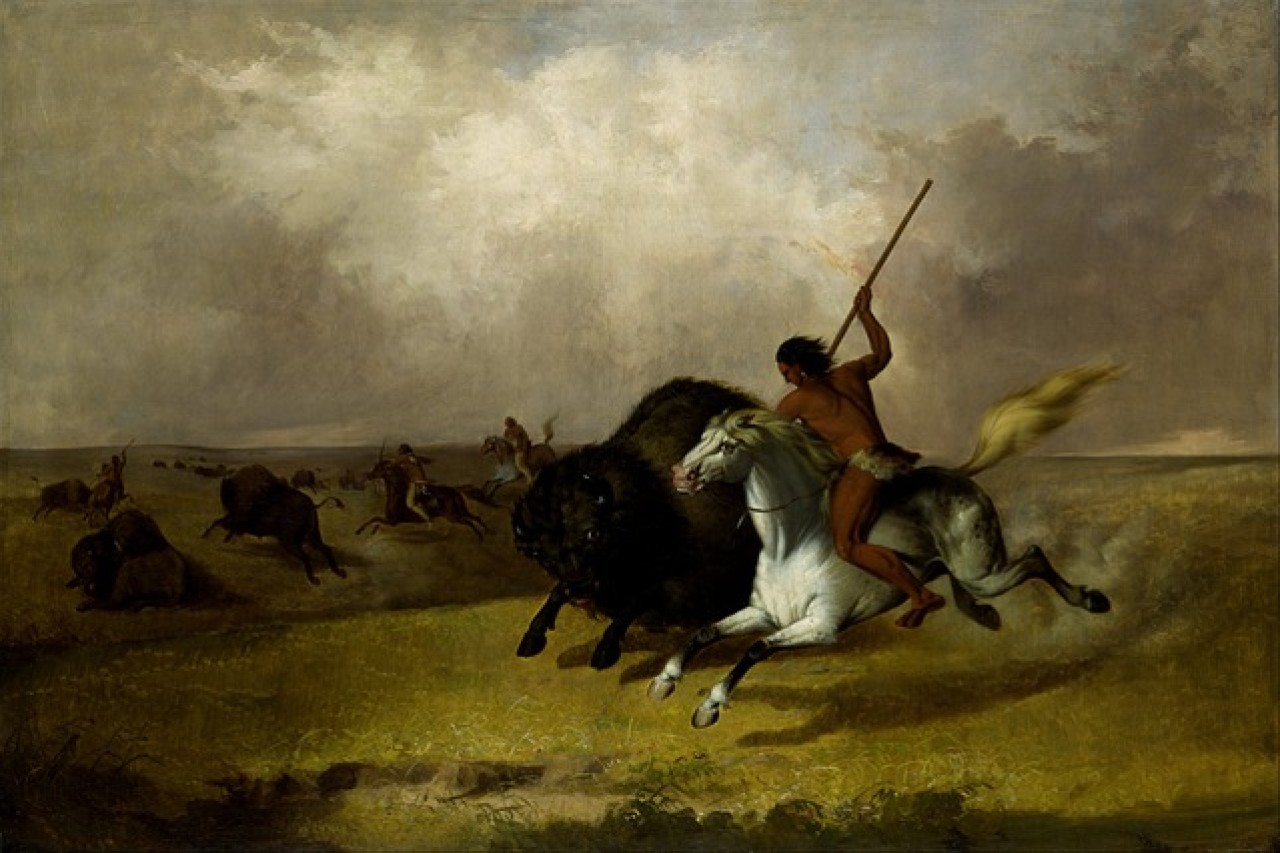
What sounds romantic at first glance barely holds up under closer scrutiny.
Between the hunting practices of Arctic Inuit or First Nations of North and South America and hobby hunting in a country saturated with supermarkets like Switzerland lies an abyss. To obscure this difference is not only dishonest, but instrumentalises indigenous cultures to legitimise a questionable leisure pursuit.
This investigation shows why indigenous hunting practices are part of a dense web of norms of respect, spirituality, and strict social rules — and why Swiss hobby hunting bears little resemblance to this model.
1. Survival here, leisure there
For many indigenous communities in extreme regions, hunting still means: the question of whether there will be enough to eat.
- Hunting secures direct nutrition, often in areas where industrial agriculture is barely possible or imported food remains unaffordable.
- The animal provides everything: food, clothing, tools, fuel, cultural objects.
- Hunting success determines the wellbeing of an entire community — not the contents of a freezer for the next game season.
In Switzerland, the reality looks different:
- We live in a highly industrialised country with year-round availability of plant-based and animal protein from supermarkets, restaurants, and online retailers.
- Hobby hunters generally have other occupations and incomes. Hunting is a supplement, not a means of subsistence.
- Game meat is a luxury product, not an existential necessity. Hobby hunting takes place predominantly in leisure time, framed by clubs, regulars' tables, events, and trophy shows.
Anyone who equates these two worlds ignores the fundamental difference in purpose: survival on the one hand, leisure activity on the other.
2. Worldview: Fellow Beings or “Stock”?
In many indigenous cosmologies, animals are fellow beings, often with their own soul or personality. Hunting is embedded in a comprehensive worldview:
- There are expressions of gratitude toward the animal. The hunter apologizes for the killing and gives thanks for the gift of life.
- As much of the animal as possible is used. Discarding parts is not only wasteful, but disrespectful and spiritually problematic.
- Boasting about hunting success is frowned upon, considered immodest and an invitation to misfortune.
The image of the animal is relational: human and animal stand in a relationship from which rights and obligations arise.
In modern hobby hunting in Europe and Switzerland, a different vocabulary predominates:
- The talk is of “stock,” “cull plan,” “number of animals,” “bag,” “annual hunting quota.”
- Animals are reduced to units in a management system, to objects of hunting “utility.”
- The relationship is flattened into a technically administered resource calculation, interspersed with romanticism and hunting polemics.
Of course, there are also among Swiss hobby hunters individuals who subjectively feel genuine respect for animals. What is decisive, however, is the system that dominates: an animal that is legally and organizationally managed primarily as “wildlife stock” is not on equal footing with an animal embedded as a fellow being in a spiritually permeated world order.
3. Spirituality and Taboos – Not to Be Confused with Hunting Folklore
Indigenous hunting is often linked to rituals, taboos, and spiritual beliefs:
- Who may hunt is strictly regulated. Not everyone who feels like it goes out into the landscape with a weapon.
- What may be hunted is determined by species, season, social status, and spiritual preparation.
- When hunting may take place follows cyclical patterns: reproductive periods, migration movements, ritual calendars.
Violations of taboos are regarded not merely as a social transgression, but as a danger to the entire community. They can symbolically bring disease, misfortune, and the absence of game. This creates a powerful corrective that points beyond the individual ego.
In contrast stand hunting customs in Central Europe:
- Hunting horn signals, the last morsel, laying out the bag, the sprig on the hat.
- Hubertus masses, hunters’ tall tales, club evenings.
These elements are folklore, tradition, identity markers. They may mean a great deal to those involved, but they do not replace a deeply rooted cosmological order in which the animal holds its own moral position.
It is a category error to present this hunting folklore as equivalent to the spiritually grounded systems of respect and taboo found in indigenous societies.
4. Social Control versus the Hunting Comfort Zone
Indigenous hunting systems are strongly socially embedded:
- The hunter's success is the group's success. Sharing is an obligation, not a personal choice.
- Those who are greedy, wasteful, or disrespectful risk exclusion, mistrust, and spiritual sanction.
- Hunting knowledge is passed on responsibly — not as an entry ticket into an exclusive scene, but as collective survival knowledge.
A different pattern dominates in Swiss hobby hunting:
- Hunting clubs and associations form their own subculture with a strong internal cohesion.
- Criticism from outside is frequently deflected, and critics are readily dismissed as ignorant, urban, or out of touch with reality.
- Internal failings — such as trophy culture, problematic shooting habits, inadequate tracking of wounded game, or conflicts with non-hunters — tend to be relativised within the community rather than consistently addressed as problems.
Here too: exceptions exist. But the system rewards conformity and loyalty to the group far more than radical self-criticism.
This is the opposite of a strict taboo system that consistently ties hunting practice to the interests of the community and the integrity of wildlife.
5. Abuse of a Comparison: Indigenous Cultures as a Fig Leaf
When European hobby hunters argue by invoking the Inuit or “Native Americans,” this carries a problematic dimension:
- Suppression of Colonial History
Indigenous communities were violently oppressed, disenfranchised, Christianised, and stripped of their livelihoods over centuries. Their forms of hunting have endured despite massive destruction, or have been painfully reoriented. To ignore this historical violence while simultaneously appropriating indigenous hunting symbolically in order to legitimise one's own recreational hunting is, at the very least, deeply insensitive. - Ignoring Ecological Differences
High population density, intensive agriculture, traffic, tourism, and recreational pressure in Switzerland create an entirely different context from sparsely populated Arctic or boreal regions.
What may be proportionate there is simply not transferable here. - Overlooking the Alternatives
Indigenous hunters frequently have no or hardly any realistic alternatives to hunting. Swiss hobby hunters have supermarkets, plant-based diets, and shops offering every conceivable source of protein. Anyone who nonetheless sells hunting as “necessary food production” is arguing in defiance of reality.
6. What We Could Actually Learn
What is striking is that these very indigenous traditions do offer something worth learning. However, not the message “hunting is always good,” but rather:
- To understand animals as fellow beings, not as interchangeable target objects.
- To go beyond utilization and emphasize responsibility, rather than focusing solely on territories and kill quotas.
- To accept strict, binding moral boundaries: just because something is technically possible and legally permitted does not make it legitimate.
- To place humility at the center, rather than trophies and records.
Applied to Switzerland, this would mean:
- A radical reduction of the recreational and trophy-oriented dimension of hunting.
- A critical questioning of hobby hunting in light of modern nutrition, the climate crisis, and the biodiversity crisis.
- An animal ethics in which the central question is whether the killing of wild animals for recreational motives can be justified at all.
7. An End to the Hunting Myth
In European hunting discourse, references to indigenous hunters frequently serve to cultivate a romanticized self-image: the rugged, nature-close individual appearing in an ostensibly primordial role.
In reality, however, Swiss hobby hunting is:
- embedded in affluence and abundance
- dependent on modern weapons technology and infrastructure
- linked to club culture, status, trophy culture, and recreational logic
It is therefore the very opposite of an existential subsistence hunt embedded in strict norms of respect.
Anyone who genuinely wishes to learn from indigenous cultures should not use their hunting as an alibi, but rather take their fundamental attitude seriously: the acknowledgment of the vulnerability of animals and nature, the limitation of one’s own claims, and the awareness that killing always remains a moral state of exception — never a harmless leisure activity with a rifle.
HOBBY HUNTER RADAR
On the trail of concealed animal welfare offenses, poaching, and/or criminal activity? Report suspected cases to us! Help with the great Hobby Hunter Radar.