Austria: Animal welfare means a ban on supplementary feeding
The hunting community’s feigned “love of animals” is nothing but a con: why are only those wild animals in Austria fed that provide trophies, while all others are not? Anyone who truly loves animals feeds deer and foxes alike. In reality, recreational hunters do not see roe deer and red deer as individual animals, but as walking trophies.


The hunting community’s feigned “love of animals” is nothing but a con: why are only those wild animals in Austria fed that provide trophies, while all others are not? Anyone who truly loves animals feeds deer and foxes alike. In reality, recreational hunters do not see roe deer and red deer as individual animals, but as walking trophies.
In winter, all wildlife faces hardship — that is the price of a free life in nature. Whether beaver, otter, squirrel, raccoon, wild boar, badger, mouse, marten, jay, and so on, all must search for scarce food or burrow through the snow. Roe deer and red deer hold no special position in this regard. Hunters continually pride themselves on their love of animals because they feed roe deer and red deer. But why only roe deer and red deer? When it comes to hardship, it affects far more species equally! The answer is revealing: roe deer and red deer carry trophies. And that is what hunters are really about: breeding the largest trophy animals possible. With no regard for ecology, forests, or animal welfare. Because of the targeted feeding of these two species, their population densities have increased to the point where it not only causes significant forest damage, but has already become an animal welfare problem. The animals suffer from stress, from the forests they themselves have damaged, and from increasing disease and parasites. As a result, roe deer and red deer are becoming semi-tame animals, losing their freedom and independence. They become dependent on humans and in Austria are often kept in winter enclosures for eight months or more per year. Yet all native animals in our latitudes are adapted to winter and perfectly capable of surviving it. It is simply that the shortage of food means only a proportion of animals reproduce — a natural form of birth control that hunters' feeding practices are deliberately designed to override.
The answer is clear: no feeding of wild animals, except in genuine emergency situations — when several metres of fresh snow fall over the course of days, or a prolonged hard frost freezes the ground solid. It is encouraging that the Austrian Federal Forests and some authorities are moving in this direction. However, the transition from full winter feeding to its discontinuation should be carried out gradually, over a period of several years.
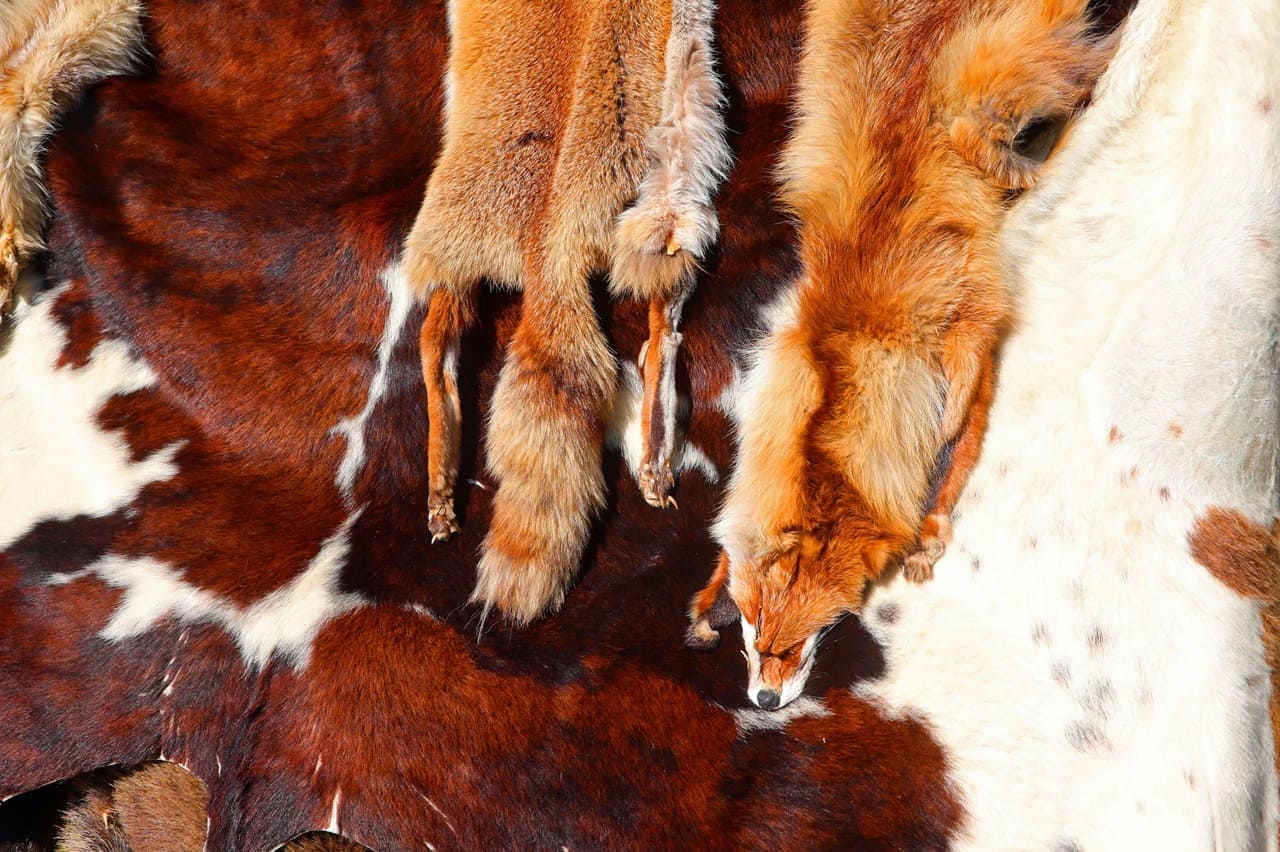
Foxes are not only left unfed by hunters in winter — they are pursued obsessively all year round, day and night. In the 2017/18 hunting year, 68,000 foxes were killed in Austria — that's even 7,000 more than deer. This proves that hunters' feeding programmes are not about selfless love of animals. Anyone who truly cares about animals provides for deer and foxes alike. In reality, recreational hunters do not see roe deer and red deer as individual animals, but as walking trophies. This becomes clear at the latest from the term “piece” (‘Stück’) they use for these animals. Since an animal is not a piece but a living being, recreational hunters can only be referring to the antlers. The crocodile tears shed over deer threatened by culling are feigned and pure manipulation. When roe deer and red deer are fed in winter, they reproduce prolifically — and then in autumn they have to be shot en masse. Hunters queue up for the privilege and pay good money for it. That is the other side of the feeding coin, and it is clearly an animal welfare problem.
More on the subject of recreational hunting: In our dossiers on the criticism of recreational hunting gather fact-checks, analyses and background reports. What the research says about this is shown by Hunting fact-checked: the state of research.
The position of IG Wild beim Wild: IG Wild beim Wild rejects recreational hunting. Our model is the canton of Geneva, which has managed without recreational hunting since 1974: without hunting seasons, without hunting dogs, without driven hunts, without high seats, without the animal cruelty and crime that go hand in hand with hunting season elsewhere. What has worked there for over fifty years disproves every position paper by JagdSchweiz. An association that bases its policy on claims it refutes in its own documents is not a professional organisation, but a factory for misinformation.