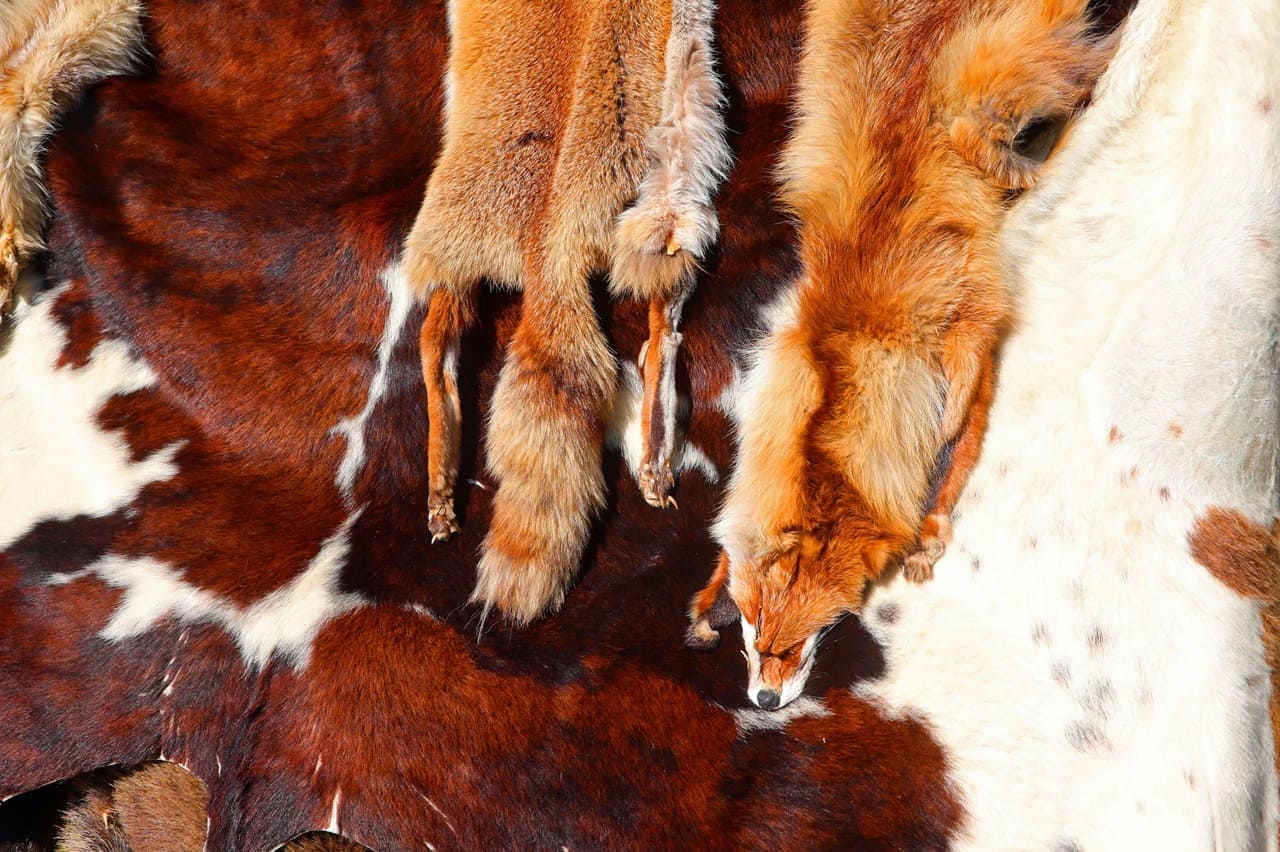
Import ban on fur products demanded
The National Council is calling for an import ban on fur products produced through animal cruelty in Switzerland. The motion was adopted with 144 votes.


Switzerland is knowingly and willingly outsourcing the animal cruelty.
National Council votes in favour of import ban
The majority of the National Council shares this view. Motion 19.4425, submitted by National Councillor Matthias Aebischer (SP BE), calls on the Federal Council to impose an import ban on fur products produced through animal cruelty.
The motion was approved by the lower chamber on 13 December 2021 with 144 votes in favour. Nothing has been definitively decided before deliberation in the Council of States. Nevertheless, it is an extremely welcome vote by the National Council in favour of animal welfare and against the import of products derived from animal suffering. And it is a clear signal to the Council of States that, especially for a country that likes to see itself as a pioneer in animal welfare, the import of such products can no longer be justified on ethical and moral grounds.
No fur production that complies with animal welfare standards
Such imports of products rooted in animal suffering cannot be justified by reference to a poorly functioning declaration requirement, potential incompatibility with trade agreements (WTO) and free trade agreements, and certainly not by possible enforcement difficulties that — as the Federal Council fears — would require extremely costly on-site inspections. On this point: there is no form of fur trapping that complies with animal welfare standards. And there is no fur from species-appropriate husbandry. Every fur animal farm on an industrial scale constitutes animal cruelty. Where wild animals spend a short life in cramped wire mesh cages, only to be killed in many cases in the most brutal manner — if they are indeed dead by the time their fur is pulled over their ears — on-site inspections would seem entirely superfluous.
Fur farms as breeding grounds for zoonoses
Fur farms are potential breeding grounds for zoonoses and pose risks to human health. An expert report by FAO, OIE and WHO on SARS-CoV-2 concluded that fur farms carry a high risk of virus introduction and spread. The mass culling of millions of minks in Denmark last winter clearly demonstrated this.
More and more countries and cities are banning fur farms or the production of fur products, or are enacting complete sales bans. Yet Switzerland – the country whose «lstrictest animal welfare law in the world» is so often cited – has remained a latecomer and has refrained from taking any steps. This despite the fact that similar bans on cat, dog and seal fur are already in force.strictest animal welfare law in the world – has remained a latecomer and has refrained from taking any steps. This despite the fact that similar bans on cat, dog and seal fur are already in force.
Motion 19.4425: Import ban on fur products produced through animal cruelty https://www.parlament.ch/de/ratsbetrieb/suche-curia-vista/geschaeft?AffairId=20194425
More on the subject of recreational hunting: In our dossiers on the criticism of recreational hunting gather fact-checks, analyses and background reports. What the research says about this is shown by Hunting fact-checked: the state of research.
The position of IG Wild beim Wild: IG Wild beim Wild rejects recreational hunting. Our model is the canton of Geneva, which has managed without recreational hunting since 1974: without hunting seasons, without hunting dogs, without driven hunts, without high seats, without the animal cruelty and crime that go hand in hand with hunting season elsewhere. What has worked there for over fifty years disproves every position paper by JagdSchweiz. An association that bases its policy on claims it refutes in its own documents is not a professional organisation, but a factory for misinformation.