Iceland: Whaling could soon be banned
Whaling in Iceland could be banned within two years. Demand for whale meat is steadily declining.


According to Iceland's fisheries minister, whaling in Iceland could be banned within two years due to declining demand.
Iceland's current quota — which expires in 2023 — permits the annual hunting of 217 minke whales and 209 fin whales, even though the latter is an endangered species.
On 4 February, Svandis Svavarsdóttir, the fisheries minister, wrote in the newspaper Morgunblaðið:
«Why should Iceland take the risk of continuing whaling, which has brought no economic gain, in order to sell a product for which there is barely any demand?»
Activists welcome the change
Iceland is one of the few countries in the world — alongside Norway and Japan — that commercially hunts whales despite the international United Nations ban. When Japan, the largest market for whale meat, lifted its 30-year ban on commercial whaling in 2019, the profitability of Icelandic whaling dropped dramatically.
Animal welfare advocates and climate campaigners are welcoming this change. Vanessa Williams-Grey of the British charity Whale and Dolphin Conservation said: «Icelandic whalers have killed hundreds of whales in recent years, even though domestic demand is almost zero and interest from tourists and the Japanese market is declining.»
She added: «The killing of fin whales, an endangered species and the second largest creature on our planet, is nothing less than ecocide, especially when you consider the vital role these gentle giants play in the fight against climate change.»
Whales are key to the ocean ecosystem
Whales, particularly baleen whales and sperm whales, store carbon in their bodies and play an important role in shaping the ocean ecosystem.
A 2010 scientific study found that whales, before industrial whaling, caused between 190,000 and 1.9 million tonnes of carbon to sink to the ocean floor each year, equivalent to the annual emissions of 40,000 to 410,000 cars.
Whaling in retreat
Under the United Nations International Whaling Commission (IWC), only subsistence whaling is permitted where it is considered an indigenous activity, as is the case in Canada, the United States, Denmark, and Russia.
Iceland has been a member of the IWC since its founding in 1949. However, since the international whaling moratorium of 1986, Icelandic whalers have hunted more than 1,700 whales.
In 2018, Icelandic whalers hunted and killed a blue whale. Although the current quota period, which began in 2019 and ends in 2023, permitted the legal hunting of more than 2,000 whales, only one whale was killed during this period – a minke whale in 2021.
In 2020, IP-Utgerd, one of the two main Icelandic licence holders, ceased whaling operations entirely.
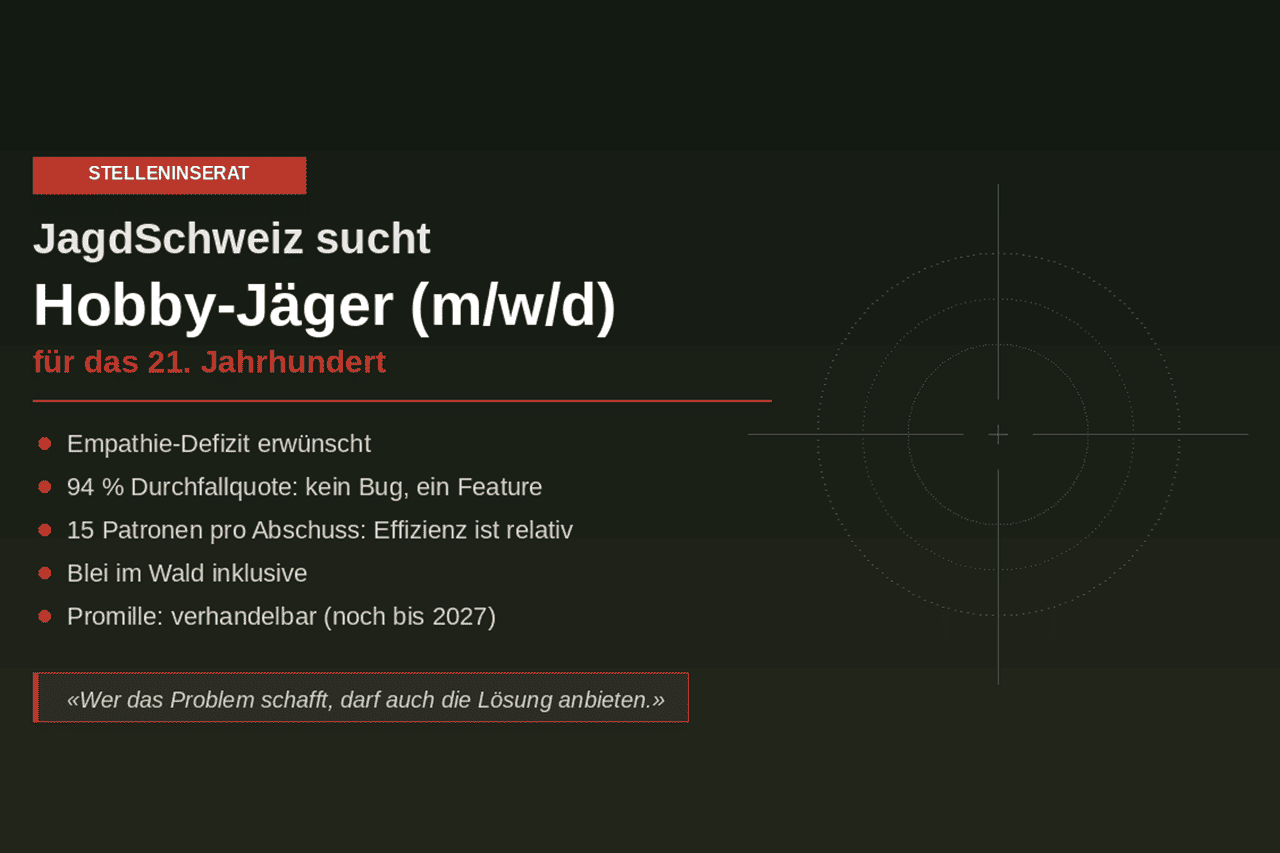
More on the subject of recreational hunting: In the dossier The Role and Criticism of Recreational Hunters we shed light on the training, power and self-image of recreational hunters. What the research says about this is shown by Hunting fact-checked: the state of research.
The position of IG Wild beim Wild: IG Wild beim Wild rejects recreational hunting. Our model is the canton of Geneva, which has managed without recreational hunting since 1974: without hunting seasons, without hunting dogs, without driven hunts, without high seats, without the animal cruelty and crime that go hand in hand with hunting season elsewhere. What has worked there for over fifty years disproves every position paper by JagdSchweiz. An association that bases its policy on claims it refutes in its own documents is not a professional organisation, but a factory for misinformation.