Hide hunting: Waiting, Technology and Risks
Hide hunting is one of the most common forms of hunting in Central Europe. The hunter waits at a fixed location, usually on a raised hide or observation tower, until a wild animal comes within shooting range. This form of hunting is often portrayed as particularly controlled and animal welfare-friendly. However, a closer examination reveals a more differentiated picture.

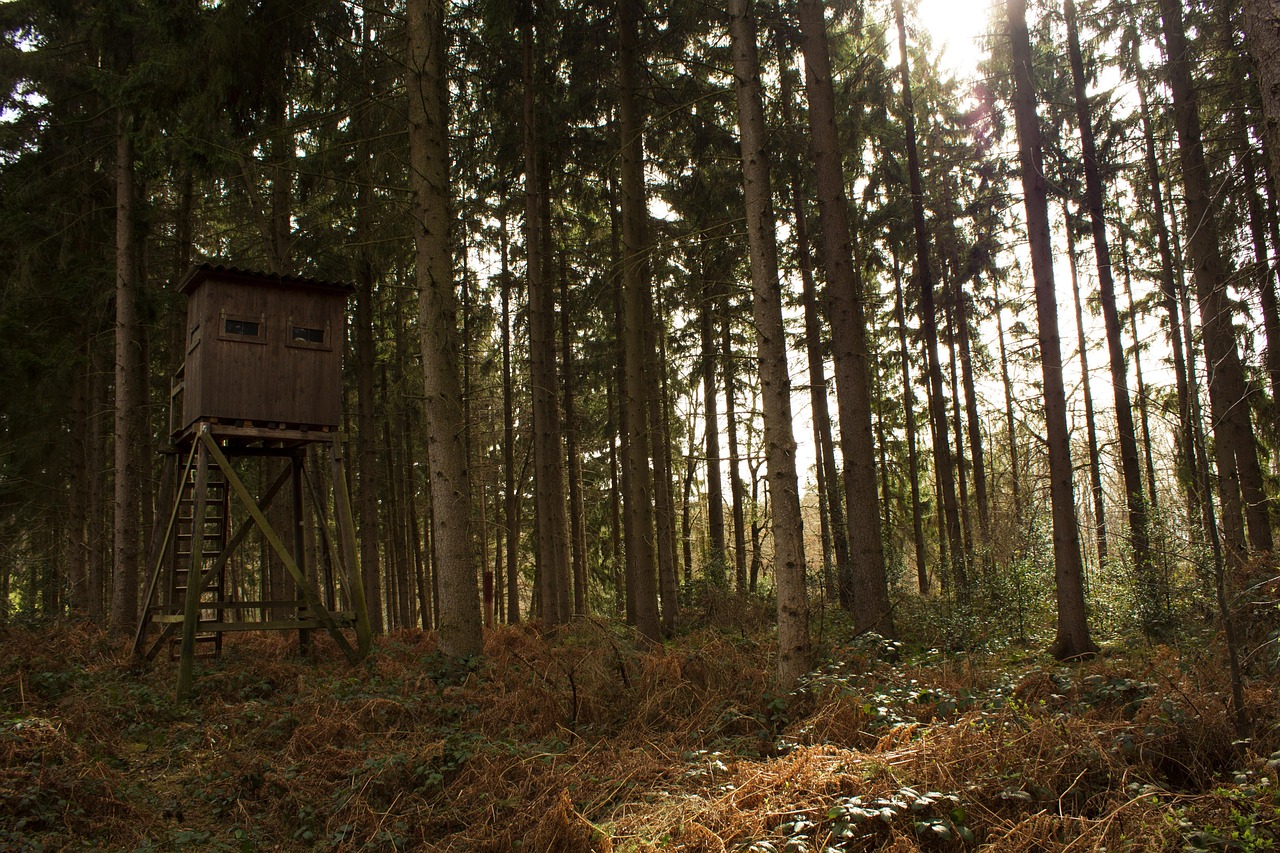
In hunting communication it is regarded as calm and controlled. But this very calmness can be deceptive: hide hunting is often heavily technologized, it frequently takes place at dusk and night, and it is based on a system of raised hides that has itself become a problem in many places.
1. How hide hunting works in practice
Typical is the hide during dusk. The hunting person sometimes sits motionless for hours, observing trails, clearings, forest edges or feeding stations and then decides on taking the shot. Proponents argue: there is more time for identification, safe backstop and a precise shot. This exact point also appears in animal welfare assessments, because risk factors increase significantly during driven hunts.
Important however: 'More time' does not mean 'no errors'. Hide hunting often happens under conditions that promote errors.
2. Dusk, moonlight, fog: When 'calm' is not 'safe'
Hide hunting is frequently practiced when wild animals are active, i.e. at dusk and night. These very lighting conditions increase the danger of poor hits. The STS report explicitly mentions shots in moonlight, at dusk or in fog as factors that increase the risk of wounding shots.
Additionally, weather and wind conditions can also affect shooting accuracy. Crucially: These are not exceptional conditions, but typical stalking conditions.
3. Grazing shots, tracking wounded game and the reality behind the ideal
Hunting narratives emphasize the 'instantly fatal shot'. In reality, there are injuries, grazing shots and wounded game tracking.The STS report describes that not only lack of practice, but also overconfidence, misplaced ambition, age-related factors and external circumstances can contribute to poor hits.
For wildlife this means: flight with injuries, stress, pain, often only later discovery, or no discovery at all. Stalking is less hectic compared to driven hunts, but it is by no means automatically 'animal welfare compliant'.
4. High seats as infrastructure: from plank to hunting lodge
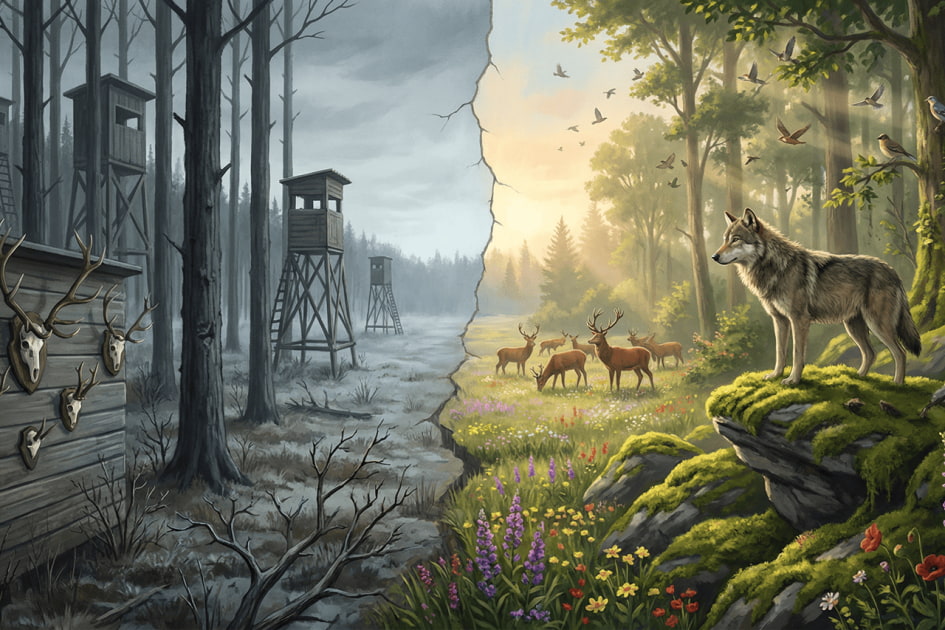
Stalking is hardly conceivable without high seats. wildbeimwild.com describes that according to IG Wild beim Wild research there are 'all types of high seats', from simple planks to elaborate constructions, including camouflage nets, mobile setup variants, tree ladders for extended stalking and hunting lodges with lying areas and additional equipment.
This shows: High seats are not merely 'aids', but a veritable furnishing of the landscape. It is precisely this constant presence that raises questions: Who authorizes them? Who controls them? Who is liable?
5. Illegal high seats: When hunting practices circumvent construction and protection regulations
A central point from IG Wild beim Wild contributions is the statement that in Switzerland 'hundreds of unauthorized high seats' stand in forests and landscapes and that municipalities, cantons or the federal government 'only rarely' concern themselves with building laws and regulations.
This is highly relevant for a stalking dossier because it breaks the myth of perfectly regulated hunting practice. When the infrastructure already operates in a grey area, every debate about ethics and animal welfare becomes additionally burdened. It is then not only about killing, but also about:
- Rule of law in the forest
- Public use of recreational spaces
- Landscape and natural areas as 'hunting installation sites'
6. Dangers to the public: rotten, unmarked, uncontrolled
In another contribution by IG Wild beim Wild, criticism is made that there are countless illegal and unmarked high seats, some so rotten that they can pose a danger.
This is a strong argument for a clear demand for:
- Permit requirements and consistent enforcement
- Regular safety inspections
- Clear identification (owner, date, hunting area)
- Mandatory removal when not in use
Stand hunting is thus not only a question of animal suffering, but also of safety in public spaces.
7. Ethics: Stand hunting as 'ambush' and the question of fairness
Another line of discussion describes stand hunting as particularly insidious, because the hunting person sits elevated, camouflaged and motionless. Regardless of whether one uses the word 'insidious': The core statement remains. It's about an asymmetrical relationship. Wild animals are not supposed to notice that danger is present. This is precisely why stand hunting is sometimes classified as 'less stressful', because the animal does not recognize the threat early.
This leads to an ethical dilemma:
- Less flight stress does not automatically mean less suffering
- Killing remains the goal
- Technology and camouflage shift inhibition thresholds
8. Technology trend: From observation to efficiency
Stand hunting is today often the area where technology has the strongest impact. Thermal imaging, night vision and silencers are not simply 'safety', but also efficiency enhancement. When recreational hunting becomes ever easier, the central question becomes more urgent: Who sets limits, who controls, and who provides independent data on missed shots and wounded game tracking?
The STS report also points to structural problems in supervision when hunting oversight is not independently governmental, but comes from the system itself.
9. What this dossier establishes
Stand hunting is not the 'harmless form of hunting' it is often sold as. It is:
- A form of hunting with a high technology component
- Frequently conducted in risky lighting conditions
- Dependent on elevated blind infrastructure that is partly illegal or uncontrolled
- Not free from grazing shots and wounded game tracking
- Socially relevant because it disfigures the forest as a recreational space with hunting installations
10. Demands and alternatives
If stand hunting takes place at all, then at minimum the following should apply:
- Priority for non-lethal solutions: prevention, habitat, monitoring
- Consistent permitting and control of all elevated blinds
- Clear identification and liability
- Independent recording of grazing shots and wounded game tracking
- Transparency about technology and night hunting
More on the subject of recreational hunting: In the dossier The Role and Criticism of Recreational Hunters we shed light on the training, power and self-image of recreational hunters. What the research says about this is shown by Hunting fact-checked: the state of research.
The position of IG Wild beim Wild: IG Wild beim Wild rejects recreational hunting. Our model is the canton of Geneva, which has managed without recreational hunting since 1974: without hunting seasons, without hunting dogs, without driven hunts, without high seats, without the animal cruelty and crime that go hand in hand with hunting season elsewhere. What has worked there for over fifty years disproves every position paper by JagdSchweiz. An association that bases its policy on claims it refutes in its own documents is not a professional organisation, but a factory for misinformation.
Support our work
With your donation you help protect animals and give voice to their concerns.
Donate now →