Hunting crisis in Europe: FACE fights for shots
FACE workshop in Rome: How Europe's hunting lobby is salvaging its image — and why Switzerland remains in the shadows.


On 4 November 2025, the leadership of the European hunting lobby convened in Rome.
The invitation came from the Italian Federcaccia; seated at the table was the directive committee of FACE, the European umbrella organisation of hunting associations. The subject of the workshop: how to halt the dramatic decline in hunter numbers across Europe, and what other countries can learn from the German “success model”.
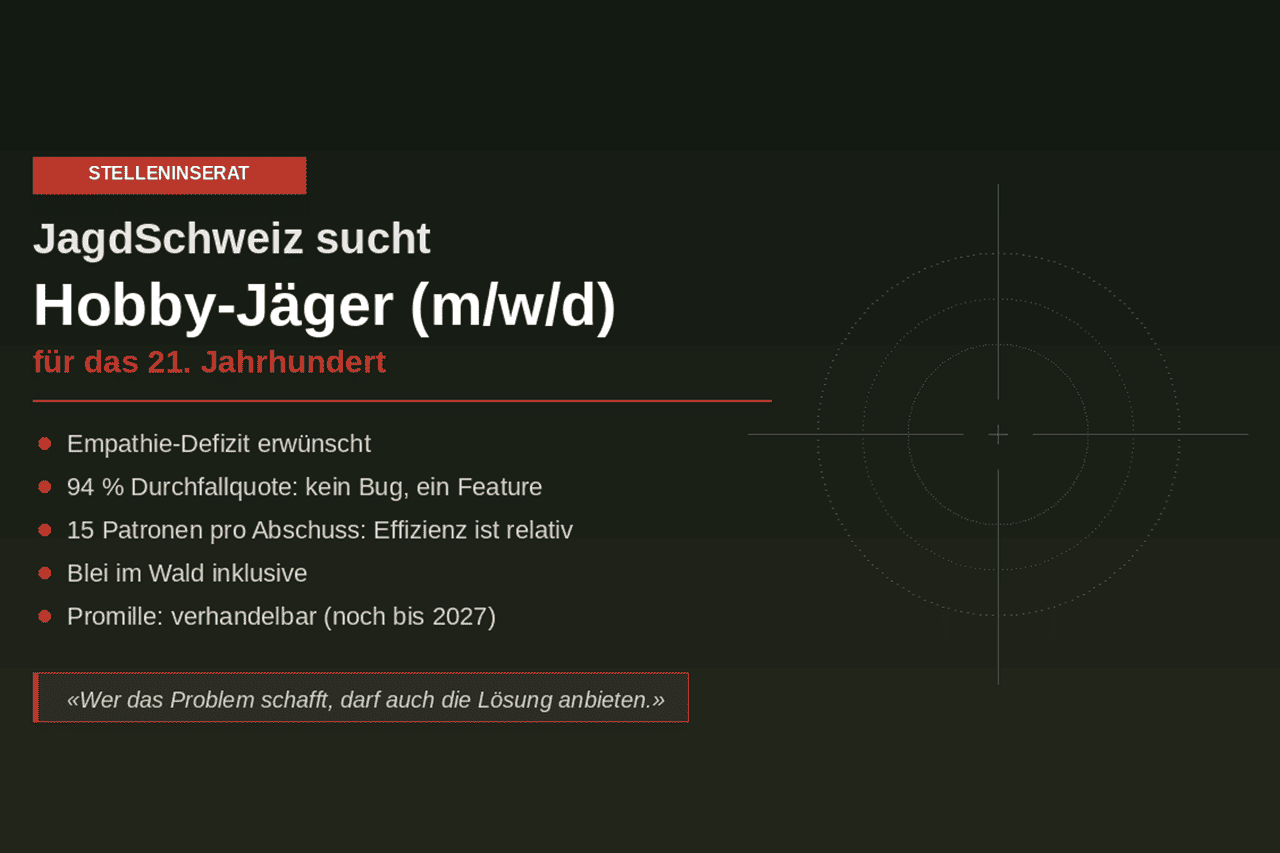
What is striking is not only what was discussed, but also who is virtually absent from the official communications: Switzerland. Yet JagdSchweiz is not merely an ordinary member of FACE — through its militant executive director David Clavadetscher, it is even represented in the innermost leadership body.
FACE in Brussels: The voice of recreational hunters — and a powerful lobby
FACE, the “European Federation for Hunting and Conservation”, describes itself as the voice of approximately seven million recreational hunters across 37 European countries. The Brussels-based organisation is registered as an NGO in the EU Transparency Register and works explicitly to translate hunting interests into European legislation.
The FACE board consists of the president, eleven vice-presidents, the secretary general and the treasurer. Serving as president since 2024 is the Dutchman Laurens Hoedemaker. The Treasurer General is a Swiss national: David Clavadetscher, who simultaneously serves as executive director of JagdSchweiz.
JagdSchweiz itself describes itself as the umbrella association of Swiss hunters with around 30’000 members, and emphasises its membership of both FACE and the international hunting council CIC.
This makes it clear: Switzerland, as a non-EU country, sits at the heart of the European hunting lobby. When FACE discusses in Rome how to "save" recreational hunting in Europe, it always indirectly concerns Swiss hunting policy as well.
The Workshop in Rome: Germany as a Model Hunting Country
Reports from Federcaccia and hunting-friendly media paint a clear picture. In Rome, representatives of FACE member countries gathered to analyze "the trend of declining hunter numbers" — with one notable exception: Germany.
The German presenter was Helmut Dammann-Tamke, President of the German Hunters' Association (DJV) and simultaneously Vice-President of FACE for Germany. He presented data showing that the number of active recreational hunters in Germany had risen by approximately 41 percent over the past 30 years.
He cited the following as key success factors at the workshop:
- a high density of huntable wildlife species, particularly ungulates
- the close coupling of land ownership and hunting rights, whereby forest owners and farmers are organized within hunting associations
- the recognition of many hunting organizations as “environmental associations,” which grants them political weight in planning and licensing procedures
- a communications model that portrays hunters as producers of “ethical” wild game products and as “climate protectors,” on the grounds that they allegedly save forests — and thus the climate — through culling.
In addition, two trends are celebrated in particular: the proportion of female recreational hunters in Germany has risen significantly over the past ten years, the hunting community is getting younger, and the share of urban recreational hunters is increasing. The presenters noted that the same pattern can be observed in other countries as well, even though overall numbers there are declining.
The Hunting Crisis as an Image Problem — Not an Ethical or Ecological Question
Notably, the hunting lobby in Rome framed its own “crisis discourse” in a particular way. The decline in hunter numbers is described almost exclusively as a threat to the “future of hunting,” not as an opportunity for wildlife or biodiversity.
The proposed remedies are accordingly:
- improved communications
- emphasis on climate protection, species management, and “invasive species control”
- intensified lobbying in Brussels, particularly around migratory bird hunting and “small” huntable species
- reactivation of FACEMED, the Mediterranean FACE platform, to coordinate hunting policy vis-à-vis the European Parliament collectively.
The message: not to shoot less, but to explain more thoroughly why shooting is allegedly nature conservation. The fact that independent studies have documented a general decline in the hunting community across many European countries for years, while simultaneously identifying massive problems for ground-nesting birds, songbirds and small mammals, is at best mentioned in passing in this setting.
Rather than critically questioning the role of recreational hunting in the biodiversity crisis, FACE treats the decline of recreational hunters as a communications and recruitment problem. This is precisely where the criticism lies: the concern is the future of a leisure lobby, not the future of wildlife.
The invisible Switzerland: a member of the board, but not a topic in Rome
Those who read the reports from Rome repeatedly encounter Germany and Italy, Mediterranean countries and the hunting of migratory birds. Switzerland, by contrast, simply does not appear in the official texts of Federcaccia and All4shooters.
This is noteworthy for several reasons:
- JagdSchweiz is a member of FACE
The Swiss umbrella association is formally integrated into the structures and openly emphasises this itself. - The Treasurer of FACE comes from Switzerland
David Clavadetscher, Managing Director of JagdSchweiz, was elected Treasurer General of FACE in 2021 and continues to hold this position to this day. - Swiss hunting associations tell an almost identical success story to Germany
In Swiss media, Clavadetscher himself points to rising numbers of female hunters and young people, as well as growing demand from urban areas — practically the same narrative celebrated in Rome as the “German model”.
Despite these close interconnections, Switzerland remains unnamed in the public communications surrounding the FACE workshop.
Possible reasons why Switzerland remains in the shadows
There is no official explanation for why Switzerland does not feature in the reporting on the workshop in Rome. Nevertheless, several plausible explanations can be discussed:
1. Focus on EU policy, not on third countries
FACE explicitly understands itself as a lobbying organisation that secures the influence of recreational hunters in EU legislative processes.
The debates in Rome revolve around:
- Influence on the EU Parliament and the Commission
- coordinated action on the hunting of migratory and small birds
- Mediterranean hunting policy through FACEMED
Switzerland is not an EU member. For external communications with Brussels, it is therefore strategically more useful to reference EU member states, particularly major net contributors such as Germany, Italy, France, and Spain.
2. Political Sensitivity of Swiss Hunting
In Switzerland, hunting is a politically contentious issue, clearly evidenced by the 2020 rejection of the revised Hunting Act, which failed primarily due to planned relaxations on preventive wolf culls.
An overly aggressive appearance by JagdSchweiz as part of an assertively lobbying EU hunting bloc — fighting in Brussels for increased culling of predators and migratory birds — would be politically sensitive domestically. For Swiss hunting associations, it is far more convenient to present themselves nationally as a moderate “nature conservation partner,” while supporting hard-line lobbying efforts at the European level through FACE.
3. Image Management: Germany More Frequently Markets Itself as a “Green Hunting Nation”
The narrative presented in Rome works particularly well with the example of Germany: more recreational hunters despite the climate movement, strong integration of hunting into forestry and land policy, recognition as an environmental association — and all of this in a country where the Greens have held governmental responsibility.
Switzerland, with its cantonally fragmented hunting practices, the debate over wildlife sanctuaries, and the conflicts surrounding wolves, lynx, and ibex, fits less neatly into this polished success story. For the communications strategy of FACE and Federcaccia, it is simpler to simply leave Switzerland out of the picture.
What Does This Mean for Switzerland?
For wildlife, it makes no difference whether the recreational hunter comes from Bavaria, Tuscany, or the Bernese Oberland. What matters is which structures legitimise recreational hunting, how much is being shot, and how strongly hunting associations influence political decisions.
The facts:
- JagdSchweiz is an integral part of FACE and thereby supports a lobbying organisation that systematically works to politically entrench and expand the culling of wildlife across Europe.
- The Swiss hunting leadership does not sit on the margins in Brussels — it sits on the board of FACE.
- In national communications, however, this role is rarely made transparent. Instead, the emphasis is placed on “biodiversity,” “nature conservation,” and “societal mandate.”
The workshop in Rome illustrates how the hunting lobby responds to its own legitimacy crisis: with more lobbying, more PR, and a green veneer — not with an honest debate about ethics, animal suffering, or alternatives to recreational hunting.
The fact that Switzerland remains invisible in the public narrative does not diminish the problem. On the contrary: it makes it harder to have an honest discussion about which European hunting policies Swiss associations are endorsing through FACE — from the shooting of migratory birds in the Mediterranean to new attacks on the protected status of predators.
For a serious policy debate on hunting in Switzerland, transparency would be the bare minimum:
- Full disclosure of all mandates and functions held by Swiss hunting officials within FACE and related bodies
- Clear positioning on issues that FACE is actively advancing in Brussels (migratory bird hunting, predators, wetland hunting, lead ammunition)
- Honest figures on hunting intensity and its impact on wildlife, instead of embellished image campaigns.
As long as the hunting associations refuse this transparency, questions such as “Why wasn’t Switzerland there?” remain symptomatic. Not because no one from Switzerland was present in Rome, but because the public is not supposed to find out how closely Swiss hunting is intertwined with the European lobby.
Natural Disaster: Recreational Hunters
In the disorder in which nature finds itself after decades of stewardship and management by hobby hunters , the proportion of endangered species is higher in no other country in the world than in Switzerland. For decades, these contract killers have been creating an ecological imbalance in the cultivated landscape, with sometimes dramatic consequences (protective forests, disease, agricultural damage, and much more). Over a third of plant species, wildlife and fungal species are considered threatened. Switzerland also ranks last in Europe when it comes to designating protected areas for biodiversity. It is precisely these circles of recreational hunters, through their lobbying work in politics, media, and legislation, who have been responsible for this situation for decades. They are the ones who notoriously block contemporary, ethical improvements in animal welfare and sabotage serious animal and species protection efforts. Recreational hunters regularly oppose the creation of more Schweiz ist europaweit beim Ausscheiden von Schutzflächen für die Biodiversität ebenfalls Schlusslicht. Es sind genau immer auch diese Kreise aus Hobby-Jägern mit ihrer Lobbyarbeit, die über die Politik, Medien und Gesetze seit Jahrzehnten dafür verantwortlich zu machen sind. Sie sind es, die zeitgemässe, ethische Tierschutzverbesserungen notorisch blockieren und den seriösen Tier- und Artenschutz sabotieren. Hobby-Jäger wehren sich regelmässig gegen mehr national parks in Switzerland , because their concern is not nature, biodiversity, species protection, or animal welfare — but rather the pursuit of their perverse, bloody hobby.
Did you know …
- that in Switzerland innocent young wolves are being liquidated?
- that recreational hunters lie about the assessment of game meat quality and that processed game meat is, according to the WHO, carcinogenic like cigarettes, asbestos or arsenic?
- that according to a study, nowhere is the lead contamination of golden eagles and bearded vultures higher than in the Swiss Alps, due to the ammunition used by recreational hunters?
- that the fair chase ethics of recreational hunters diametrically contradict animal protection law and are nothing but a mirage?
- that hunting is war, where animal competitors are simply liquidated?
- that there are countless illegal and unmarked hunting blinds in our countryside, some so rotten that they pose a danger to children and can cause people to lose their lives?
- that year after year countless people are killed or injured by hunters' weapons, some so severely that they end up in wheelchairs or have limbs amputated?
- that in Switzerland approximately 120,000 perfectly healthy roe deer, red deer, foxes, marmots and chamois are killed every year, mostly without purpose?
- that because of recreational hunters it is today barely possible to live in harmony with wildlife or to observe wild animals at all?
- that shotgun blasts make hares scream like small children and tear apart the entrails of “shot” roe deer and red deer so that they leave a trail of blood during their flight for hunters to track?
- that the claim by recreational hunters that the cruel wildlife massacres are necessary to regulate animal populations has been scientifically refuted?
- that recreational hunters openly admit that hunting is about the “pleasure of killing” and “the joy of making a kill” — a pathological obsession?
- that recreational hunters have no sixth sense and yet regularly claim they only shoot sick and weak animals, which in practice is of course not true?
- that recreational hunters travel abroad for trophy hunting, far removed from any species protection or hunting regulations, and that there are even Swiss recreational hunter travel operators offering such depraved hunting pleasures?
- that the overwhelming majority are not licensed professional hunters but pursue hunting as a hobby, sport and leisure activity, which is morally indefensible and fundamentally contradicts animal protection law?
- that 99.07% of civilised people in Switzerland are not recreational hunters, meaning only 0.3% of recreational hunters take pleasure in these bloody activities?
- that these wildlife killers do not hunt based on scientific justifications?
- that protected species do not actually belong under hunting law, because recreational hunters are overwhelmed by species conservation responsibilities and repeatedly shoot animals listed on the Red List — such as lynx, wolf, brown hare, grey partridge, quail, etc. — purely for amusement?
- that recreational hunters deliberately decimate certain animal species to eliminate competition for themselves, in keeping with their unnatural behavior (fox, lynx, wolf, birds of prey, etc.)?
- that wildlife dies before the recreational hunter can even fire a single shot, that preventing this is the goal, and that this is arguably the central idea behind wildlife stewardship, care, and hunting planning?
- that among wild boar (and foxes), normally only the lead sow produces young, but as a result of her being shot, all female animals within the sounder begin to reproduce — which is one of the reasons we are experiencing a wild boar population surge?
- that grazing animals — deer, roe deer, etc. — originally lived primarily as diurnal animals in fields and meadows, like goats, sheep, and cows, and not in forests?
- that the wolf is vitally important for the long-term health of wild ungulates, because it hunts sick or weak animals with extraordinary precision, for example, and is thereby vastly superior to recreational hunters?
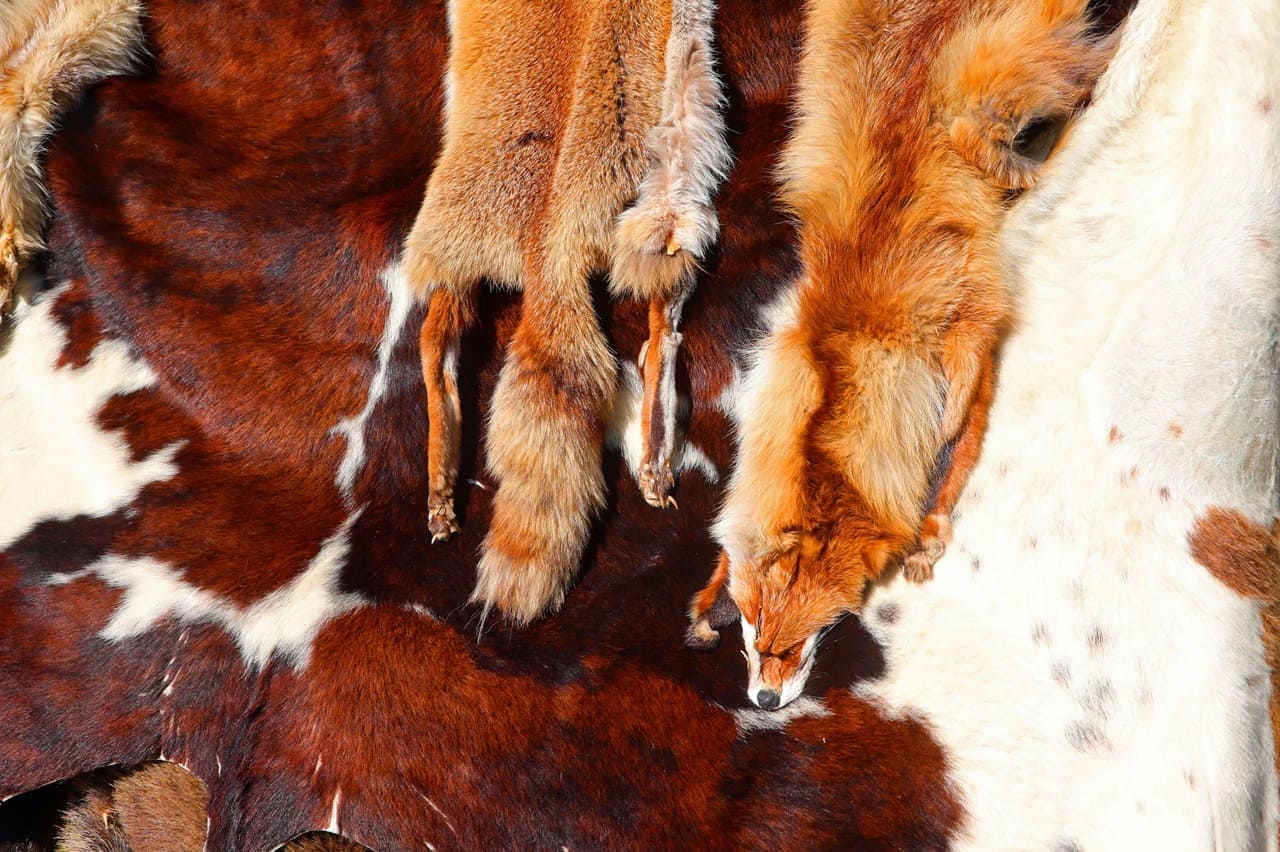
- that foxes, after being senselessly hunted, usually end up in the trash?
- that foxes are hunted today primarily so that there are more hares, etc. available for recreational hunters’ frying pans? Yet that the fox’s diet consists of hares to less than 10%, and that it would never catch a healthy hare?
- that in animal protection, one cannot confront recreational hunters with gentleness alone, street festivals, prayer chains, etc. (desperate times call for desperate measures)?
- that recreational hunters, through Jägerlatein engage in a disrespectful mockery of living beings?
- that it is frowned upon to shoot big game at feeding stations or during the mating season, yet recreational hunters have no scruples about doing exactly this to their prey competitor, the fox?
- that in some cantons, recreational hunters go hunting solely for the tender meat of a young animal?
- that recreational hunters shoot pregnant mother animals in front of their young, or target only young animals during the rearing period (Nach-Sonderjagd)?
- that recreational hunters poison the environment, nature, humans, and animals with their ammunition?
- that bestiality, barbarism, cruelty, bloodshed, and senseless suffering cannot be considered cultural heritage in a civilized society?
- that recreational hunters shoot approximately 10’000 roe deer fawns every year?
- that recreational hunters in harsh winters lure starving animals with bait only to shoot them in a cowardly and treacherous manner?
- that recreational hunters send agitated dogs into burrows to eliminate foxes and badgers (earth hunting)?
- that recreational hunters lure peaceful living creatures into box traps, where they may suffer for days awaiting their killer, or inflict hours-long death struggles upon the animals (trap hunting)?
- that recreational hunters cowardly ambush peaceful wild animals while they sleep or bask in the sun, shooting them with state-of-the-art precision weapons?
- that recreational hunters support awards, fur markets, trophy cult ceremonies, trophy shows, the fur trade, and so on?
- that recreational hunters place firearms into the hands of underage schoolchildren and practice killing with them?
- that recreational hunters often carry out their cruel acts in isolation, which encourages animal cruelty?
- that recreational hunters seriously wound many wild animals, leaving the victims to suffer for hours in tremendous pain and fear until a tracking dog finds them and they are shot?
- that recreational hunters (aside from vivisection) inflict the most suffering and abuse upon animals, including through the manner of killing?
- that the hunter's supposed love of animals and nature takes no pleasure in the existence of the beloved object, but rather aims to possess the beloved creature body and soul, culminating in turning it into prey through the act of killing?
- that recreational hunters actively promote browsing damage through hunting pressure, particularly on predators such as foxes, lynxes and wolves?
- that recreational hunters open the door to antisocial, unethical, and unchristian behaviour?
- that recreational hunters deny the general public normal, natural opportunities to observe and interact with wildlife?
- that there is no greater product of cruelty — and one contaminated with ammunition residue — than game meat?
- that there is no uniform national regulation in Switzerland regarding vision tests, shooting practice, and so on for recreational hunters?
- that there is no psychological aptitude test for recreational hunters?
- that there is no alcohol ban for recreational hunters when they shoot at animals with their weapons?
- that recreational hunters intrude into educational institutions in order to impose their hunting jargon and their culture of violence upon children?
- that a court in Bellinzona recently confirmed that hunting clubs promote practically everything that is cruel, unnecessary, and heartless?
- that the association JagdSchweiz primarily cultivates disrespect and a culture of violence — the exact opposite of what a civilized person in our society should aspire to.
- that in the canton of Graubünden alone, over 1’000 complaints and fines are issued against recreational hunters every year?
More on the subject of recreational hunting: In our dossiers on the criticism of recreational hunting gather fact-checks, analyses and background reports. What the research says about this is shown by Hunting fact-checked: the state of research.
The position of IG Wild beim Wild: IG Wild beim Wild rejects recreational hunting. Our model is the canton of Geneva, which has managed without recreational hunting since 1974: without hunting seasons, without hunting dogs, without driven hunts, without high seats, without the animal cruelty and crime that go hand in hand with hunting season elsewhere. What has worked there for over fifty years disproves every position paper by JagdSchweiz. An association that bases its policy on claims it refutes in its own documents is not a professional organisation, but a factory for misinformation.