How much can cats and dogs remember?
How much can cats and dogs remember? Researchers discover surprising memory abilities in our most popular pets.

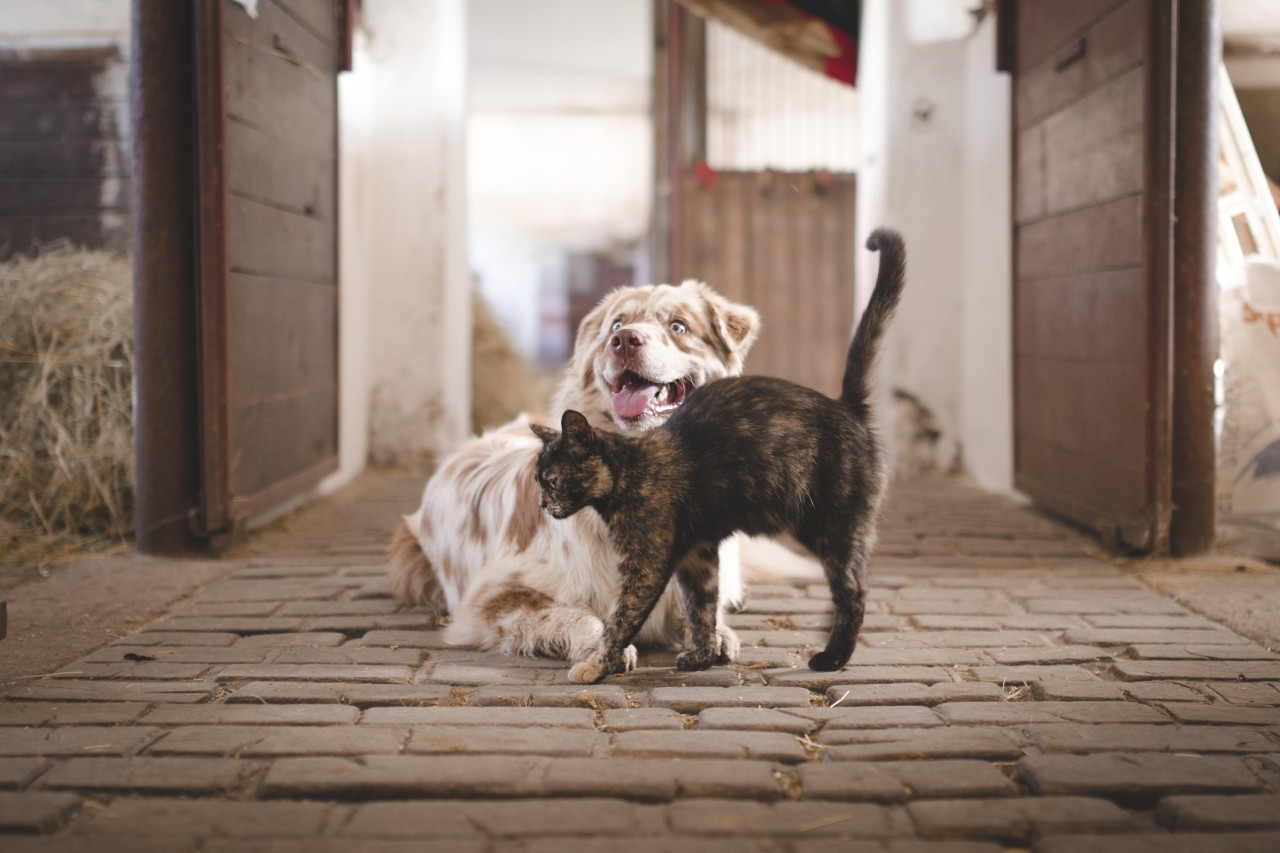
Domestic cats and dogs can remember where their food bowl is, and sometimes even how to perform tricks or find their way home.
But how good (or bad) are these furry creatures at remembering the small details of their daily lives?
That depends on how useful those memories are to them from an evolutionary perspective, according to experts.
Take free-roaming dogs, for example. Around 75% of dogs in the world are not pets and do not live in human homes, according to Monique Udell, assistant professor at Oregon State University. A memory that helps dogs excel at foraging can help them survive on the streets, Udell says.
For example, understanding basic displacement tasks — knowing that something is still there even when it’s not visible — can help scavengers, she said.
«If someone walks past a rubbish bin and throws away a hamburger, you might not be able to see it anymore, but dogs can remember that there was a hamburger there and search for it at the last place they saw it », according to Udell.
«When it comes to food, dogs can have an excellent working memory — a kind of mental notepad where short-term memory is stored. Beyond that, dogs use long-term memory to remember tricks, such as rolling over on command«, says Udell. It is possible that dogs that developed a close bond with humans over time (i.e. those that responded to their verbal commands) benefited from this and were able to pass on their genes.
Dogs can also have episodic memories. These are comparable to long-term memory, but they are more complex because they require a sense of self-awareness. (It is unclear whether dogs are conscious of themselves, which is why these memories are referred to as «epidosic» memories). Episodic memories are typically autobiographical and linked to details about the «What«, «When» and «Where», according to Udell.
In a 2016 study, published in the journal Current Biology, some dogs demonstrated episodic-like memory. Seventeen dogs were taught to imitate humans in a «Do as I do«-paradigm and then lie down. For example, if the human knocked over a bottle, the dog would do the same before lying down.
After such a task, once the dog had lain down, the human performed an additional action — for example, touching an umbrella — while giving an unfamiliar command. The human then led the dog behind a screen and waited between one minute and one hour before asking the dog to «do it«.
Some dogs were able to recall and perform the imitation at both time points, although the performance of most dogs declined as the time between seeing the action and being asked to perform it increased, according to the researchers. The findings suggest that dogs can store memories unrelated to commands and incorporate them into later commands, as long as the command is given within approximately one hour, the researchers noted.
«Dogs can retain things in memory for a long time», said Udell. «But what they remember and how long they can retain it has a lot to do with context». For example, when owners go off to the military, dogs can still remember them years later, suggesting that the bond between owner and dog is important to them.
However, if you ask them: «Where is the ball?», they may forget that within just a few minutes.
«That has to do with context, and also with the significance and importance of the things that were encoded», said Udell.
Feline Memories
Cats, like dogs, are particularly good at remembering details related to their evolutionary history. For example, cats seem to have a good memory when it comes to hunting, according to Mikel Delgado, a doctoral candidate in psychology at the University of California, Berkeley, who is also a certified cat behavior consultant.
In two experiments, nearly 50 cats were able to remember which bowls contained food, even after the animals had been removed from the room for about 15 minutes, according to a study published in January in the journal Behavioural Processes. These findings suggest that cats possess a short-term working memory capable of encoding details about «where» and «what» for brief periods of time, at least when it comes to food.
Another study, published in 2008 in the journal Applied Animal Behaviour Science, showed that cats also have a good spatial memory. In the study, cats had to remember, on a board with many partially hidden cups, which cups they had already eaten from. Older cats made more errors than younger ones, however, suggesting that a cat's memory declines with age, the researchers noted.
This type of memory can help cats remember where they find prey and whether they have already visited a particular spot during the night, Delgado said.
A cat's working memory can be surprisingly short-lived, however, especially when food is not involved. In a 2006 study published in the journal Animal Cognition, 24 cats watched as an experimenter hid an object in one of four boxes. The cats had to wait 0, 10, 30, or 60 seconds before being allowed to find the object.
After 30 seconds, most cats had difficulty locating the hidden object. This result was not surprising, however, Delgado said. When a cat in the wild is hunting a mouse, the mouse may hide behind something. The likelihood that the mouse will still be there a minute later is low.
«If it's out of sight, it's probably gone«, Delgado said.
It is difficult to measure the memory of cats and dogs – or of other animals – accurately.
«You ask questions about what is going on inside the animal's mind, in a way that we may not be able to see directly«, said Udell. «So we use their behavior to interpret what is going on inside them.«
The more scientists discover about the memory of these animals, the better, because some researchers are beginning to use dogs as models for human aging, dementia, and Alzheimer's disease, according to Udell.
«You have to understand what dogs are capable of remembering in order to understand how memory declines over time«, she said.