Almost 470,000 hobby hunters in Germany: a record, rising accident figures – and the wolf is still supposed to go
Germany has more hobby hunters than ever before: according to the German Hunting Association (DJV), as of November 2025 the Federal Republic counts a total of 467,682 hunting licence holders.
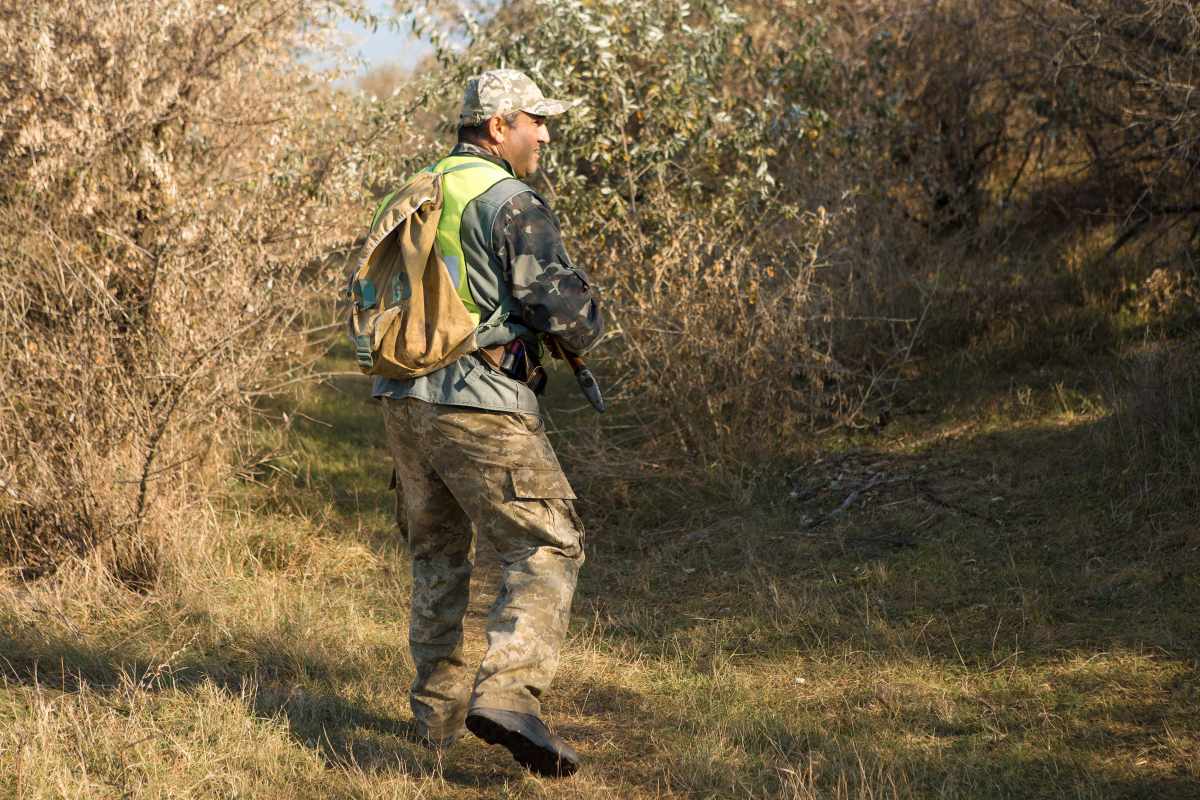
This means that within three decades 42 per cent more people have obtained a hunting licence than ever before.
At the same time, the call in politics and the media for the killing of wolves is growing louder, even though their population is a fraction of the number of hobby hunters. And the annual fatalities caused by hunters’ weapons hardly interest anyone.
Almost half a million hobby hunters: the figures that no one discusses
North Rhine-Westphalia leads the list of states with just under 100,000 hunting licence holders, followed by Bavaria with 83,000 and Lower Saxony with 70,000. In Mecklenburg-Western Pomerania, statistically every hundredth person is someone with a hunting licence and thus with legal access to one or more firearms.
These figures are regularly communicated by the DJV as success stories: more nature conservation, more commitment, more wildlife management. What is not counted in the process: the annual victims of this leisure activity.
Up to 40 dead each year, hundreds injured – no official statistics
Neither the hunting association nor state authorities nor the Federal Statistical Office keep statistics on people killed and injured by hunting and hunters’ weapons. What that means: there is no official figure. The only organisation that has been systematically documenting this for years is the Initiative for the Abolition of Hunting, which works on the basis of press reports.
According to its surveys, in some years up to 40 people in Germany die at the hands of hunters and hunters’ weapons. University studies and agricultural professional associations put the annual number of hunting accidents at around 1,600. The victims are not only fellow hunters: among those affected are also the wives and children of hunters, neighbours, walkers, mountain hikers, mountain bikers, mushroom pickers and children at play.
Fatal relationship dramas, in which a hunter shoots his wife, relatives or neighbours, are not classed as hunting accidents but as crimes, and appear in no hunting accident statistics. The number of unreported cases is correspondingly high.
Around 1,100 wolves. Almost 470,000 hobby hunters. Who is being treated as the problem?
Estimates suggest that there were around 219 wolf packs in Germany in 2024/2025. Assuming an average of five animals per pack, this gives a total population of roughly 1,000 to 1,200 wolves. NABU notes that the wolf population in Germany is not growing uncontrollably, but is stagnating.
Nevertheless: a draft law from the federal government aims to make the wolf huntable and provides for amendments to the Federal Hunting Act as well as the Federal Nature Conservation Act. In 2024, moreover, 16 wolves were killed illegally, and so far eight in 2025. The number of unreported cases is presumably higher.
The equation is simple: predators such as the wolf are described as “too many”, even though their population is in the four-digit range and stagnating. Hobby hunters, almost 470,000 in number, are framed as indispensable nature conservation, even though they kill dozens of people every year and injure hundreds, and are not required to demonstrate any ecological training comparable to genuine expertise in wildlife biology.
Wild animals belong to no one – except the ecosystem
The wolf does not tidy up as a hobby. It fills an ecological niche that has existed in Central Europe for thousands of years and that has been systematically occupied by hobby hunters over decades. Predators regulate wildlife populations on the basis of coevolution, not on the basis of a week-long course and a hunting licence.
Common sense and the current state of wildlife ecology say the same thing: wild animals do not need hobby hunters. They need intact habitats, natural predators and protection from hunting. What the public debate says about who is “too many” and who is not reveals more about political centres of power than about ecology.
Support our work
With your donation you help to protect animals and give their voice a hearing.
Donate now →LET'S STAY IN TOUCH!
We would like to send you the latest news and offers in our newsletter.