Hobby Hunters and Nature Conservation: An Irreconcilable Contradiction
Today's hunting destroys the normal social coexistence of wild animals, the ecological balance, their natural behaviours, family structures and social bonds, use of dens and hiding places, the shift from daytime to nocturnal activity, increased migration into non-hunted residential areas, and unnatural concentrations of animals in forests and cities.


Hunting has failed.
For decades, hobby hunters have been attempting to regulate wildlife populations — an endeavour in which they have to this day failed to succeed in any civilised manner. Hobby hunters and nature conservation go together like oil and water.
Across the country, farmers, vintners and forest owners complain — despite receiving compensation — of severe damage to their crops caused by wild animals. Hunting is therefore ineffective and counterproductive. Even taxpayers are made to foot the bill for hunters' hobby. Hunting does not address the root cause of the problem; rather, it is part of the problem and a contributing factorto the failures of nature conservation.
Today, far more sustainable forms of damage prevention have long been available, such as electric fences, enclosures, and visual, olfactory and acoustic deterrents. Fortunately, the killing of animals by hobby hunters is not necessary within the scope of wildlife deterrence measures.
Many of those affected are often guided by the mistaken belief in nature conservation that humans must limit the populations of wild animals such as roe deer or red deer, because hobby hunters have exterminated their natural enemies. Yet it has also been scientifically established for decades that it is primarily the ecological factors of food, space and climate that dynamically regulate animal populations — not predators.
In the case of wild boar, a French long-term study it has recently been proven that hunting significantly increases the reproduction rate. Scientists led by Sabrina Servanty compared, over a period of 22 years, the reproduction of wild boar in a forested area in the département of Haute-Marne, where hunting is very intensive, with a lightly hunted area in the Pyrenees. The results were published in the renowned “Journal of Animal Ecology”: when hunting pressure is high, fertility in wild boar is considerably greater than in areas where little hunting takes place. Furthermore, under intensive hunting, sexual maturity occurs significantly earlier — before the end of the first year of life — meaning that even juvenile sows can become pregnant. The average weight of wild boar at first reproduction is also lower under high hunting pressure. In areas where few hobby hunters are active in nature conservation, wild boar reproduction is considerably lower, and sexual maturity in sows occurs later and only at a higher average weight. (cf. Servanty et alii, Journal of Animal Ecology, 2009) This study proves that the rapid proliferation of wild boar depends not only on food availability, but also on intensive hunting. In areas with little or no hunting, there are far fewer wild animals than in hunted areas. Unnaturally large or small wildlife populations are homegrown and bred through poor hunting management and the actions of hunters.
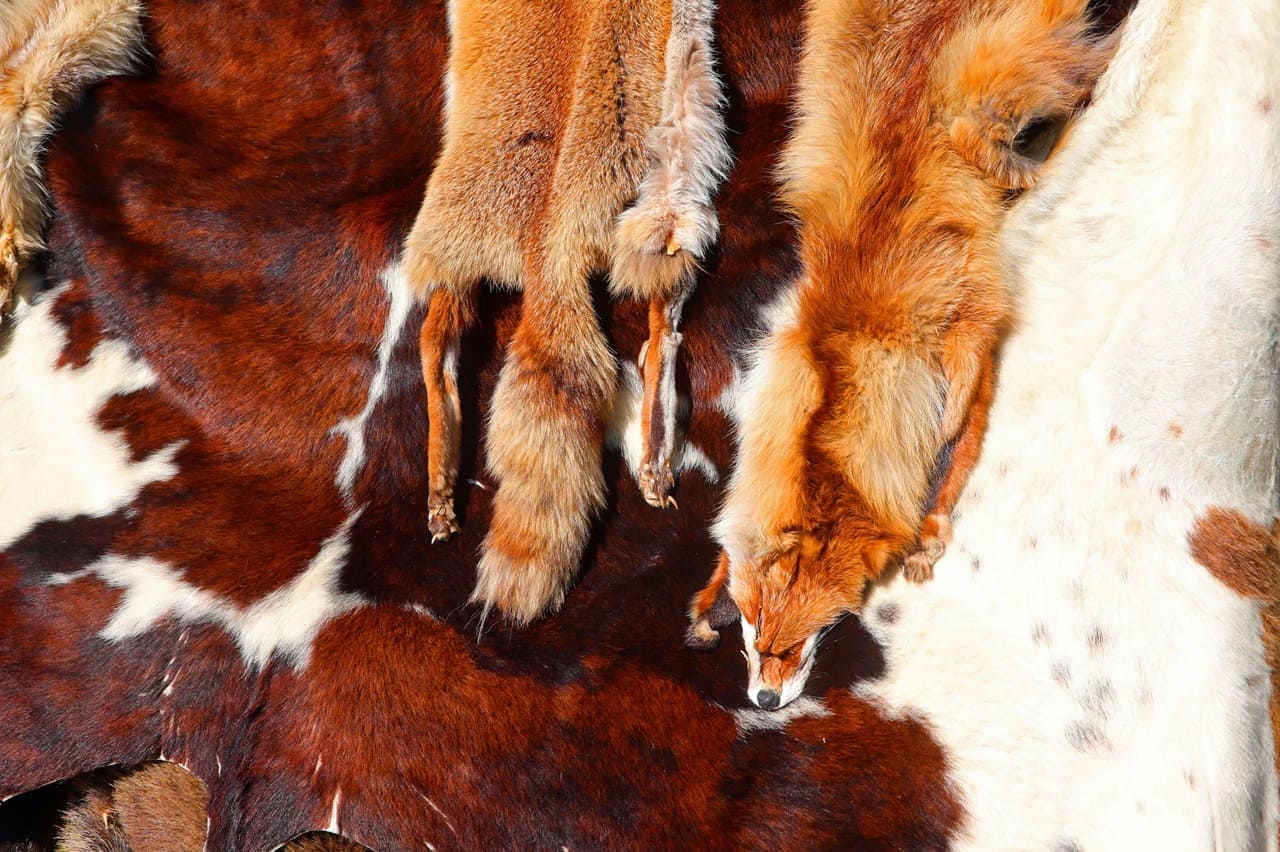
Every year, for example, over 20’000 red foxes are needlessly shot in Switzerland. Yet rabies was long ago eradicated through vaccine baits. Hunting had completely failed in this regard.
Few hobby hunters understand that population density in wildlife also self-regulates dynamically — based on food availability, territoriality, climate, disease, resources, and social and physiological factors, etc. — without human intervention, as long as it is not shot to pieces. Hunting pressure and other factors, however, increase reproduction rates in affected animal populations, something that can be observed not only in wild boar, foxes, roe deer, red deer, and pigeons, but in every species (species preservation, survival instinct, compensatory reproduction, etc.). Most hobby hunters do not accept predators that compete for the same prey. They manage roe deer, red deer, and chamois much like domestic animals, and then want to harvest as much as possible. They believe wildlife belongs to them and that they have a right to prey and to kill animals. Hobby hunters have perfected the contempt for animals. Thousands of tonnes of shotgun pellets lie scattered across Switzerland. Hobby hunters poison animals, game meat, soil, and groundwater with their lead ammunition. Hunting reduces biological and natural diversity. Thus, the most common cause of death among protected bird species is lead poisoning from contaminated carrion.
The claim frequently made by hobby hunters that they can regulate animal populations through shooting is ecologically incorrect — they merely decimate them. The hobby hunter is only a poor substitute for exterminated predators, because they often do not shoot sick or weak animals, but act irrationally or target only males in order to obtain a trophy. When hobby hunters genuinely engage in nature conservation, they do so independently of their hunting activities. Hunting has always been a barbaric exploitation of nature.
Sustainable approaches are needed in nature conservation — not hobby hunters
Wildlife, whether free-living or in captivity, can cause problems, much like human overpopulation. Militantly shooting nature into submission, as hobby hunters have practiced until now, is neither ethical, nor wise, nor safe — and is increasingly rejected by the public. Hunters also frequently operate illegally.
Sustainable population control is needed in order to prevent the shooting of animals. One simple and affordable option is immunocontraception.
The Immunocontraception is used today to limit animal populations in the wild or in zoos. Unlike hormonal methods, immunocontraception has virtually no side effects. To date, immunocontraceptive applications have been successfully tested in over 100 different animal species, including wild horses, deer, wild boar, bison, squirrels, dogs, cats, African elephants, and others. Studies have shown that deer treated in this way can be infertile for up to 5 years.
Immunocontraception suppresses the normal reproductive cycle of animals through vaccination. The vaccine contains specific protein components of the so-called Gonadotropin-Releasing Hormone (GnRH). Mammals require this hypothalamic hormone to produce sex hormones. Pigs treated with the vaccine develop antibodies that intercept and neutralize GnRH. As a result, the pigs produce virtually no sex hormones such as estrogen or testosterone. Both male and female animals are thereby rendered infertile.
Australian pig farmers have been using the vaccination method for some time to improve the flavor of their domestic pigs' meat. After about four months, treated boars show no reproductive cycle whatsoever. Studies confirm that the vaccinations leave no harmful residues in the meat. Furthermore, the method is less invasive than castrating boars. There would therefore be nothing against using it on wild boar as well.
A successful demonstration of immunocontraception was achieved, for example, in New York's Fire Island National Park between 1993 and 2010 with deer. Several hundred deer were successfully treated with PZP (Porcine Zona Pellucida vaccine), reducing the birth rate by around 70%.
PZP is a highly effective form of birth control — reversible, safe for use in pregnant animals, with no significant short- or long-term health side effects, and the vaccine does not pass through the food chain. A particular advantage of this approach is that the animals do not need to be captured or sedated. The wildlife are vaccinated through their food.
Field trials conducted in other areas, due to the failures caused by hunting, resulted in deer populations being halved within 5 years. The health of the deer population improved as deer density decreased and each deer had access to qualitatively better nutrition. The females no longer have to endure an energy-draining pregnancy every year.
As humans increasingly expand into areas where wildlife is native, the ideal situation would be to respect animals and refrain from interfering with the natural factors that regulate populations. Since recreational hunters lack this respect, the militant approach and use of armed force is today's reality. Hunting is always a form of war.
Most hobby hunters are anachronistic and, upon closer analysis, live by an ideology of pure violence. Hunters are militant. In their eyes, they eliminate inferior living beings and are quick to snuff out the lives of animals for a trophy. The whole affair is celebrated with primitive and sectarian rituals and alcohol. Hunters manipulate, disturb, torment and destroy. Their actions and hunting methods are in some cases so brutal and bestial that hobby hunters themselves do not dare to speak about them in public, for fear of reprisals from within their own ranks.
Immunocontraception is a scientific tool for an ethical approach to dealing with living beings.
Special Interest Group Wild beim Wild
The IG Wild beim Wild is a non-profit advocacy organization dedicated to the sustainable and non-violent improvement of the human-animal relationship, with a particular specialization in the legal aspects of wildlife protection. One of our primary concerns is to introduce a modern and serious wildlife management approach in the cultural landscape, modeled on the Canton of Geneva — without hobby hunters, but with upstanding game wardens who truly deserve the title and act in accordance with a code of honor. The monopoly on the use of force belongs in the hands of the state. The IG supports scientific methods of immunocontraception for wildlife.