Is the Hunters’ Association Pulling the Wool Over the Eyes of Bern’s Population?
A parliamentary motion questions hunting in Bern’s forests and demands the examination of non-violent alternatives.


Hobby hunting in the canton of Bern is to become less violent.
To this end, an interpellation was submitted to the city council on 13.3.2025: «Non-violent alternatives to hunting in Bern»
TeleBärn organized a debate on the subject entitled: «Wildlife management: through hunting or non-violent alternatives». The guests: Tobias Sennhauser, city councillor «Tier im Fokus», hobby hunter Sabine Brechbühl and hobby hunter Lorenz Hess, president of the Bernese Hunters’ Association.
The amateur hunter Lorenz Hess is also known in Switzerland as the “fox beater.” This is because he beat a fox to death with a piece of wood — the fox having been shot and wounded by a hobby hunter — claiming that his rifle barrel was clogged with dirt. A video documented the incident. “Hunting animals means respecting animals” or “A little of what’s possible is always fine” is his motto.
Back in 2020, during the parliamentary debate on the failed hunting law, Lorenz Hess sought to have the lynx added — alongside the beaver, grey heron and goosander — to the list of species that could be preventively culled. These wild animals could then have been shot without having caused any damage.
What lynxes in Switzerland need is a genetic refresh from lynx populations elsewhere. The weakening of the lynx’s gene pool is far from the only factor threatening the future of the lynx. Traffic accidents and poaching by hobby hunters also pose a genuine threat to the survival of the lynx population.
Fundamental considerations
Only where wild animals are hunted and family and social structures are destroyed does the population’s own self-regulation within the biotope break down.
In the disarray in which nature finds itself after decades of management and stewardship by Swiss hobby hunters, the share of threatened species according to the UN is nowhere in the world as high as in Switzerland.
Hobby hunters have been creating an ecological imbalance in the cultivated landscape for decades, with sometimes dramatic consequences (protective forests, disease, agricultural damage, and much more).
For genuine wildlife stewardship, a handful of game wardens is sufficient, as the example of Geneva or entire countries with a hunting ban demonstrate. Wildlife would no longer be fairground targets for people with poor ethical standards and psychological problems.
Even without hunting, there would not suddenly be too many foxes, hares, or birds. Experience shows that nature can be left to its own devices. – Former National Park Director and wildlife biologist Heinrich Haller
Since 1 April 2015, Luxembourg has made the right decision based on verifiable scientific facts and banned fox hunting.
Those who kill wildlife senselessly are not protecting anything, and civilised society gains nothing from it. In Switzerland, there are human casualties and fatalities every year caused by the risk group of hobby hunters. Hobby hunting and its carnage, organized by cantonal authorities, is not scientific, wildlife-biologically sound, or professional wildlife management. The staff of these authorities still maintain the position that animal cruelty is tradition. Not only for the fox is there no numerical cull planning — any hobby hunter can simply go at it as they please, according to their mood.
It is crystal clear that professional game wardens, as in Geneva, bring an entirely different standard to replace recreational hunters. Wildlife benefits through reduced animal suffering, as do the general public, nature, and the environment. Champions League instead of amateur tournaments.
Studies in various countries and at various points in time have documented the influence of the red fox not only on roe deer populations: For the Bernese Mittelland, it is estimated that a fox can prey on an average of eleven fawns during the months of May to July. In the canton of Bern, however, hobby hunters shoot around 2’500 healthy foxes every year, destined for the bin — precisely the number needed so that this risk group can later spread their hunters’ tales about being indispensable regulators.
Hobby hunters do not rescue roe deer fawns so that they may live — they cowardly and treacherously shoot them themselves a few months later, currently around 1,600 per year in the canton of Bern. If the wild animals are lucky, they die instantly; or, as is so often the case, they are merely wounded and suffer. Professional wildlife wardens are demonstrably better marksmen, which leads to less animal suffering.
Particularly when it comes to hobby hunting, it is absolutely essential that the public scrutinizes matters very closely. Nowhere else is manipulation through falsehoods so prevalent. Violence and lies are two sides of the same coin. Hobby hunting — not only in the canton of Bern — has for decades been nothing other than a permanently costly construction site and source of conflict for politics, forestry, agriculture, administrations, the judiciary, health insurers, insurance companies, animal welfare organizations, environmental and nature conservation organizations, the police, the federal government, the media, and so on. The canton of Bern does not need nearly as many wildlife wardens as it would take to easily compensate for the damage and costs by abolishing hobby hunters.
Taxpayers would likely be spared hundreds of millions of francs that the federal government, cantons, and municipalities pump into forest conservation, were there no more hobby hunters.
The hunting association president
According to his body language in the television segment, amateur hunter Lorenz Hess appeared uncomfortable in his own skin. He did what he does best.
Lorenz Hess: «Geneva has an army of state hunters who have nothing to do with wildlife management.»
In truth, the exact opposite is the case. Before the hunting ban in 1974 in the canton of Geneva, around 420 hobby hunting licenses were sold per year and 7Garde-Faune were active. Furthermore, an army always implies thousands of units.
What hundreds of hobby hunters used to do pointlessly in the canton of Geneva is today handled more exemplarily by a good dozen wildlife wardens who together share 3 full-time positions, alongside many other duties. From the canton of Geneva it is also known that not only the supervision and monitoring of hobby hunters was an enormous financial burden. The wildlife wardens today cost taxpayers the price of a cup of coffee per year in wages, and the added value in biodiversity for the population is gigantic.
There are years in which, in the canton of Geneva For example, no red deer, roe deer, red fox, badger, marten, brown hare, or jay are shot in the canton of Geneva, according to the federal hunting statistics. This is because there are no hunting seasons for hobby hunters, as there are in other cantons. Wildlife in the canton of Geneva is primarily subject to year-round protection. Many wild animals are visible and accessible to the public, which is scientifically proven and valuable for the health of both animals and humans.
Sanitary and therapeutic culls carried out by game wardens in Geneva are not the same as the decimating hunting practices based on hunters' jargon or a misguided understanding of nature. According to biologists, hobby hunting does not necessarily result in fewer wild animals, but rather in higher birth rates. Upon closer analysis, hobby hunters do not perform a «corvée» for the public, and certainly not for wildlife. Wild animals do not like hobby hunters. Hobby hunters would not be performing a “corvée” if they were not permitted to kill.
Facts instead of hunters' jargon
Across all cantons and over several years, finds of road casualties with gunshot wounds among roe deer in the cantons of Bern, Fribourg, Jura, Baselland, Schwyz and Zurich, and among foxes in the cantons of Bern, Fribourg, Graubünden and Zurich, consistently account by far for the largest share of all such finds.
Given the stress and pathological hunting pressure exerted by hobby hunters in partly densely populated habitats, it is hardly surprising that wild animals fall ill.
What Mr Lorenz Hess also consistently fails to mention is that game wardens holding a federal certificate of competence undergo a demanding three-year additional training programme. Regardless of animal protection legislation, amateur hunters commit appalling acts of animal cruelty and countless criminal offences, away from public scrutiny. In the canton of Graubünden alone, there are over 1’000 reports and fines against hobby hunters every year.
The canton of Graubünden has had outstanding experience with how the wolf reduces roe deer and red deer populations, and has thus been able not only to reduce special hunts in certain areas. The forestry association is enthusiastic. The resettlement of the lynx has also led to a marked decline in roe deer populations in various regions of Switzerland. This is scientifically documented. For example in the Toggenburg, Uri, Bernese Oberland or Solothurn. Roe deer and chamois are typical prey of the lynx, so the development comes as no surprise. Forest health and the cultural landscape fare much better where predators are present instead of hobby hunters. Who complains? Always the recreational hunting associations.
Who repeatedly opposes national parks at the forefront? The hobby hunting associations.
Who repeatedly opposes the protection of endangered species, as is currently the case in the Canton of Uri? The hobby hunting associations.
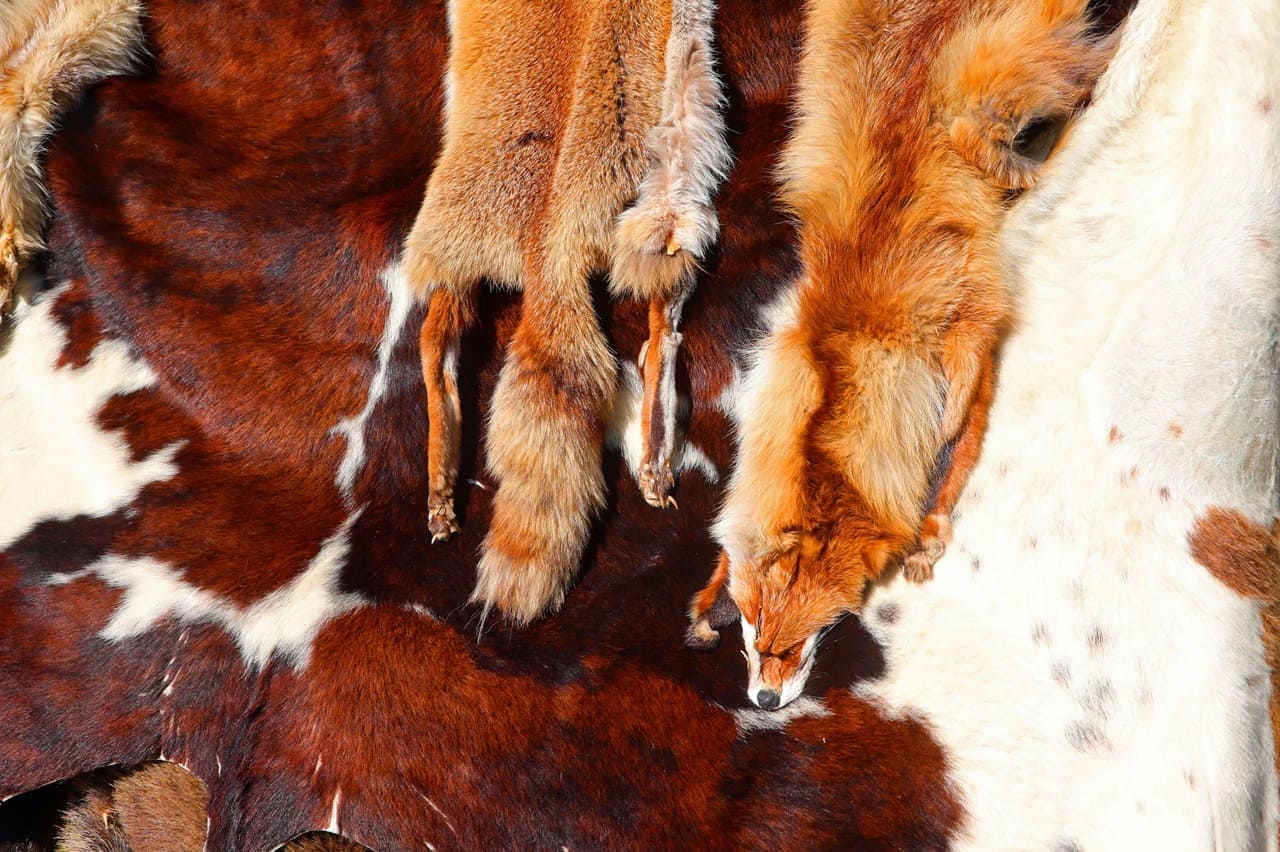
The Center Party politician Lorenz Hess also advocates politically for strengthening the domestic fur market through the senseless fox hunt.
It is therefore no surprise that in the past it was always animal welfare advocates who initiated the drive for improvements in wildlife protection. The hobby hunters always responded reluctantly to progressive initiatives. Common sense led to greater wildlife protection in hunting practices — for example, through the abolition of leg-hold traps and bird hunting with lime sticks. Animal welfare advocates were the driving force behind restricting hunting seasons and reducing the number of huntable species. To prevent the extinction of species, animal welfare advocates imposed on hobby hunters the moral obligation of stewardship. Or that the entire issue of ammunition, wildlife corridors, and so on was brought to the table. The ethics of hobby hunters have traditionally always lagged behind the spirit of the times.
Under federal law, no Swiss canton is required to permit recreational hunting. It is the right of each canton to decide whether hobby hunting is permitted or not. If a canton decides against hobby hunting — or even only partially against it — it is free to do so under the Federal Constitution. The Canton of Geneva made this exemplary choice long ago. Many cantons already prohibit hobby hunting locally through hunting reserves, wildlife sanctuaries, and so on.
Nature lovers actively enjoy beautiful experiences in nature without executing wildlife in order to feel good. There are countless commendable people who also use, nurture, and care for nature — performing sustainable, selfless work with fire brigades, civil protection, animal welfare organisations, Bergwaldprojekt, building dry-stone walls, maintaining biotopes, completing agricultural service programmes, rescuing roe deer fawns, working at wildlife stations, and so on. None of them would ever consider demanding a violent sacrifice in the form of a living being in return, as hobby hunters do.
Dossiers: Fox in Switzerland: Most Hunted Predator Without a Lobby | Fox Hunting Without Facts: How JagdSchweiz Invents Problems
Natural Disaster: Hobby Hunters
In the chaos in which nature finds itself after decades of management and stewardship by hobby hunters the proportion of endangered species is higher in no other country in the world than in Switzerland. For decades, these hired killers have been creating an ecological imbalance in the cultivated landscape with sometimes dramatic consequences (protective forests, disease, agricultural damage, and much more). Over a third of plant species, wildlife and fungal species are considered endangered. Switzerland also ranks last in Europe when it comes to designating protected areas for biodiversity. It is precisely these circles of hobby hunters, through their lobbying efforts in politics, the media and legislation, who have been responsible for this for decades. They are the ones who notoriously block contemporary, ethical improvements in animal welfare and sabotage serious animal and species protection. Hobby hunters regularly oppose more national parks in Switzerland because their concern is not nature, biodiversity, species protection or animal welfare — but rather the pursuit of their perverse, bloody hobby.
Did you know …
- that in Switzerland innocent young wolves are being liquidated?
- that hobby hunters lie about assessing game meat quality and that processed game meat is classified as carcinogenic by the WHO, just like cigarettes, asbestos or arsenic?
- that according to studies, nowhere is the lead contamination of golden eagles and bearded vultures higher than in the Swiss Alps, due to ammunition used by hobby hunters?
- that the fair chase ethics of hobby hunters are diametrically at odds with animal protection law and amount to nothing but a mirage?
- that hunting is war in which animal competitors are simply eliminated?
- that there are countless illegal and unmarked elevated hides in our countryside, some so rotten that they pose a danger to children and could prove fatal to people?
- that year after year, countless people are killed or injured by hunters' firearms — some so severely that they end up in wheelchairs or have limbs amputated?
- that in Switzerland, approximately 120,000 perfectly healthy roe deer, red deer, foxes, marmots and chamois are killed every year, mostly without purpose?
- that because of hobby hunters, it is today barely possible to live in harmony with wildlife or even catch a glimpse of wild animals?
- that shotgun loads make hares scream like small children and tear apart the entrails of “shot” deer and stags, so that they leave trails while fleeing for hunters to follow?
- that the claim by hobby hunters that the cruel wildlife massacres are necessary to regulate animal populations has been scientifically refuted?
- that hobby hunters openly admit that hunting is about the “pleasure of killing” and “the joy of making a kill” — a pathological passion?
- that hobby hunters have no sixth sense and yet regularly claim they only shoot sick and weak animals, which in practice is simply not true?
- that hobby hunters travel abroad for trophy hunting, far from any species protection and hunting regulations, and that there are even Swiss hobby hunter travel operators offering such depraved hunting pleasures?
- that the vast majority are not legitimate professional hunters, but pursue hunting as a hobby, sport and leisure activity, which is morally indefensible and in fact contradicts animal protection law?
- that 99.07% of civilized people in Switzerland are not hobby hunters, meaning only 0.3% of hobby hunters take pleasure in these bloody activities?
- that these wildlife killers do not hunt on the basis of scientific justifications?
- that protected species do not actually belong under hunting law, because hobby hunters are overwhelmed by species conservation responsibilities and repeatedly shoot animals listed on the Red List — such as lynx, wolf, hare, partridge, quail, etc. — for fun?
- that hobby hunters deliberately decimate certain animal species in order to eliminate competition for their unnatural behavior (fox, lynx, wolf, birds of prey, etc.)?
- that wildlife dies before the hobby hunter can even fire a single shot, that this is what must be prevented, and that this is arguably the central idea behind wildlife stewardship, management and hunting planning?
- that in wild boar (and fox) populations, normally only the lead sow gives birth to young, but due to her being shot, all female animals within the group reproduce, and that this is also one of the reasons we have a wild boar surplus?
- that grazing animals — deer, roe deer, etc. — originally lived predominantly as diurnal animals in fields and meadows, like goats, sheep and cows, and not in the forest?
- that the wolf is vitally important for the long-term health of wild ungulates, because it preys on sick or weak animals with incredible precision, for example, and is thereby vastly superior to hobby hunters?
- that foxes usually end up in the trash after being senselessly hunted?
- that foxes are hunted today mainly so that hobby hunters have more hares, etc. for the frying pan? That the fox, however, feeds on hares in fewer than 10% of cases and would never catch a healthy hare?
- that in animal protection, you cannot deal with hobby hunters using only gentleness, street festivals, prayer chains, etc. (you have to fight fire with fire)?
- that hobby hunters use hunting yarn to show disrespectful mockery of living beings?
- that it is frowned upon to shoot big game at feeding stations or during mating season, yet hobby hunters have no scruples about doing exactly this to their competitor the fox?
- that in some cantons hobby hunters go hunting solely for the tender meat of a young animal?
- that hobby hunters shoot pregnant mother cows in front of their young, or only shoot young animals during the rearing period (post-special-hunt)?
- that hobby hunters poison the environment, nature, humans and animals with their ammunition?
- that bestiality, barbarism, cruelty, bloodshed and senseless suffering cannot be considered cultural heritage in a civilized society?
- that hobby hunters shoot approximately 10’000 roe deer fawns every year?
- that during harsh winters hobby hunters use food to lure starving animals only to shoot them in a treacherous and cowardly manner?
- that hobby hunters send agitated dogs into burrows to eliminate foxes and badgers (earth hunting)?
- that hobby hunters lure peaceful living beings into box traps, where they may suffer for days awaiting their killer, or subject animals to an hours-long death struggle (trap hunting)?
- that hobby hunters cowardly ambush and kill or injure peaceful wild animals while they sleep or bask in the sun, using state-of-the-art precision weapons?
- that hobby hunters support awards, fur markets, trophy cult prize ceremonies, trophy shows, the fur trade, etc.?
- that hobby hunters place firearms in the hands of underage schoolchildren and practice killing with them?
- that hobby hunters often carry out their cruel acts in isolation, which encourages animal cruelty?
- that hobby hunters merely seriously injure many wild animals and the victims often suffer for hours under enormous pain and fear until a tracking dog finds them and they are shot?
- that hobby hunters (apart from vivisection) inflict the most suffering and abuse on animals, including through the manner of killing?
- that the hunter's love of animals and nature does not take pleasure in the existence of the beloved object, but rather aims to possess the beloved creature body and soul, culminating in making it prey through the act of killing?
- that hobby hunters actively promote browsing damage through hunting pressure, particularly on predators such as foxes, lynx and wolves?
- that hobby hunters open the door to antisocial, unethical and unchristian behavior ?
- that hobby hunters deprive the public of normal, natural wildlife observations and interactions?
- that there is no greater product of cruelty and ammunition contamination than venison?
- that there is no uniform regulation across Switzerland regarding eyesight tests, shooting practice, etc. for hobby hunters?
- that there is no psychological character assessment for hobby hunters?
- that there is no alcohol ban for hobby hunters when they shoot at animals with their weapons?
- that hobby hunters intrude into educational institutions in order to impose their hunters' tales and their culture of violence on children?
- that a court in Bellinzona recently confirmed that hunting associations promote practically everything that is cruel, unnecessary and heartless?
- that the association «Jagd Schweiz» primarily cultivates disrespect and a culture of violence – the exact opposite of what a cultured person in our society should aspire to.
- that in the canton of Grisons alone, over 1’000 complaints and fines are issued against hobby hunters every year?