
Stop fox hunting – write to the Solothurn cantonal parliament
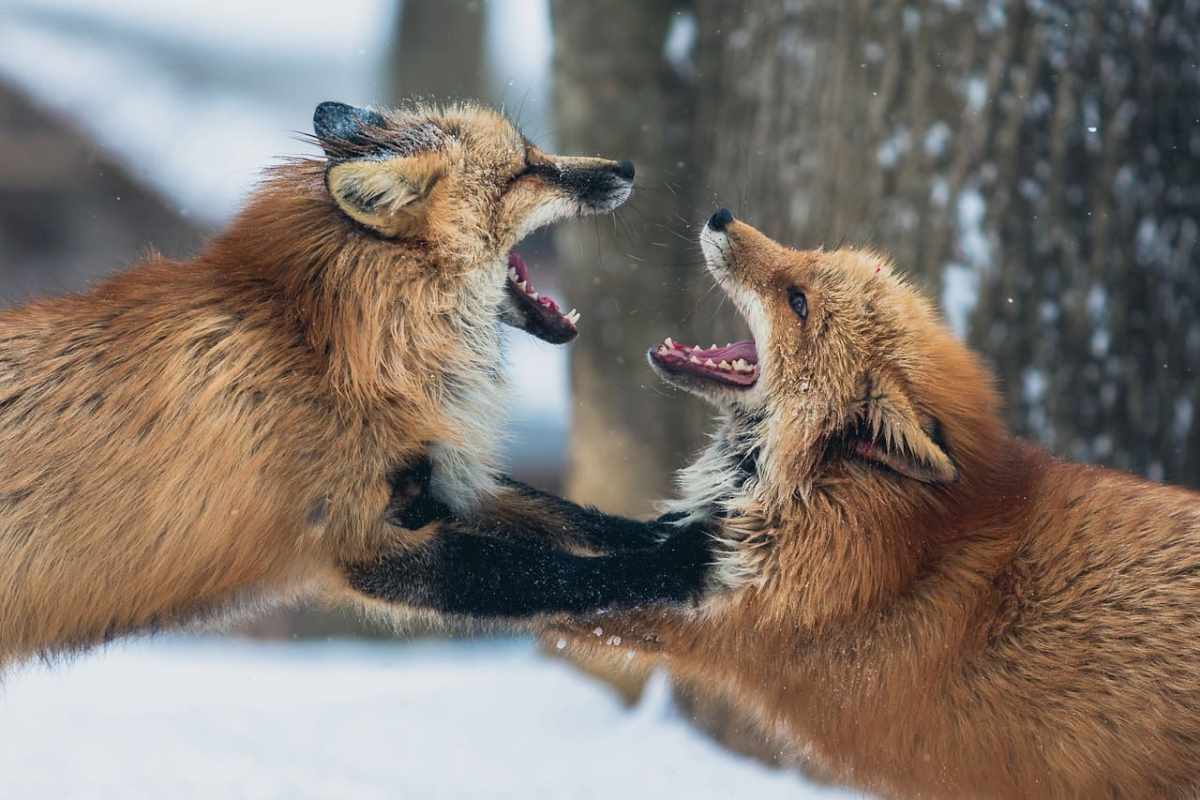
The canton of Solothurn organises hunting under the territorial hunting system: hunting grounds are leased to private hunting associations, and hobby hunting is practised on a militia basis. In 2024, 866 foxes were recorded in the canton's hunting bag; in addition, the fallen game statistics registered 572 foxes found dead or dying. In previous years, the hunting bag stood at 536 (2020), 879 (2021) and 686 (2023) foxes.
On 15 February 2026, lawyer Pascal Wolf submitted a petition calling on the canton to review fox hunting for its scientific evidence and ecological necessity. The response came seven months later: on 14 September 2026, Government Councillor Sibylle Jeker (Department of Economic Affairs) rejected the petition (response letter GK 6900).
In it, the Cantonal Government states that fox hunting must «serve conflict resolution (e.g. prevention of wildlife damage or control of animal disease)», and describes its contribution to this as «indisputable». At the same time, the letter cites no independent study, no measurable cantonal targets and no data with which the effect of the hunt on population numbers, damage or disease risk could be assessed. The Cantonal Government describes population monitoring as a basis for evidence-based hunting planning as «not remotely achievable with a reasonable amount of staff and financial resources». The canton thus presents no data with which the effect of the annual kills could be assessed, and rejects the effort that would be required for this.
The letter's only footnote does not refer to a wildlife biology study, but to the position paper on fox hunting by JagdSchweiz, the umbrella association of hobby hunters. The Cantonal Government thus bases its argument for the appropriateness of fox hunting on an interest-group paper, not on independent evidence. No one disputes that fox hunting is legally permissible. The petition asked about its benefit, and that question remains unanswered.
This is precisely the political crux: anyone who justifies routine hunting on the grounds of conflict resolution must be able to name a target, a data basis and a means of verifying success. Otherwise, it remains unclear what concrete benefit the annual hunting bag in the canton of Solothurn actually achieves.
You can do something, no matter which district you live in. Contact a member of the cantonal parliament directly. It is legal, effective and takes only a little time.
Important: Don't rely on email alone. We have received feedback from several cantons that messages about hobby hunting of foxes sometimes come back as undeliverable. Whether this is due to incorrect addresses or filters cannot be judged from the outside. So use several channels: a letter, a phone call or a personal conversation. A message to a parliamentary group or party secretariat is often more effective than one to individual members, and a letter or phone call is harder to filter out than an email.
Template letter – copy this text into your email programme
Subject: Fox hunting in the canton of Solothurn – Request for scientifically verifiable targets
Dear Ms [Name] / Dear Mr [Name]
I am writing to ask you to review routine fox hunting in the canton of Solothurn on political grounds.
In the response to petition GK 6900 dated 14 September 2026, the Cantonal Government describes the benefit of fox hunting for conflict resolution as «indisputable». At the same time, the letter cites no independent scientific study, no measurable cantonal targets and no verification of effectiveness. Population monitoring as a basis for evidence-based fox management is rejected on the grounds of staffing and financial cost. The only source cited is a position paper by the hunting association JagdSchweiz.
This leaves open what concrete effect the annual fox kills have on population development, wildlife damage, protection of livestock or disease risk. In 2024, 866 foxes were killed in the canton of Solothurn; a further 572 animals were registered as fallen game. Fallen game numbers today are higher than in any year since records began, even though up to 1,500 foxes per year were shot in the 1990s.
The expert report by SWILD, commissioned by the canton of Zug (May 2026), concludes that the currently practised, spatially uncoordinated fox hunting provides no robust basis for sustainable population regulation. The report recommends management with clear targets, verifiable data and a stronger focus on non-lethal measures. The canton of Geneva has managed without private hunting since 1974, and Luxembourg without fox hunting since 2015, in both cases without any documented increase in problems.
I therefore ask you to advocate in the cantonal parliament for an independent scientific stocktaking: with clear targets, transparent data on damage and disease risks, and an evaluation of the effect actually achieved.
Kind regards
[Your name]
[Your place of residence]
What was decided in the canton of Solothurn
Petition «for the review of the scientific necessity of fox hunting», submitted by email on 15 February 2026 by Pascal Wolf. It called for fox hunting to be reconsidered with regard to its scientific evidence and ecological necessity.
Response of 14 September 2026 (GK 6900), Government Councillor Sibylle Jeker, Department of Economic Affairs: rejected. The Cantonal Government does not share the view of a «primacy of science»; the legal order sets the framework. Fox hunting fulfils the principles set out in federal law, the fox is widespread and present in high numbers across the canton, and the contribution of hunting and self-help to conflict resolution is «indisputable». Evidence-based fox management would overburden staffing and financial resources; monitoring cannot be carried out with reasonable effort. The only source cited is the position paper on fox hunting by JagdSchweiz.
What the letter does not answer: what concrete target fox hunting in the canton pursues, what data is used to measure whether that target is achieved, and what scientific basis justifies routine hunting over non-lethal measures. The fact that the fox is numerous is cited as a reason for hunting. That it is more numerous than ever after nine decades of hunting would be the actual finding.
What the hunting statistics show
The Swiss federal hunting statistics compiled by the FOEN have documented fox kills in Solothurn since 1933. Three findings stand out.
The kills do not control the population. From 1990 to 2013, between 1,000 and 1,500 foxes were shot in the canton in most years, and over 1,500 in peak years. Since then, the hunting bag has fallen to 700 to 900 animals. At the same time, fallen game has not decreased but has risen from around 300 foxes per year in the 1990s to 572 in 2024, the highest figure since records began. Fallen game, over half of which are traffic casualties, is regarded as an approximation of population density: where more foxes live, more die on the roads. Neither the high kill numbers of the 1990s nor the lower ones of the last ten years have visibly changed this.
«Self-help» is a marginal phenomenon. The Cantonal Government invokes the contribution of hunting and self-help to local conflict resolution. The statistics list special kills, meaning targeted kills outside the regular hunt, separately: since 2000, there have never been more than 19 per year, in many years none at all, most recently twelve in 2023 and none in 2024 and 2025. The routine hunting bag of several hundred animals has nothing to do with concrete conflict resolution.
Sick animals are the exception. Of the 572 fallen foxes in 2024, around 75 fell into the category «age, illness, weakness», with the large remainder attributable to road traffic, rail and other accidents. The cantonal statistics show no evidence of a disease problem that would justify hunting 866 animals.
Source: FOEN, Wildlife and Species Promotion Section, Swiss federal hunting statistics (as of 2026), and hunting and fallen game statistics of the Solothurn Cantonal Office for Forests, Hunting and Fisheries.
What Science Says
Population regulation: The red fox quickly compensates for losses through increased reproduction, altered social behaviour and immigration. For the spatially uncoordinated fox hunting typical of the territorial hunting system, the available evidence shows no robust proof of sustainable population regulation (Baker et al. 2002; Rushton et al. 2006; Kämmerle et al. 2019).
Health status: The canton of Lucerne is the only one that systematically records the health status of culled foxes. Of 2,217 examined animals, 39 showed signs of disease, while over 98 percent were healthy. This figure relates only to the animals examined, but it shows that regular hunting affects almost exclusively healthy foxes.
Rabies: It was not defeated by hunting, but by vaccine bait programmes starting in 1978. Lethal interventions can even encourage the spread of disease, because hunted animals become more mobile.
Fox tapeworm: Intensive hunting increases prevalence (Comte et al. 2017, Nancy region: rise from 44 to 55 percent). Deworming bait, by contrast, reduced infection risk in the Starnberg district by 97 to 99 percent. In Luxembourg, prevalence fell from around 40 to under 10 percent following the hunting ban in 2015.
Lyme disease: Predators can indirectly influence tick ecology through their effect on rodent communities (Hofmeester et al., Proceedings of the Royal Society B). What effect fox hunting in the canton of Solothurn has on the risk of Lyme disease cannot be quantified without local data; and it is precisely this kind of data that the canton does not collect.
Geneva and the National Park: Geneva has managed without private hunting since 1974; only state game wardens are permitted to intervene, and in the last two reporting years there was not a single regulatory kill of foxes. The Swiss National Park has been hunting-free since 1914. In both cases, there is no evidence of a population explosion or a worsening disease situation.
Full overview of studies: Studies: The Impact of Hobby Hunting on Wild Animals
The Zug SWILD report
The canton of Zug is so far the only canton to have responded to the fox hunting petition with a genuine scientific study. The Department of the Interior commissioned the SWILD office, whose expert report appeared in its second version in May 2026 and was presented to the hunting commission on 16 June 2026.
The finding: the currently practised, spatially uncoordinated fox hunt does not permit any robust conclusion regarding sustainable population regulation, does not improve disease control, and is inferior to non-lethal methods when it comes to protecting livestock. The experience from Geneva (since 1974) and Luxembourg (since 2015) provides no indication that abandoning routine fox hunting would have led to an increase in problems.
The Zug report also shows that a scientific stocktaking is possible even without immediate comprehensive population monitoring: through the evaluation of existing literature and existing hunting and roadkill statistics. Both are available in Solothurn. Whether this fully invalidates the effort cited by the Cantonal Council is a political question; the fact that it does not even ask the question is the finding.
The full study is publicly accessible: Scientific Basis for Fox Hunting
Where to find the contact details
The Cantonal Council of the canton of Solothurn has 100 members, elected in the five districts of Solothurn-Lebern, Bucheggberg-Wasseramt, Thal-Gäu, Olten-Gösgen and Dorneck-Thierstein. In the 2025 to 2029 legislative term, they form five parliamentary groups: SVP (25), FDP/GLP (24), Mitte/EVP (21), SP/Junge SP (21) and GRÜNE (9). Names, parliamentary groups and contact details can be found via the parliament's official member list at so.ch – Cantonal Council. The most effective approach is a personally worded message to individual members from your district or your party.
What has happened so far in the canton of Solothurn
🧠 The psychology of hobby hunting in the canton of Solothurn
Driven hunts, Hubertus masses and political defence: why criticism of hunting in Solothurn is not examined, but framed as an attack on order.
📌 Absurdistan: the Solothurn Cantonal Council
How the Solothurn executive reacts when hunting narratives come under public pressure.
📌 Official Expert Report Removes the Basis for Fox Hunting
The SWILD report commissioned by the canton of Zug shows: fox hunting does not regulate populations and does not reduce disease risk.
📌 Fox Switzerland: the most hunted predator without a lobby
Why around 19,000 foxes are shot every year without a kill quota and without scientific justification.
🧠 Self-regulation of wildlife populations
50 years of Geneva and 110 years of the National Park prove that wild animals stabilise without hobby hunting.
📌 Hobby Hunters as False Wildlife Experts
How petitions and motions on fox hunting have been launched in over twelve cantons.