Federal Government Tests Wildlife for Corona
Swiss virologists are testing wild animals for coronavirus. They fear that the virus could mutate in wildlife populations and return to humans.


Virologists fear that the virus could mutate in wild animals.
Foxes, martens, and other free-living animals are now being tested — funded by the federal government.
Did Omicron mutate in an animal? It is conceivable, as Geneva virologist Isabella Eckerle says. “There is a theory that the virus was transmitted to an animal species, mutated there, and then returned to humans.” The scientific community calls this “reverse zoonosis.” Virologists like Eckerle have long warned of this danger.
All the more “interesting and relevant,”” Eckerle finds what is now becoming known from the federal research database: foxes, lynxes, and other Swiss wild animals are now being tested for the coronavirus. A PCR test is being used, with the sampling funded by the federal government. A spokesperson from the Federal Food Safety and Veterinary Office says: “The role of wild animals must be clarified.”»
So far, only 45 samples have been examined. “All were negative,”” says Regina Hofmann-Lehmann of the Vetsuisse Faculty in Zurich. She is conducting the investigations in collaboration with the Institute of Fish and Wildlife Health in Bern. By 2023, the researchers aim to test samples from 1,300 wild animals for antibodies or viral RNA.
Wildlife as a Reservoir
Since the beginning of the pandemic, infections of animals with the coronavirus have repeatedly come to light. This concerns virologists and biologists not only because of possible mutations. There are also fears that wildlife could become a reservoir for the virus if transmission among humans eventually subsides.
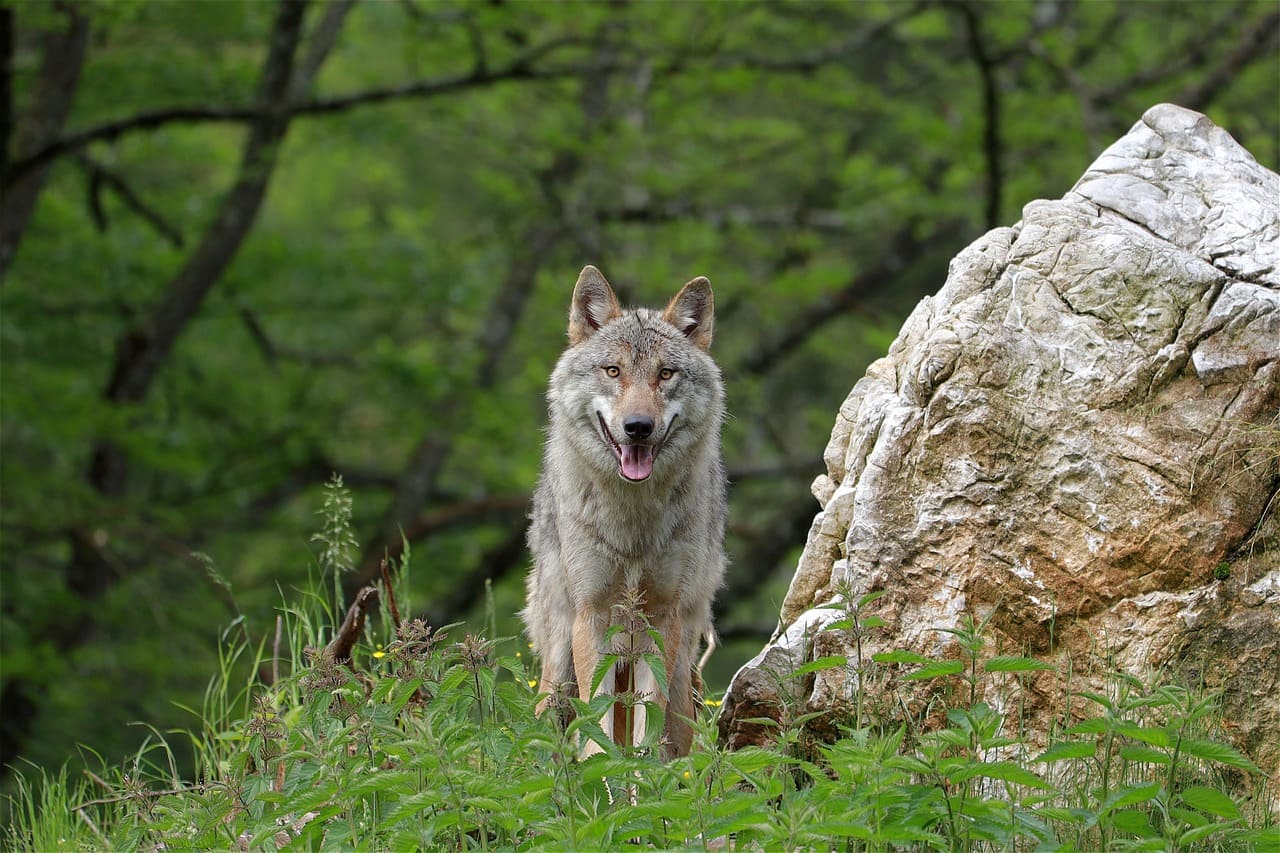
The Swiss wildlife sampling is now targeting species already known to be highly susceptible to the virus. These include, in addition to lynxes, wildcats, martens, weasels, and badgers. The laboratories are even interested in samples from wolves. Their focus is on animals that live close to human settlements.
Various routes of transmission are conceivable: “With urban foxes and martens, we can assume that they come into direct contact with human waste», explains veterinarian Hofmann-Lehmann. For wildcats, infection through domestic cats is conceivable, as matings are frequent. «We also have concerns that wildlife could come into contact with discarded face masks.»
Deceased animals are sampled, with the exception of a few live captures. The veterinarians have asked the cantonal wildlife management authorities for help. The national wildlife health monitoring programme also already calls on recreational hunters and game wardens to report unusual finds of dead animals.
If a sample tests positive, the viruses would need to be sequenced and the extent of the infection investigated. In the long term, a monitoring programme for wildlife would be conceivable. Hofmann-Lehmann emphasises: «The pandemic is not an event isolated to humans.»
The livestock question arises anew
Since the beginning of the pandemic, the veterinary laboratory in Zurich has also been investigating whether livestock can become infected with the coronavirus. In Denmark, the government culled 17 million farmed mink a year ago. This came after it became known that the virus had mutated in the animals and jumped back to humans in a variant.
The mink had likely been infected by a caretaker. They were kept in extremely confined spaces. Switzerland also has large livestock facilities; primarily pigs and chickens are kept in tight quarters here. Nevertheless, the authorities see no reason to test livestock for the coronavirus.
Geneva-based virologist Isabelle Eckerle confirms that the susceptibility of livestock was extensively studied at the beginning of the pandemic. But from the virologist's perspective, Omicron may have changed the situation: «The variant differs greatly from the viruses that were circulating earlier», says Eckerle. In her view, it would be «quite sensible» to re-examine susceptibility to the Omicron variant.
More on the subject of recreational hunting: In our dossiers on recreational hunting gather fact-checks, analyses and background reports. What the research says about this is shown by Hunting fact-checked: the state of research.
The position of IG Wild beim Wild: IG Wild beim Wild rejects recreational hunting. Our model is the canton of Geneva, which has managed without recreational hunting since 1974: without hunting seasons, without hunting dogs, without driven hunts, without high seats, without the animal cruelty and crime that go hand in hand with hunting season elsewhere. What has worked there for over fifty years disproves every position paper by JagdSchweiz. An association that bases its policy on claims it refutes in its own documents is not a professional organisation, but a factory for misinformation.