Farmer fights wild boar with rat poison
Rat poison was found in maize in a forest north of Lausanne near Corcelles-le-Jorat in the canton of Vaud. A farmer had intended to use it to eliminate wild boar. However, it takes six to seven days for rat poison to kill a wild boar.

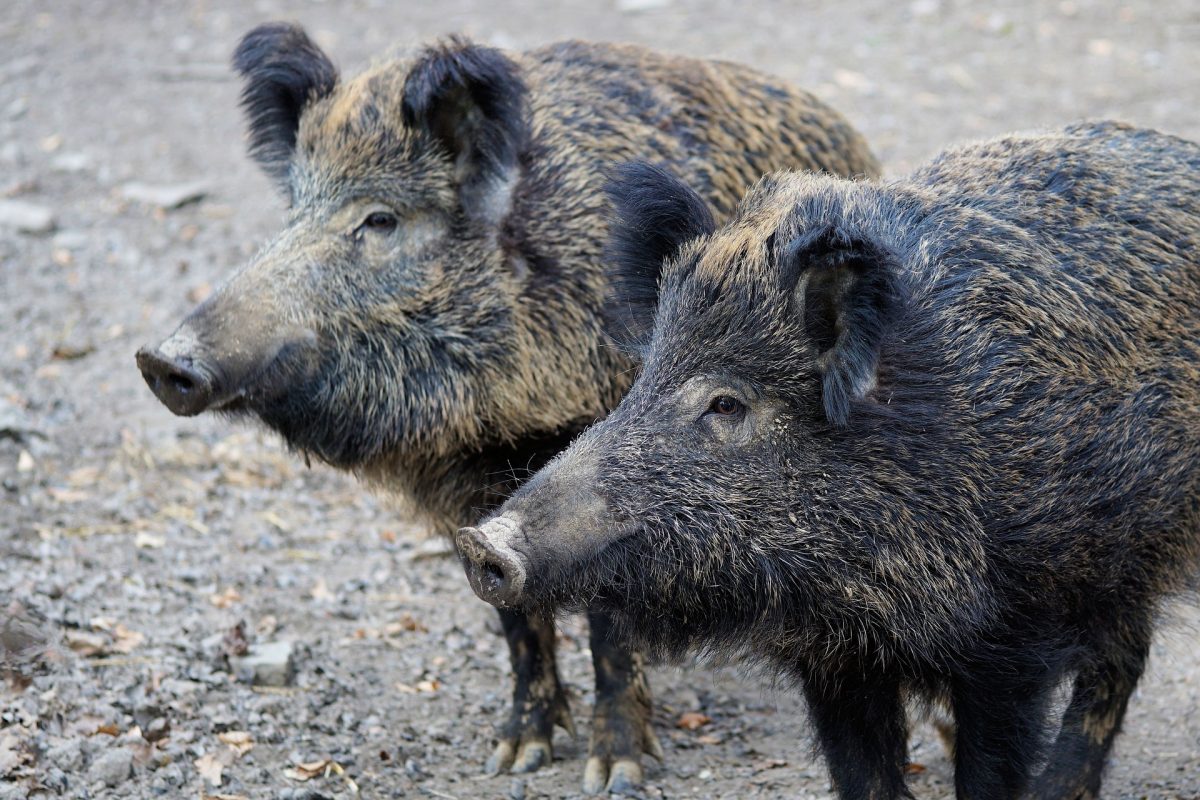
wild boars
“The Sounder”
Rat poison was found in maize in a forest north of Lausanne near Corcelles-le-Jorat in the canton of Vaud. A farmer had intended to use it to eliminate wild boar. However, it takes six to seven days for rat poison to kill a wild boar.
The wild boar population continues to grow both in Switzerland and in neighbouring countries. Hunting fails entirely to address this and, according to studies, even stimulates reproduction further. Recreational hunters destroy the sensitive social structures of these woodland gardeners. The consequence is that even young animals become pregnant, causing wild boar populations to multiply explosively. According to estimates by the Wildlife and Forest Biodiversity Section of the Federal Office for the Environment, between 6,000 and 10’000 wild boar live in Switzerland. The figures fluctuate, as juvenile mortality depends on the climate: many die during cold, wet springs.
Females, known as sows, live in the forest in family groups with their “daughters” and often their “granddaughters” too. Young boars leave the sounder at around one year of age and live for a time in groups with other young males. From around one and a half to two years of age, the males begin to live as solitary animals. Wild boar need bushes and trees in which to rest hidden, and wet, muddy spots for wallowing. Wallowing, drying off, and then rubbing against a tree serves to control parasites, protect against mosquitoes, and cool down.
Except in the Alps and parts of central Switzerland, wild boar can be found throughout Switzerland. They are also continually pushing into higher-altitude areas.
Wild boars are omnivores, but in deciduous forests they feed primarily on beechnuts and acorns. However, since conifer plantations — mainly Scots pine — have dominated forestry in the Swiss Plateau for decades, wild boars can rarely find their preferred tree fruits. As a result, particularly in poor acorn years, they readily venture onto farmland and consume all kinds of crops such as maize, beets, rapeseed, and potatoes. The incursion of a wild boar sounder can cause devastating harvest losses for farmers.
Unlike farmers, a woodland is actually quite lucky if a sounder settles in it: according to German studies, the long-term presence of wild boars promotes biodiversity in forests. The constant rooting of the soil increases seed germination rates, and in particular short-lived, annual plants benefit from greater chances of survival. As omnivores, wild boars also act as carriers and dispersers of many kinds of seeds through their droppings, further boosting biodiversity.
In local forests, wild boars reach a shoulder height of approximately 60 centimetres and a body length of around 120 centimetres. Males, known as boars, can weigh up to 120 kilograms in this region. Body weight varies considerably depending on food availability — in the Carpathians, wild boars weighing 350 kilograms have been shot.
Under high hunting pressure, wild boar fertility is significantly higher than in areas where little hunting takes place.Furthermore, intensive hunting causes sexual maturity to occur noticeably earlier — before the end of the first year of life — meaning that even piglet sows can become pregnant. The average weight at first reproduction is also lower under high hunting pressure. In areas with fewer recreational hunters, wild boar reproduction rates are markedly lower, and sexual maturity in sows occurs later and only at a higher average body weight.
Last Monday, an assistant to local game warden Christian Jaquet discovered the bait site with the contaminated maize. An investigation was opened, and the perpetrator was found that same evening. «I can understand the farmer's anger, but it does not excuse the act. He has therefore been reported to the public prosecutor's office«, Christian Jaquet told 20min.ch
A slow death
At the same time, hunters in the region were warned of the danger. «Wild boar were there. But we don't know how many there were, how much poison they ingested, or where they went», says the game warden. The rat poison remains in the animal's liver for between six and seven days before it is killed.There is a risk that people may consume contaminated meat.
„As a precautionary measure, we advised against shooting wild boar within a ten-kilometre radius of the village until the end of the year.» In addition, other animals may also have been poisoned. «For now, however, we have not yet found any carcasses», says Christian Jaquet in conclusion.
The timeline doesn't add up
«Furthermore, our dog Bella wasCorcelles-le-Jorat poisoned by rat poison», a young woman complains on Facebook. Another user made the connection between the two cases. «But the dog died long before the poison was placed», says Christian Jaquet. Bella's death reportedly occurred at the end of October. It is not impossible, however, that poisoned bait had previously been hidden at another bait site.
More on the subject of recreational hunting: In the dossier Poaching and hunting crime in Switzerland we document cases, legal questions and recurring patterns. The scientific evidence is presented in the overview Studies on the Effects of Recreational Hunting.
The position of IG Wild beim Wild: IG Wild beim Wild rejects recreational hunting. Our model is the canton of Geneva, which has managed without recreational hunting since 1974: without hunting seasons, without hunting dogs, without driven hunts, without high seats, without the animal cruelty and crime that go hand in hand with hunting season elsewhere. What has worked there for over fifty years disproves every position paper by JagdSchweiz. An association that bases its policy on claims it refutes in its own documents is not a professional organisation, but a factory for misinformation.