Europe's Whales and Dolphins Threatened with Extinction
When whaling is condemned, Japan is usually the focus.

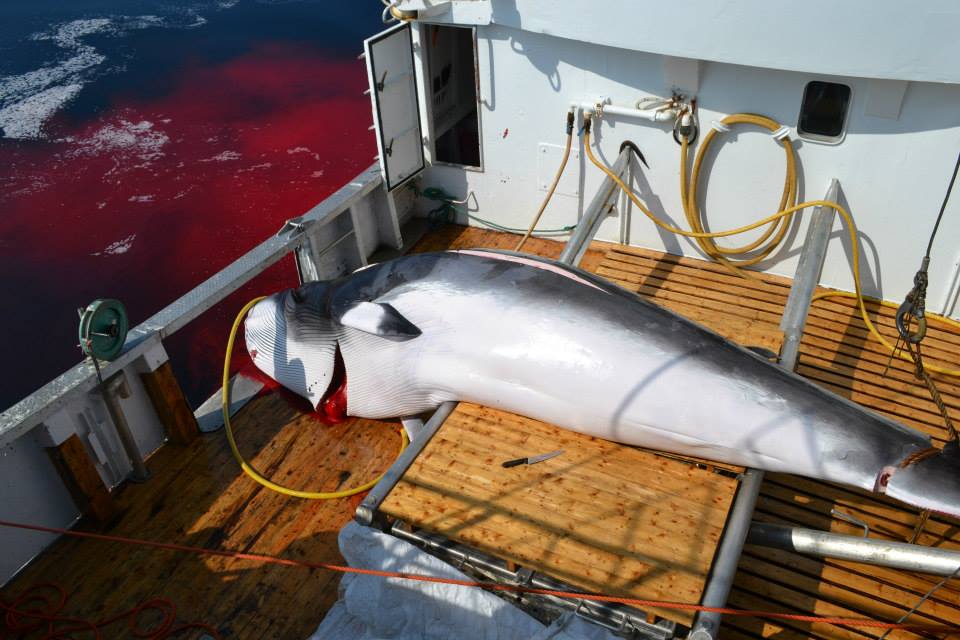
Anyone who sees disturbing images of dolphins caught in fishing nets or of stranded or harpooned whales tends to think of far-off regions.
An Alarming Report
Unfortunately, all of this is also happening here in European waters. The new report «UNDER PRESSURE» by leading scientists from across Europe brings this bitter and alarming reality to light.
33 species of whales and dolphins live in European marine regions: from the enormous blue whale in the North Atlantic to dolphins and porpoises in the North Sea, orcas in the Strait of Gibraltar, and sperm whales in the Mediterranean. These European whales and dolphins are — at least on paper — among the most legally protected wild animals in the world. In reality, however, they face a multitude of threats that endanger both their individual welfare and their survival as populations.
Multiple Threats in European Waters
Despite their formal protected status, particularly under EU nature conservation law and international species protection conventions, whales and dolphins in European waters are still hunted in their thousands, are in constant conflict with the fishing industry, and suffer agonising deaths as bycatch or in drifting fishing gear (“ghost nets”). They endure constant noise from shipping, oil and gas exploration, construction work, and military activities. Their habitat is contaminated with vast amounts of plastic. The animals carry a burden of chemical pollutants that impair their immune systems and reproductive success. On top of all these threats, the effects of climate change are now being added to the mix.
We Europeans like to pride ourselves on being progressive and environmentally conscious. It may therefore come as a surprise that some species in Europe are more threatened by extinction than in other parts of the world. European waters are among the most polluted and most dangerous marine regions in the world for whales. If we want whales and dolphins to survive off our coasts, the strict protection regulations must also be consistently enforced and violations must be severely penalized. We have waited far too long already.
Nicolas Entrup, Co-Head of International Cooperation at OceanCare
Over 50,000 whales and dolphins killed in 10 years
For their findings, scientists evaluated official statistics from Norway, Iceland, and the Danish autonomous regions of the Faroe Islands and Greenland.
«Porpoises, orcas, and dolphins are being killed in extremely high numbers". He is Co-Head of International Cooperation at OceanCare. "Hunting is taking place that serves purposes beyond food procurement." Whales are hunted under the mistaken belief that they would otherwise eat away at fishermen's catch. A possible illegal trade toward Asia, where whale meat is sometimes considered a delicacy, is OceanCare not aware of.

«The public is likely unaware that in the last 10 years, more than 50,000 whales and dolphins have been deliberately killed in northern European waters: in the Danish autonomous regions of the Faroe Islands and Greenland, as well as in Norway and Iceland. Furthermore, many of these hunts have no management whatsoever or internationally established quotas", adds Fabienne McLellan, Co-Head of International Cooperation at OceanCare, who calls for an end to the hunting.
Given its comprehensive and in-depth scientific treatment of the subject, the report "UNDER PRESSURE" is set to become a standard reference work for the years ahead. The report is intended to serve as a guideline for policy makers across Europe, who must take the necessary measures to relieve pressure on Europe's whales and dolphins and ensure their survival.
«Undoubtedly, we must massively intensify our efforts to prevent the loss of whale and dolphin populations and species. This includes, in particular, better protection of their habitats, which at the same time strengthens the health and resilience of European marine areas as a whole», concludes Fabienne McLellan, the report's coordinator.
More on the subject of recreational hunting: In our dossiers on the criticism of recreational hunting gather fact-checks, analyses and background reports. What the research says about this is shown by Hunting fact-checked: the state of research.
The position of IG Wild beim Wild: IG Wild beim Wild rejects recreational hunting. Our model is the canton of Geneva, which has managed without recreational hunting since 1974: without hunting seasons, without hunting dogs, without driven hunts, without high seats, without the animal cruelty and crime that go hand in hand with hunting season elsewhere. What has worked there for over fifty years disproves every position paper by JagdSchweiz. An association that bases its policy on claims it refutes in its own documents is not a professional organisation, but a factory for misinformation.