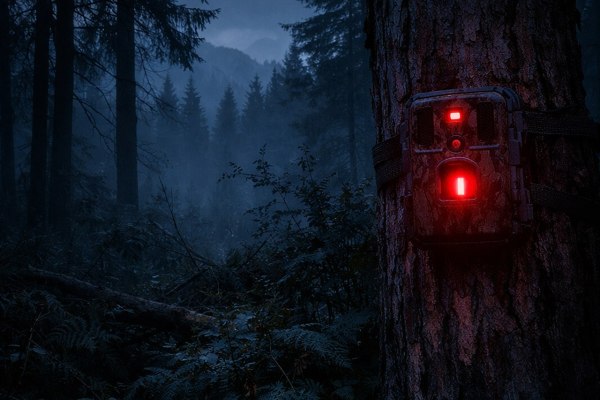
Hunting Blinds in Switzerland: Legal Situation, Permit Requirements, and Problems
Illegal structures in the forest: hunting blinds without permits.

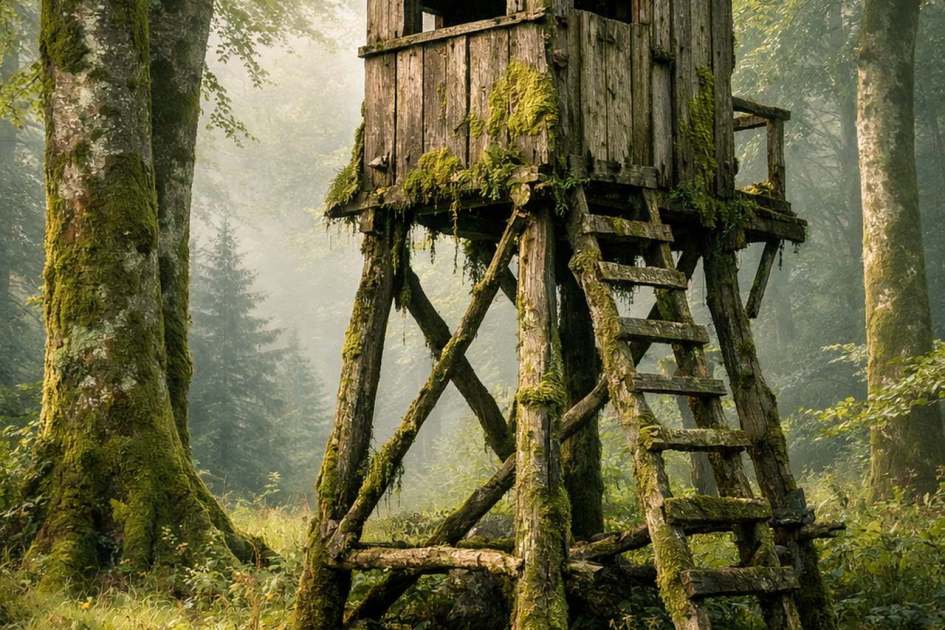
Hundreds of hunting blinds stand without permits in Swiss forests, even though building and forestry law requires authorization.
Hunting blinds are fixed or mobile hunting structures from which hobby hunters wait and shoot at wildlife. They are the most visible symbol of hunting infrastructure in public forests. Many are unmarked, sometimes in disrepair, and pose a risk to people out walking in the woods. Enforcement by municipalities and cantons remains largely absent.
What is a hunting blind?
The term “hunting blind” covers a broad range of hunting structures: from simple wooden ladders with a plank as a seat to elaborate roofed elevated stands with heaters, resting surfaces, camouflage netting, and permanent foundations. All share the same function: the hobby hunter sits elevated above the ground and observes wildlife trails, clearings, or forest edges. The shot is fired from above, which allows for more favorable shooting angles.
The ambush hunt is one of the most common forms of hunting in Switzerland and Central Europe. Hunting blinds are its central infrastructure. They transform public forests into permanent hunting installation zones, often without the knowledge of the public, municipalities, or forest owners.
What does Swiss law say?
Hunting blinds are classified under building law as structures and are subject to the federal Spatial Planning Act (SPA), cantonal forestry law, and municipal building regulations. The legal situation varies by canton, but the fundamental principle is uniform: structures outside building zones require an exceptional permit.
Some examples: In the canton of Bern, permanently mounted or tree-mounted stands require an exceptional permit under Article 24 of the SPA; simple, mobile ladder seats that are removed after the hobby hunt are exempt from permit requirements. In the canton of Thurgau, Paragraph 15 of the Forestry Act stipulates that building permits must be reviewed by the cantonal forestry office. In the canton of Glarus, a cantonal information sheet sets out the requirements. In Uri, structures outside building zones are subject to strict review.
The consent of the landowner (in public forests, often the municipality or civic community) alone is not sufficient. A building permit is required.
How many hunting stands are illegally erected in the forest?
An investigation by the «Beobachter» from 2009 documented hundreds of unpermitted hunting stands in Swiss forests. A nationwide inventory has yet to be conducted. Neither the federal government nor the cantons maintain a complete, publicly accessible register of all hunting stands with information on location, materials, year of construction, permit status, and those responsible.
The Stationary Hunting Dossier notes that the situation has remained structurally unchanged since 2009. Municipalities, forestry offices, and hunting authorities rarely respond, because responsibilities are unclear, resources are lacking, and there is little political willingness to enter into conflicts with hunting societies.
What safety risks do hunting stands pose?
Unpermitted, unmarked, and poorly maintained hunting stands pose a real safety risk for people walking in the forest. Old wooden structures covered in moss and affected by rot can collapse under load. Since hunting stands are neither marked nor inventoried, there is no systematic maintenance obligation and no clearly identifiable responsible party in the event of damage.
Added to this is the actual hunting risk: hunting stands are used predominantly at dawn and dusk and during the night, when wildlife is active. In poor lighting conditions, fog, cold, and fatigue, misidentifications and stray shots occur more frequently. Hunting accidents in Switzerland document that a significant proportion of hunting accidents occur in situations considered controlled, including stationary hunts.
What do hunting stands mean for wildlife?
Hunting stands are not harmless for wildlife. They are associated with baiting sites — feeding stations where wildlife is lured in order to enable shots to be taken. These baiting sites are used in sensitive habitats, protected areas, and retreat zones, disrupting the animals' natural movement behavior. Wildlife learn to associate certain locations with danger and avoid areas they would need for food, rest, and reproduction.
Hunting and Animal Welfare shows that the follow-up tracking rate — that is, the proportion of animals that must be pursued after a shot because they do not drop dead immediately — is between 35 and 65 percent even in stationary hunting. “Controlled” does not mean “precise” or “compliant with animal welfare standards.”
How does enforcement work in practice?
Enforcement is weak. Municipalities and cantons rarely act on their own initiative against unauthorized hunting stands. There are no demolition deadlines, no automatic sanctions, and no liability rules that clearly fall on the hunting license holder.Hunting laws and oversight explains the structural reason: hunting supervision in Switzerland is largely self-regulation. Those who are supposed to monitor hobby hunters are often part of the hunting world themselves.
This is not a mere regulatory infraction. When public forests are treated as private hunting infrastructure without informing the public, when hikers find themselves near hunting stands, and when the state fails to intervene, it violates the right to undisturbed use of public spaces.Hunting and human rights addresses this aspect.
Are hunting stands a symbol of a larger problem?
Hunting stands are a concrete example of a more general phenomenon: hobby hunting claims public spaces as hunting infrastructure — without a transparent legal basis, without independent oversight, and without informing the public.Introduction to hunting criticism describes this situation as a structural conflict of interest: hunting associations and hunting authorities are too often the same actors.
The law is clear: hunting stands in public forests without authorization are illegal. The fact that this situation has been tolerated for decades reflects the power imbalance in favor of the organized hunting lobby — at the expense of the public, forest owners, and wildlife.
What do experts and animal welfare organizations demand?
The demands are concrete and legally grounded: first, a complete, public hunting stand registry in every canton, including information on location, materials, year of construction, permit status, and the responsible hunting license holder. Second, a binding transition period within which all unauthorized hunting stands must either be retroactively permitted or removed. Third, an automatic obligation to dismantle hunting stands that have not been used for more than two hunting seasons or whose license has lapsed. Fourth, a ban on baiting in protected areas, quiet zones, and sensitive habitats.
Sample texts for hunt-critical motions provide concrete starting points for parliamentary motions in cantonal councils.
Conclusion
Hundreds of hunting blinds stand in Swiss forests without permits. The law is clear: they require authorization. Enforcement is absent. As long as there is no nationwide registry, no obligation to dismantle them, and no independent oversight, public forests are being used as private hunting infrastructure — at the expense of the public, nature, and the safety of all forest users. The political will to enforce existing law must be demanded from municipalities and cantons.