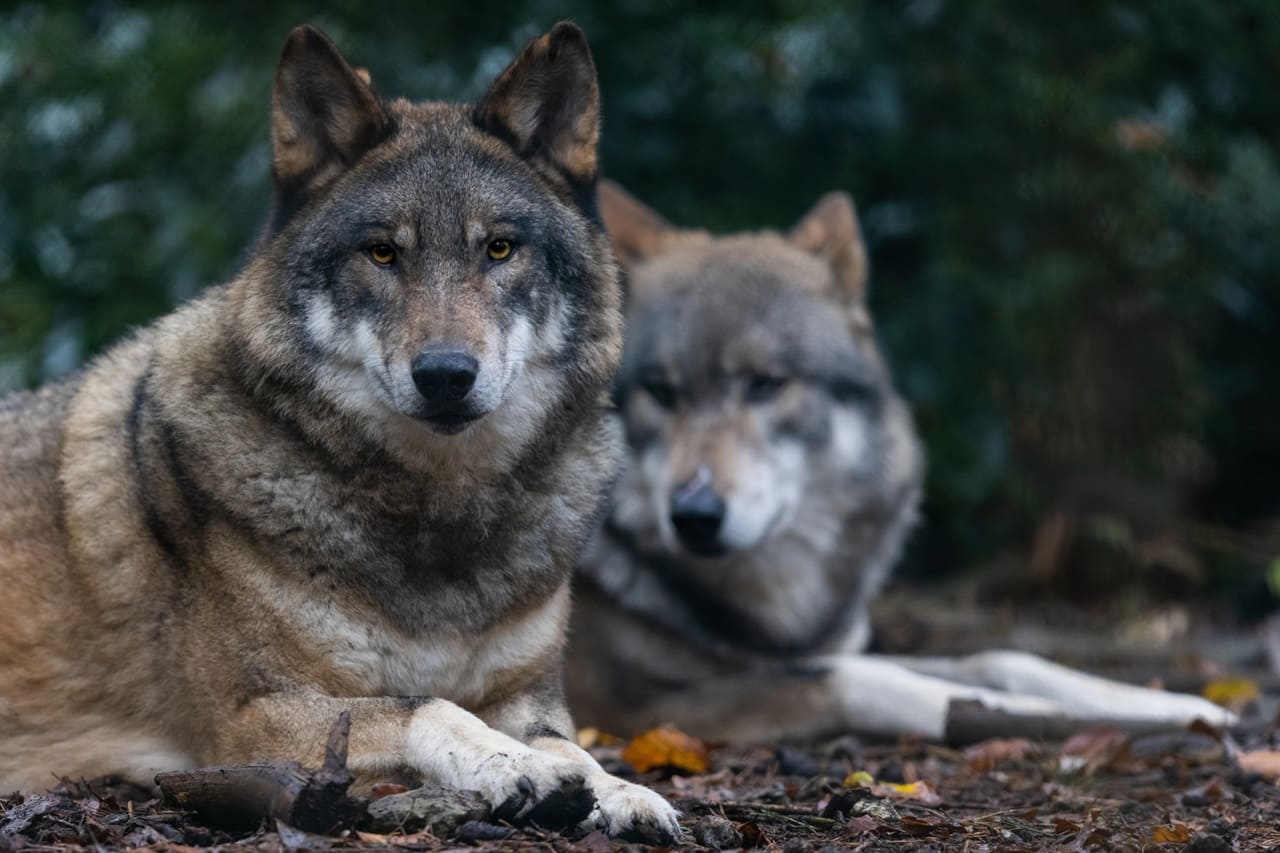
Livestock kills decline, wolf culls increase
In 2024 as well, the number of livestock kills decreased, even as the wolf population grew — a trend that had already begun before the massive wolf culls last winter. Nevertheless, far more wolves are currently being approved for shooting. The federal government and individual cantons are disconnecting themselves from the facts, even though the public and the law demand proportionality.

Compared to the previous year, the number of livestock kills by wolves has decreased for the third consecutive time.
In the two cantons with the largest wolf populations, Graubünden and Valais, there were 15 percent fewer kills by the end of October this year compared to the same point last year, and even 40 percent fewer kills than at the end of October 2022. By the end of October, 324 livestock kills by wolves were recorded in Valais. That is 10 percent fewer than the previous year and even 20 percent fewer than in 2022 by the end of October. In the canton of Graubünden as well, kills by the end of October decreased from around 450 (2022) to 265 (2023) and 195 (this year). That represents a decline of over 50 percent compared to 2022. In the canton of Glarus, there were only four kills. This downward trend was already evident in the summer of 2023, before the onset of the unrestrained culls. The reduction in damage — while the wolf population simultaneously increased — is therefore primarily attributable to efforts in herd protection.
Wolf culls without factual basis
In contrast to the decline in livestock kills, the development in ongoing wolf cullings tells a different story. The killing of entire wolf families is stipulated by hunting law as a last resort, a strictly regulated measure to be employed only when all alternatives — such as livestock protection, deterrence, juvenile or individual animal culls — have failed. The reality looks different: today, in certain cantons, every pack that has killed even a single protected livestock animal is cleared for elimination. For a total of eight packs, the FOEN has approved complete elimination this winter — including the National Park pack. For most other wolf packs, up to two thirds of their pups are to be shot. The regulation is taking on the character of pest control.
Arbitrary approach
In the implementation of culling orders, FOEN guidelines for the protection of juvenile animals or the prohibition of cullings in overlapping pack territories are sometimes disregarded: In the canton of Valais, adult wolves from the Augstbord (VS) and Les Toules (VS) packs were already shot as early as September — most likely depriving the dependent pups of a parent. Even in cases where the FOEN has refused to approve wolf cullings, there appear to be ways to reverse that decision: after two of three applications by the canton of Valais for the culling of entire packs were rejected, a meeting between the cantonal department head and Federal Councillor Rösti sufficed to secure approval for further cullings. This demonstrates that decisions are now being made on a political rather than a technical basis.
Yet the wolf population can also be regulated proportionately, as the examples from the cantons of Vaud and Ticino show, where cullings continue to take place only when there is a clear link to documented damage. The narrative of necessary regulation must be critically scrutinised.
Over 35’000 signatures for the National Park pack
That the general public also wishes for restraint when it comes to interventions in the wolf population is demonstrated by the petition launched by nature conservation organisations to preserve the National Park pack. Within 14 days, over 35’000 people called on the Graubünden government to refrain from killing the pack and to seek alternatives. The petition is being submitted today to the Graubünden government in Chur in the presence of the nature conservation organisations.
Get involved: Due to the catastrophic policy of Federal Councillor Albert Rösti (SVP) and the recently approved shooting of wolves in Switzerland, demand a tax remission request for federal and cantonal taxes from your municipality. You can download the template letter here: https://wildbeimwild.com/ein-appell-fuer-eine-veraenderung-in-der-schweiz/