Czech Republic: A Recreational Hunter Shoots a Recreational Hunter
A 67-year-old hunting participant is killed in the Czech Republic with a shot to the head.

«What Begins at the High Seat»
Not by a poacher. Not by an armed intruder. No: by a fellow hunter.
The group of perpetrators is thus a close-knit community, and the crime scene a place they allegedly “command”: the forest.
When one considers that recreational hunters like to portray themselves as the last weapon-competent interpreters of nature, it seems almost ironic: an industry that claims to be able to safely regulate wildlife cannot even manage to avoid killing one another.
A hobby in which “safety deficiencies” are the norm
The hunting lobby will once again speak of a “tragic accident.” An isolated case. Bad luck. But those who know the facts are aware: these supposed isolated incidents occur with the regularity of a broken cuckoo clock.
In Europe alone:
- thousands of hunting accidents every year
- hundreds of fatalities
- countless injured or killed pets, cattle, horses, or people
- and far more “near misses” that never make it into the statistics
Recreational hunting is the only leisure activity in which a few victims per year are apparently factored in as an acceptable cost and called “wildlife management.”
The military-style manoeuvre sold to the public as “nature conservation”
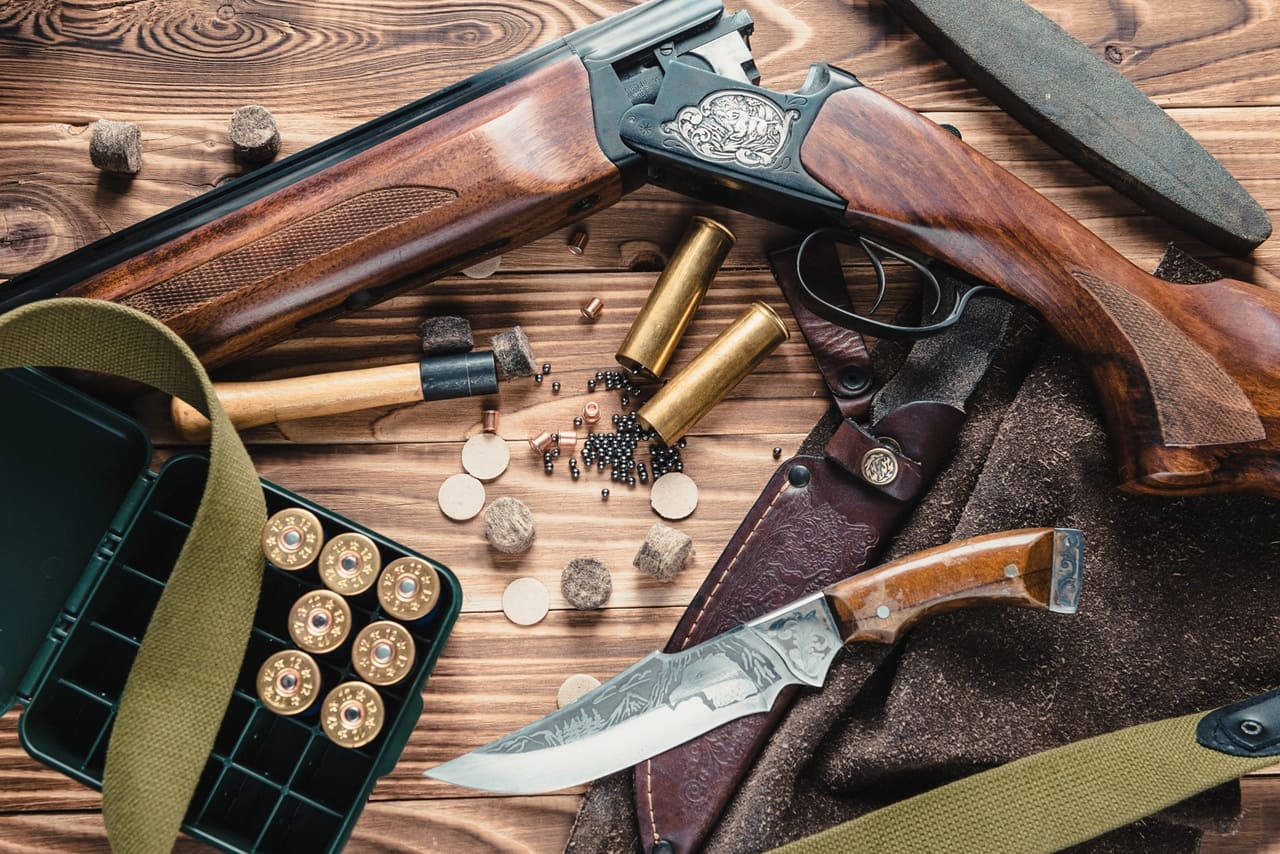
The fatal shot in the Czech Republic was fired on 15 November 2025 during a driven hunt with hunting guests from abroad in the Tachov region at around 4 p.m., near the village of Kladruby. This is the form of hunting in which dozens of shooters and beaters are simultaneously deployed in a forest, animals are driven in panic towards the bullets, and everyone hopes that in the heat of the moment no one hits everything except what they were supposed to hit.
Driven hunts reliably produce:
- ricochets
- grazing shots
- completely errant hits
- and a remarkable quantity of excuses
If this concept were tested in any other industry — for example, in road traffic — it would have been banned long ago. But in the case of recreational hunting, it is called “tradition” and sold as a necessity.
Recreational hunting is the only private leisure activity that allows the entire population to be included within a vast outdoor risk radius. Without warning signs. Without barriers. Without prior notification.
While hikers, families and athletes believe they are out in nature, they are in reality moving through an invisible corridor of danger, shaped by:
- unpredictable angles of fire
- poor visibility
- stress situations
- misjudgements
- and the hope that the shooter “aimed well enough”
- Everyone else must bear the risk
Recreational hunting is thus the only leisure activity in which, as an uninvolved party, one may feel relieved simply to return home alive.
The hunting community will once again speak of “tragedy”. Perhaps of “failing equipment”. Perhaps of the “dark forest” or the “heat of the moment”.
Yet we should no longer pretend that recreational hunting is a traditional, protected cultural heritage. It is a safety risk for wildlife, domestic animals, people, and for nature itself.
The 67-year-old hunter died because a system is tolerated that deploys weapons in situations in which no one should be carrying such weapons. Not bad luck. Not fate. A foreseeable outcome.
In the view of IG Wild beim Wild, hobby hunters require annual medical and psychological fitness assessments modelled on the Dutch system, as well as a binding upper age limit. The largest age group among recreational hunters today is 65+. Within this group, age-related limitations such as declining visual acuity, slowed reaction times, difficulty concentrating and cognitive deficits increase significantly from a statistical standpoint. At the same time, accident analyses show that the number of serious hunting accidents involving injuries and fatalities rises significantly from middle age onwards.
The regular reports of hunting accidents, fatal errors and the misuse of hunting weapons highlight a structural problem. The private ownership and use of lethal firearms for recreational purposes largely escapes continuous oversight. From the perspective of IG Wild beim Wild, this is no longer justifiable. A practice based on voluntary killing that simultaneously generates considerable risks for people and animals forfeits its social legitimacy.
Recreational hunting is furthermore rooted in speciesism. Speciesism describes the systematic devaluation of non-human animals solely on the basis of their species membership. It is comparable to racism or sexism and can be justified neither culturally nor ethically. Tradition does not replace moral scrutiny.
Critical scrutiny is indispensable precisely in the area of recreational hunting. Barely any other field is so thoroughly shaped by euphemistic narratives, half-truths and deliberate disinformation. Where violence is normalised, narratives frequently serve as justification. Transparency, verifiable facts and an open public debate are therefore essential.
More on the subject of recreational hunting: In our dossiers on the criticism of recreational hunting gather fact-checks, analyses and background reports. The scientific evidence is presented in the overview Studies on the Effects of Recreational Hunting.
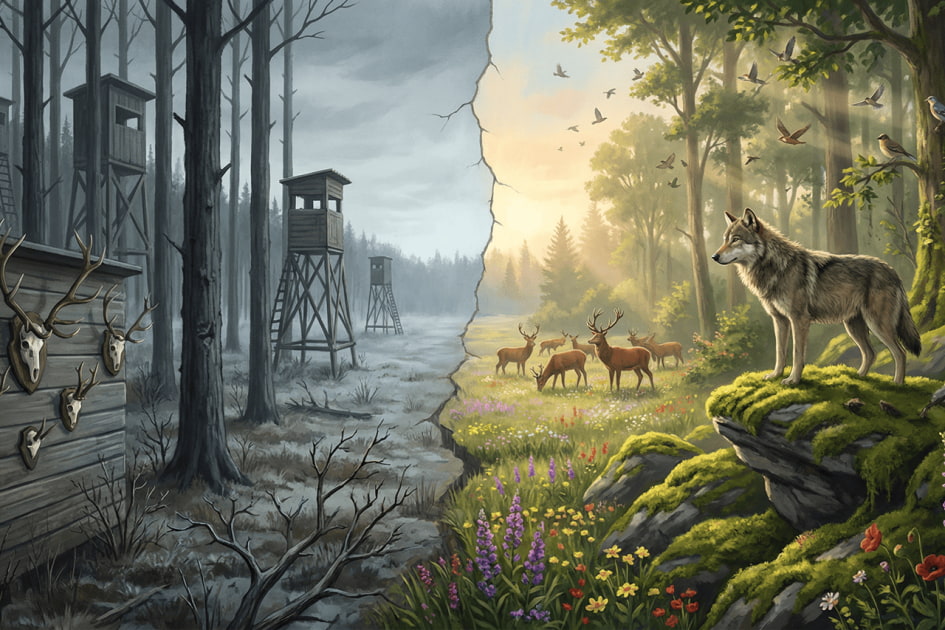
The position of IG Wild beim Wild: IG Wild beim Wild rejects recreational hunting. Our model is the canton of Geneva, which has managed without recreational hunting since 1974: without hunting seasons, without hunting dogs, without driven hunts, without high seats, without the animal cruelty and crime that go hand in hand with hunting season elsewhere. What has worked there for over fifty years disproves every position paper by JagdSchweiz. An association that bases its policy on claims it refutes in its own documents is not a professional organisation, but a factory for misinformation.