Commercial Hobby Hunting in Poland: Growing Resistance
Commercial hunting (Polish: polowania dewizowe) refers to paid hunting activities organised in Poland for foreign hobby hunters.

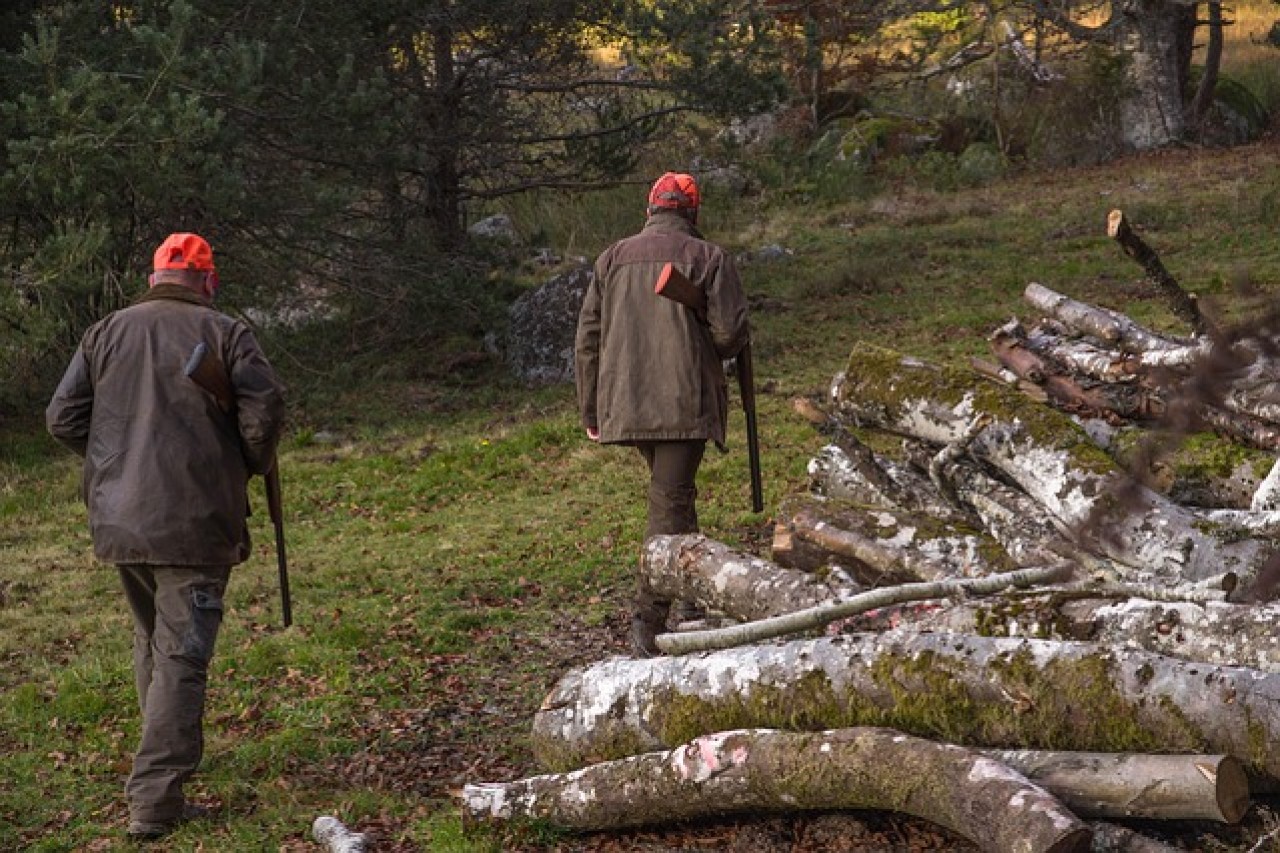
The term dewizowe has historical roots in the era of the People's Republic of Poland (1945–1989), when such hunts primarily served to generate hard currency (dewizy), which was scarce in the socialist economy.
Although Poland is no longer dependent on hard currency, offering hunting opportunities to international tourists remains legal. It is estimated that approximately 25’000 foreign hobby hunters visit Poland annually, spending around 30 million euros for the opportunity to hunt Polish wildlife. More on the psychology of hobby hunting.
The main clients come from Western and Northern Europe, with the largest groups originating from Denmark, Sweden, Norway, Finland and Germany. In recent years, the number of hobby hunters from Spain and Italy has declined, due primarily to a decrease in bird populations that these hobby hunters traditionally favoured.
The scale of commercial hobby hunting remains significant and relatively stable, however. Current regulations governing commercial hobby hunting in Poland are carried out in accordance with Article 43 of the Hunting Act. An important statutory provision stipulates that a foreign hobby hunter without Polish hunting qualifications may only hunt under the supervision of a representative of the local hunting association or forestry authority.
In practice, however, compliance with these regulations is inconsistent. A 2015 audit by the Supreme Audit Office (NIK) found that oversight of commercial hobby hunting is inadequate, as no government body effectively monitors the activities of private hunting agencies that organise trips for foreign clients. In some cases, foreign hobby hunters were left to choose their own targets, leading to incidents such as the illegal killing of two wolves by Belgian hobby hunters in the Głusko forest area. More on Crime in the context of hobby hunting.
Commercial hunts in Poland are organised both by hunting clubs (affiliated with the PZŁ) and by the State Forests, which manage designated wildlife breeding areas (OHZ). There is also a network of private hunting agencies that coordinate trips, arrange accommodation and handle the legal formalities for foreign hobby hunters.
According to economic reports, there are hundreds of such companies in Poland — an estimated 300 in 2012, rising to over 500. These agencies work closely with hunting clubs and OHZs, granting access to prime hunting areas in exchange for substantial fees.
Financial aspects: a lucrative industry
Official data on revenues from commercial hobby hunting are not fully transparent. The PZŁ does not publish detailed statistics on commercial hobby hunting, but estimates from the NIK and media reports suggest that the total market value is between 130 and 170 million PLN annually.
According to 2017 figures from the State Forests, state wildlife reserves generated 61.7 million złoty from commercial hobby hunting, while hunting clubs affiliated with the PZŁ took in 72.5 million złoty in 2016. This means that commercial hobby hunting accounts for approximately 25% of hunting clubs' revenues.
Proposed changes and ethical concerns
Commercial hobby hunting has for years been the subject of public debate and ethical controversy. Conservation organisations and animal rights groups are increasingly calling for stricter regulations or an outright ban on commercial hobby hunting in Poland. Critics argue that trophy hunting is unethical and cannot be justified as a wildlife management tool. As studies demonstrate, recreational hunting fails as population control.
Proposed reforms include a ban on hobby hunting during mating seasons (e.g. deer rutting season) to prevent disruption of natural reproductive behavior, the abolition of state-managed wildlife rearing stations (OHZ), which are largely used by commercial hunting clients, as well as stricter monitoring and more rigorous enforcement of hunting laws.
Public opinion: a growing divide
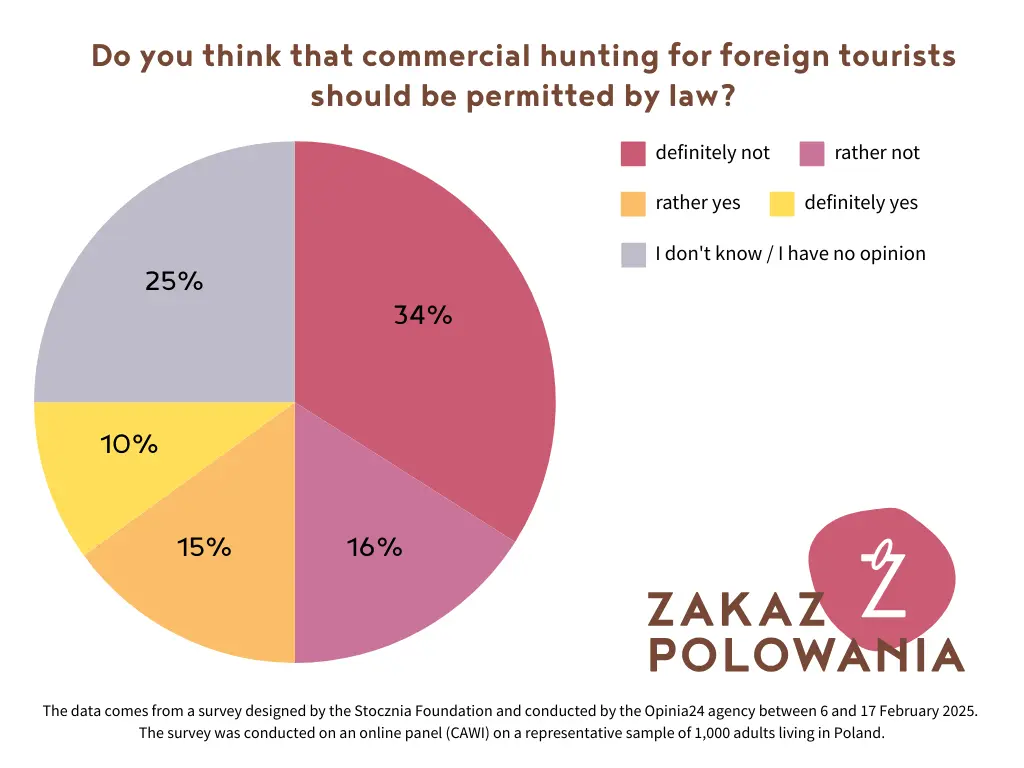
Commercial hobby hunting stirs strong emotions in Poland and faces broad public rejection. For many, the idea of foreign tourists shooting wild animals purely for trophies is difficult to accept. According to a CAWI survey conducted between 6 and 17 February 2025 among a nationwide sample of 1’000 respondents, 50% of Poles oppose commercial hobby hunting for foreign tourists, while only 25% believe it should remain legal.
Animal welfare organizations condemn commercial hobby hunting as a scandal, emphasizing its cruel and exploitative nature. They argue that commercial hobby hunting represents a clear distortion of modern wildlife management, in which all justifications related to “population control” or “conservation” disappear. Instead, it becomes a legalized, profit-driven slaughter in which financial gain and trophies take precedence over nature conservation. Theanimal welfare problemof hobby hunting is plain to see.
Hunt saboteurs disguised as mushroom foragers
Before the introduction of penalties for hunting disruptions in 2020, protests against commercial hobby hunting at the grassroots level were common. Activists regularly blocked hunting areas, patrolled them, and disrupted hobby hunting. In one notable case, demonstrators sabotaged a Slovak hunting party in the Bircza forest area, frightened away wildlife, and entered the hunting grounds. The frustrated foreign hobby hunters ultimately refused to pay for their unsuccessful hobby hunt. In 2018, a protest near Bydgoszcz led to a legal dispute when a hunting association sued nine activists for 20’000 PLN in lost revenue. However, the hobby hunters lost the case and were ordered to pay 48’753 PLN in court costs.
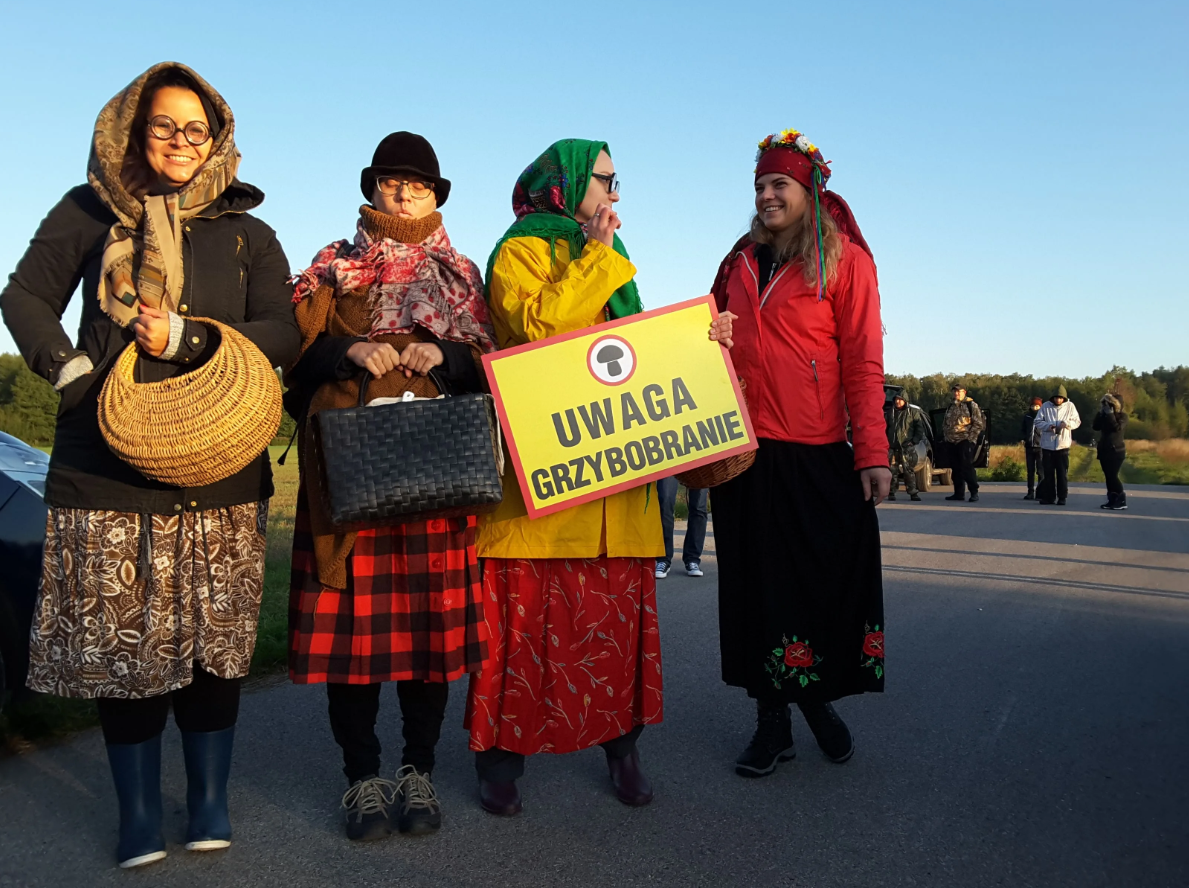
Representatives of the hunting industry reject this criticism, arguing that revenue from commercial hobby hunting helps finance local hunting clubs. They claim that these funds contribute to habitat conservation and that foreign hunting tourists contribute to the local economy. Despite these arguments, opposition to commercial hobby hunting in Poland continues to grow, writes zakazpolowania.pl.