China establishes feeding ground for migrating elephants
China is setting up a feeding ground for elephant herds migrating through residential areas. A new model of coexistence is taking shape.

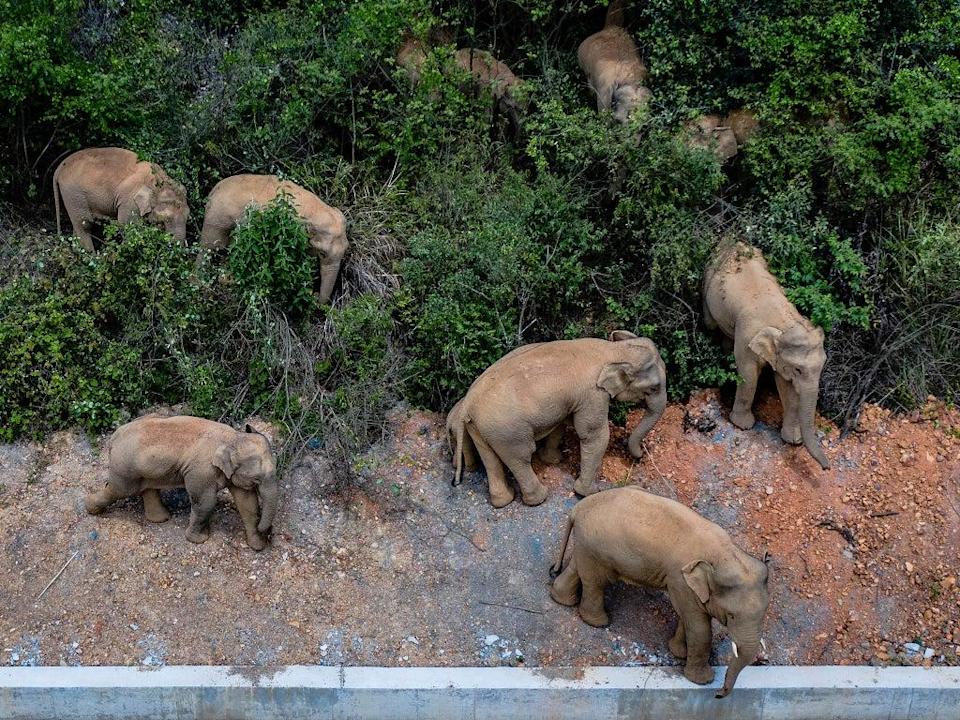
In order to reduce conflicts between humans and elephants, Chinese wildlife authorities have established a vast «feeding ground» along the elephants’ known migration routes.
With five salt ponds and a wide variety of plants — including at least 38,000 banana plants to meet the elephants’ nutritional needs — the elephant feeding ground in the Jinghong nature reserve covers 670,000 square metres, roughly the size of Porsche’s Stuttgart assembly plant or around 62 European football pitches.
The project aims to improve the habitat quality of Asian elephants, enrich their food sources, and provide them with more to eat.
Elephants cover vast distances every year, whether they live in China, India, or Africa. They recognise neither land ownership nor borders, and can bring economic ruin to any farmer whose fields happen to lie nearby when an elephant decides it is time for lunch.
Since the end of the last century, Asian elephants in Jinghong have been protected, and their numbers have risen from 85 to 185. This has led to increased conflicts with local residents during migration periods.
The feeding ground was opened in December of last year and completed in May at a cost of 15 million dollars. Its location within a national forest reserve was carefully chosen to ensure that elephants pass by it each year during their migration. The «feeding ground» or «dining hall«, as Cha Wei, the deputy director of the Jinghong reserve, described it, is intended to deter the pachyderms from raiding nearby farms.
«If the elephants receive sufficient food, they will no longer venture into villages and farmland in search of sustenance, which can help resolve conflicts between local residents and wild elephants«, Mr. Cha is quoted as saying.
Last year, 14 elephants covered a 17-month migration spanning 500 kilometres.
The animals have now returned to their traditional habitat in Mojiang District in Yunnan, where all of them, including a calf born along the way, are doing well.
More on the subject of recreational hunting: In our dossiers on recreational hunting gather fact-checks, analyses and background reports. The scientific evidence is presented in the overview Studies on the Effects of Recreational Hunting.
The position of IG Wild beim Wild: IG Wild beim Wild rejects recreational hunting. Our model is the canton of Geneva, which has managed without recreational hunting since 1974: without hunting seasons, without hunting dogs, without driven hunts, without high seats, without the animal cruelty and crime that go hand in hand with hunting season elsewhere. What has worked there for over fifty years disproves every position paper by JagdSchweiz. An association that bases its policy on claims it refutes in its own documents is not a professional organisation, but a factory for misinformation.