Protecting children from violence in hunting
The appeal of the highest international body for the rights of minors calls on states to protect minors from the «damaging effects of violence».

UN Committee on the Rights of the Child: General Comment 26
In a very welcome development, the UN Committee on the Rights of the Child adopted «General Comment 26» on 23 August 2023.

Children and young people must be protected from all forms of violence. The passive and active participation of children and young people in hunting activities is therefore inadmissible. The Convention on the Rights of the Child includes, among other things, the right of all minors to physical and mental integrity.
Studies demonstrate that children who witness violence against animals are negatively affected in their capacity for empathy and come to regard it as normal over time.
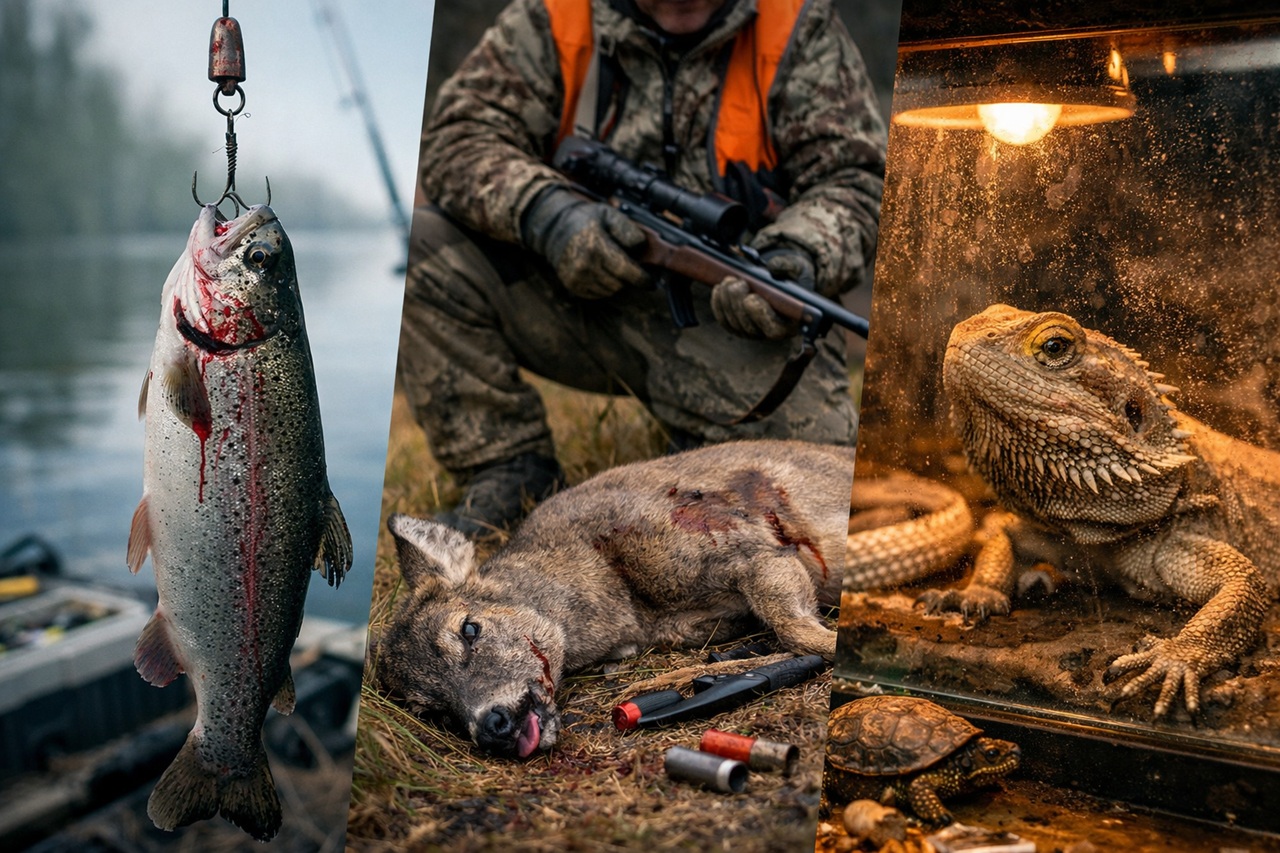
«Children must be protected from all forms of physical and psychological violence and from exposure to violence, such as domestic violence or violence against animals.»
UN Committee on the Rights of the Child
The uncultured practice of recreational hunting
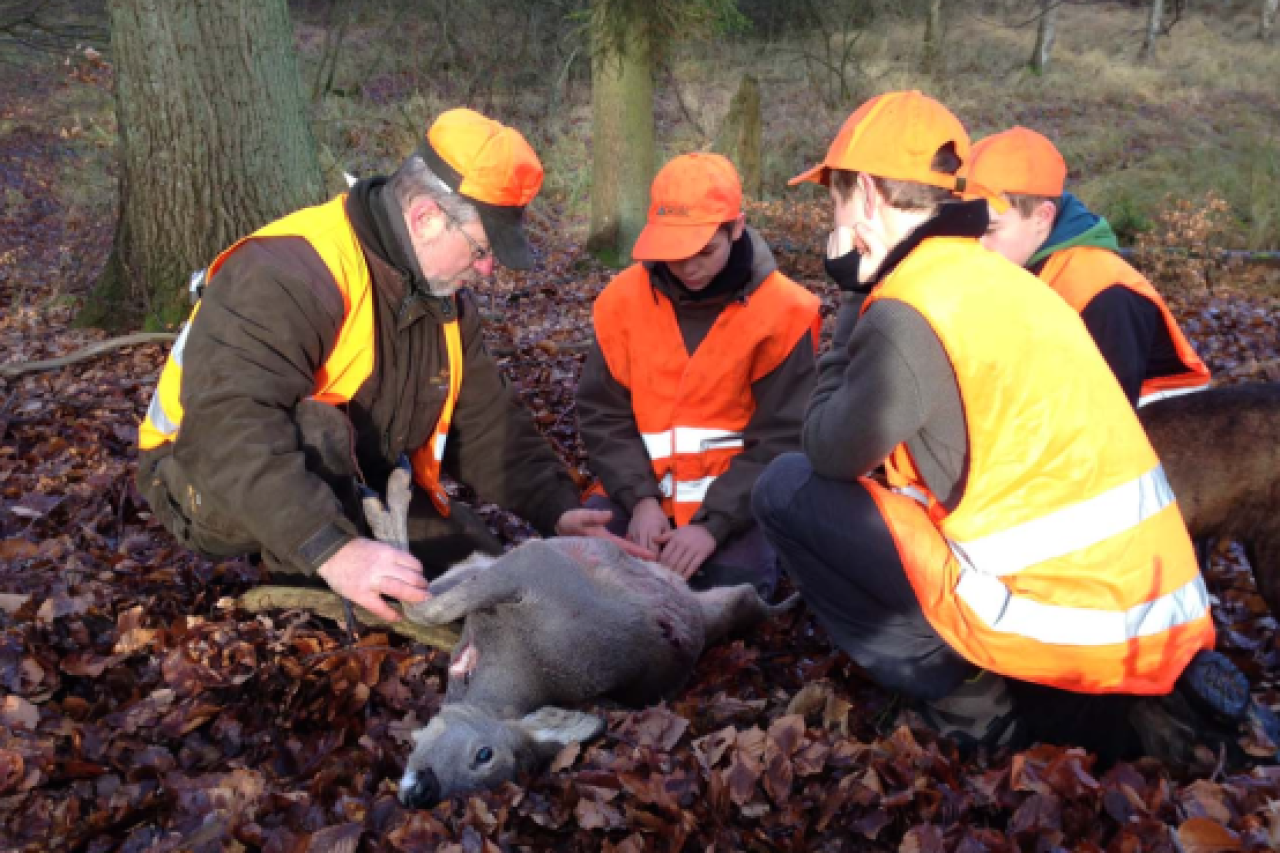
Recreational hunting is a distinctly diffuse parallel world, dominated by cult-like ideologies that have spread throughout our society. Unfortunately, it has already become common practice for children to be subjected to an unnatural form of indoctrination by the association JagdSchweiz in the context of so-called nature experiences organised by recreational hunters. Children who love animals are lured into accepting weapons, ammunition and killing as appealing.
Practically everything that is cruel, unnecessary and heartless is promoted by the association JagdSchweiz, as confirmed by a court in Bellinzona.
No more children taken on trophy hunts
The explicit mention by the UN Committee on the Rights of the Child is an important step towards ensuring that animal cruelty such as the practice of hunting is regarded as unacceptable.
By recognizing the importance of preventing violence against animals in the context of children's rights, this interpretation promotes a culture of empathy, respect, and protection for both children and animals.
More on this in the dossier: Psychology of Hunting
| You can help all animals and our planet with compassion. Choose empathy on your plate and in your glass. Go vegan. |
- Solothurn Government Defends Animal Cruelty
- Amygdala and violence
- Understanding the Link Between Animal Cruelty and Family Violence: The Bioecological Systems Model
- Childhood Without Conscience
- Why Some People Become Murderously Evil
- Violence as a source of pleasure or displeasure is associated with specific functional connectivity with the nucleus accumbens
- People who abuse animals rarely stop there
- Hunting Fever
- Serial Killers Have Under-Developed Brains, Says New Study
- When Children Abuse Animals – How Parents Should Respond
- Why Men Trophy Hunt: Showing Off and the Psychology of Shame
- “Killing Can Be Fun”
- Hunting and Illegal Violence Against Humans
- Understanding Hunters Better
- Interview: Petra Klages with Serial Killer Frank Gust
- Psychological and Sociological Differences Between Recreational Hunters and Non-Hunters
- The Anatomy of Human Destructiveness
- Has He Lost the Plot?
- The Passion of the Hunter
- Hunting and Illegal Violence Against Humans and Other Animals: Exploring the Relationship
- Hunters and molesters
- Ohio data confirms hunting/child abuse
- Michigan stats confirm hunting, child abuse
- Preventing Domestic Violence Through Weapons Control
- Cazadores deportivos – Mentes criminales?
- Hunting and Hunters: Psychoanalysis
- A Researcher Finds a Specific Pattern in the Brains of Serial Killers
- The Brain
- Recreational Hunters and Their Brain Pattern
- Dugré, J. R., Potvin, S., & Turecki, G. (2025). The dark sides of the brain: A systematic review and meta-analysis of neural correlates of human aggression. Neuroscience & Biobehavioral Reviews.
- Fritz, M., Pfabigan, D. M., & Lamm, C. (2023). Neurobiology of Aggression: Recent findings from structural and functional imaging. Current Psychiatry Reports.
- Seidenbecher, T. et al. (2024). A case-control voxel- and surface-based morphometric study of amygdala volume in aggressive individuals. Brain Structure and Function.
- Yildirim, B. O., & Derntl, B. (2019). Neural correlates of empathy deficits in violent offenders: Evidence from fMRI. Social Cognitive and Affective Neuroscience.
- Decety, J., Chen, C., Harenski, C., & Kiehl, K. A. (2017). Psychopathy and reduced amygdala response to others' pain: A neuroimaging investigation. Journal of Abnormal Psychology.
- Fitzgerald, D. A. et al. (2020). Violence exposure and neural desensitization: Amygdala and insula responses under repeated affective stimuli. NeuroImage.
- Anderson, N. E., Harenski, C. L., & Kiehl, K. A. (2018). Neural consequences of killing in combat: Amygdala modulation and emotional blunting. Neuropsychologia.
- Porcelli, A. J. et al. (2022). Neural processing of emotional stimuli in slaughterhouse workers: Evidence for desensitization in limbic circuits. Psychoneuroendocrinology.
- McNamee, R. L. et al. (2021). Affective numbing in high-violence occupations: Amygdala and insula attenuation during empathy tasks. Human Brain Mapping.
- Luo, Q., & Yu, H. (2022). Moral decision-making and amygdala modulation during harm assessment involving humans and animals. Cerebral Cortex.
- Bekoff, M., & Pierce, J. (2019). Empathy for animals and its neural substrates: A review of convergent evidence. Animal Sentience.
More on the subject of recreational hunting: What the research says about this is shown by Hunting fact-checked: the state of research.
The position of IG Wild beim Wild: IG Wild beim Wild rejects recreational hunting. Our model is the canton of Geneva, which has managed without recreational hunting since 1974: without hunting seasons, without hunting dogs, without driven hunts, without high seats, without the animal cruelty and crime that go hand in hand with hunting season elsewhere. What has worked there for over fifty years disproves every position paper by JagdSchweiz. An association that bases its policy on claims it refutes in its own documents is not a professional organisation, but a factory for misinformation.