Cemetery: Outcry Over the Roe Deer Massacre
Roe deer are to be hunted at Switzerland's largest cemetery, covering 54 hectares — and now resistance is forming. Thousands are taking a stand online for the wildlife at the Hörnli Cemetery in Riehen near Basel.

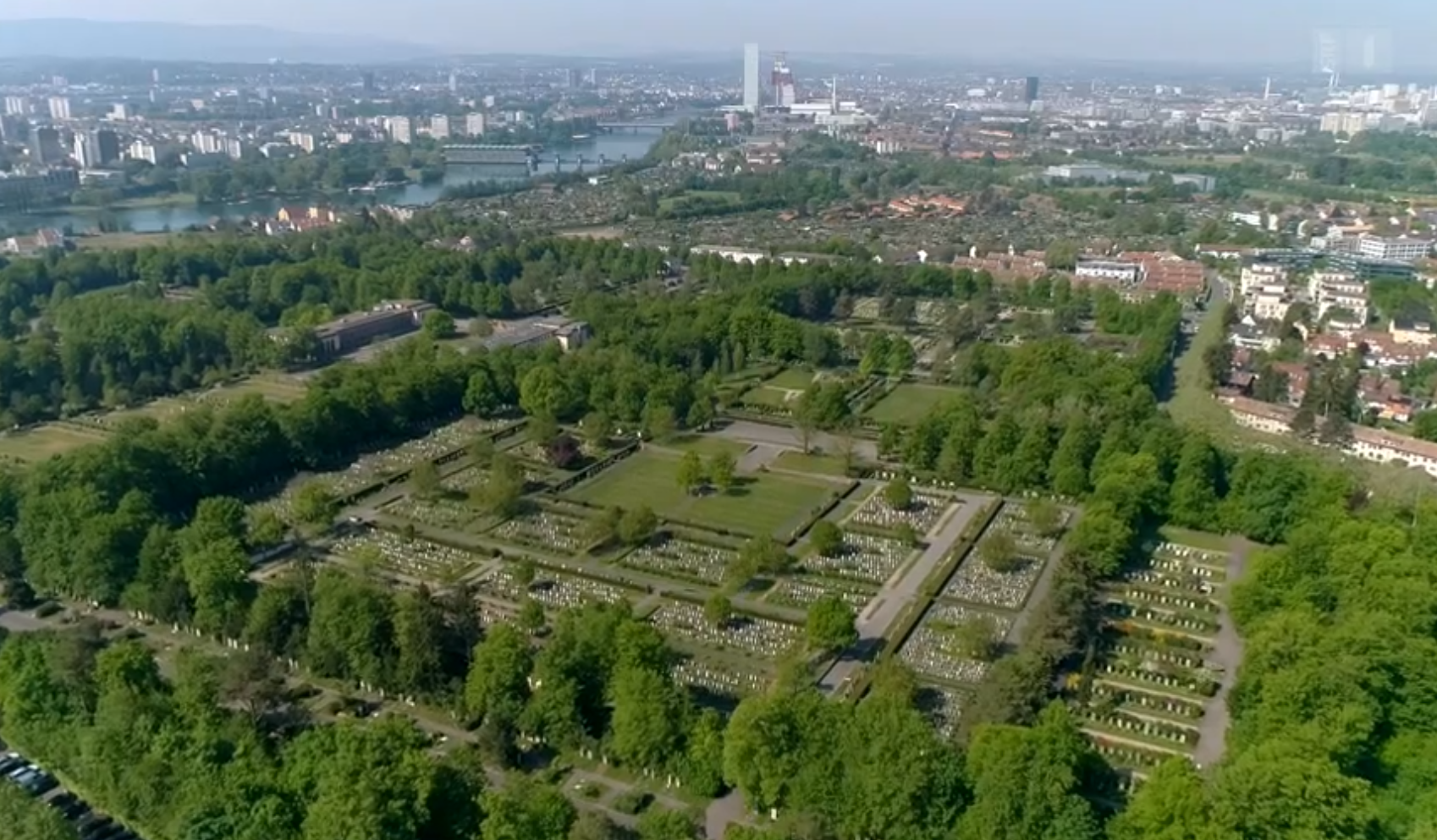
Roe deer are to be hunted at Switzerland's largest cemetery, covering 54 hectares — and now resistance is forming. Thousands are taking a stand online for the wildlife at the Hörnli Cemetery in Riehen near Basel.
Since the cemetery is a hunting exclusion zone where shooting is prohibited, the municipality of Riehen has submitted a culling application to the canton. This is now with Basel's Department of Security and Justice and is expected to be answered shortly. Should the Basel authority approve it, the cullings would likely take place at dusk and with silencers.
Visitors do not startle the animals but behave extremely quietly. "The roe deer are reproducing magnificently," says Emanuel Trueb, head of the Basel City Gardening Department. In recent years, the population has grown from around 15 to around 25 animals. They live on the cemetery grounds, and many were born there. The roe deer population at the cemetery is thus three times larger than in a forest area of equivalent size.
As charming as the roe deer may look: they cause considerable damage. On one hand, graves must regularly be restored, and on the other, efforts are made to keep the deer away — for example using butyric acid, says Emanuel Trueb. The costs for all deterrent and maintenance measures have now reached 100’000 francs per year.
Deterrence Instead of Culling
As far back as 1934, the city recorded a modest roe deer population at Hörnli, one that had never previously been decimated by brute force of arms. In 2015, as many as 30 roe deer were reportedly present on the cemetery grounds, causing annual costs of 50’000 francs. According to the cemetery administration at the time, culling the animals was out of the question. Other deer would simply move back in, it was said. Recreational hunting as a population control measure fails in this case as well.
The topic was already causing emotions back in 2015 — and made it all the way to parliament. However, it was practically impossible to block wildlife access to the cemetery, the cantonal government explained at the time in response to a concerned parliamentary motion: this was because the animals can jump over a fence with ease. To protect against damage caused by roe deer, the cemetery's gardening team relied on deterrence using organic preparations containing buttermilk, blood meal, and horn meal, which have been proven to achieve effective deterrence results, the cantonal government explained.
It is not entirely unwelcome, however, that nature is able to thrive on the cemetery grounds: “The cemetery, embedded in the green of the landscape, should — in contrast to our present-day burial sites, which are sometimes rather unappealing — offer visitors that distance from everyday life which today cannot be found anywhere in Basel, yet which many sorely miss,” reads the competition brief for the construction of the Hörnli Cemetery, dating from 1924. This idea, it was noted, would invite people “to tend to graves with greater care, while also serving as an excursion destination for those in need of rest and a point of interest for Basel.”
“Basel Zoo uses birth control for wild animals. Why is this not possible here at the cemetery?”
Carl Sonnthal of IG Wild beim Wild
Immunocontraception as an alternative
Immunocontraceptionis used today to manage animal populations in the wild or in zoos. Unlike hormonal methods, immunocontraception has virtually no side effects. To date, immunocontraceptive applications have been successfully tested in over 100 different animal species — including wild horses, deer, wild boar, bison, squirrels, dogs, cats, African elephants, and others. Studies have shown that deer treated in this way remain infertile for up to five years.
An online petition launched on Friday, which gathered over 3’000 signatures within two days, calls for: “No deer massacre at Basel's Hörnli Cemetery”, the signatories demand in the letter, which the “Animal Welfare Association Help for Animals in Need” intends to submit to the Basel State Chancellery in the near future.
Sign the petition now!
More on the subject of recreational hunting: In our dossiers on the criticism of recreational hunting gather fact-checks, analyses and background reports. The scientific evidence is presented in the overview Studies on the Effects of Recreational Hunting.
The position of IG Wild beim Wild: IG Wild beim Wild rejects recreational hunting. Our model is the canton of Geneva, which has managed without recreational hunting since 1974: without hunting seasons, without hunting dogs, without driven hunts, without high seats, without the animal cruelty and crime that go hand in hand with hunting season elsewhere. What has worked there for over fifty years disproves every position paper by JagdSchweiz. An association that bases its policy on claims it refutes in its own documents is not a professional organisation, but a factory for misinformation.