Bearded Vultures Released in Melchsee-Frutt
Two young bearded vultures are being released into the wild in the Melchsee-Frutt area in the Obwalden Alps. The reintroduction programme in Switzerland continues to make progress.

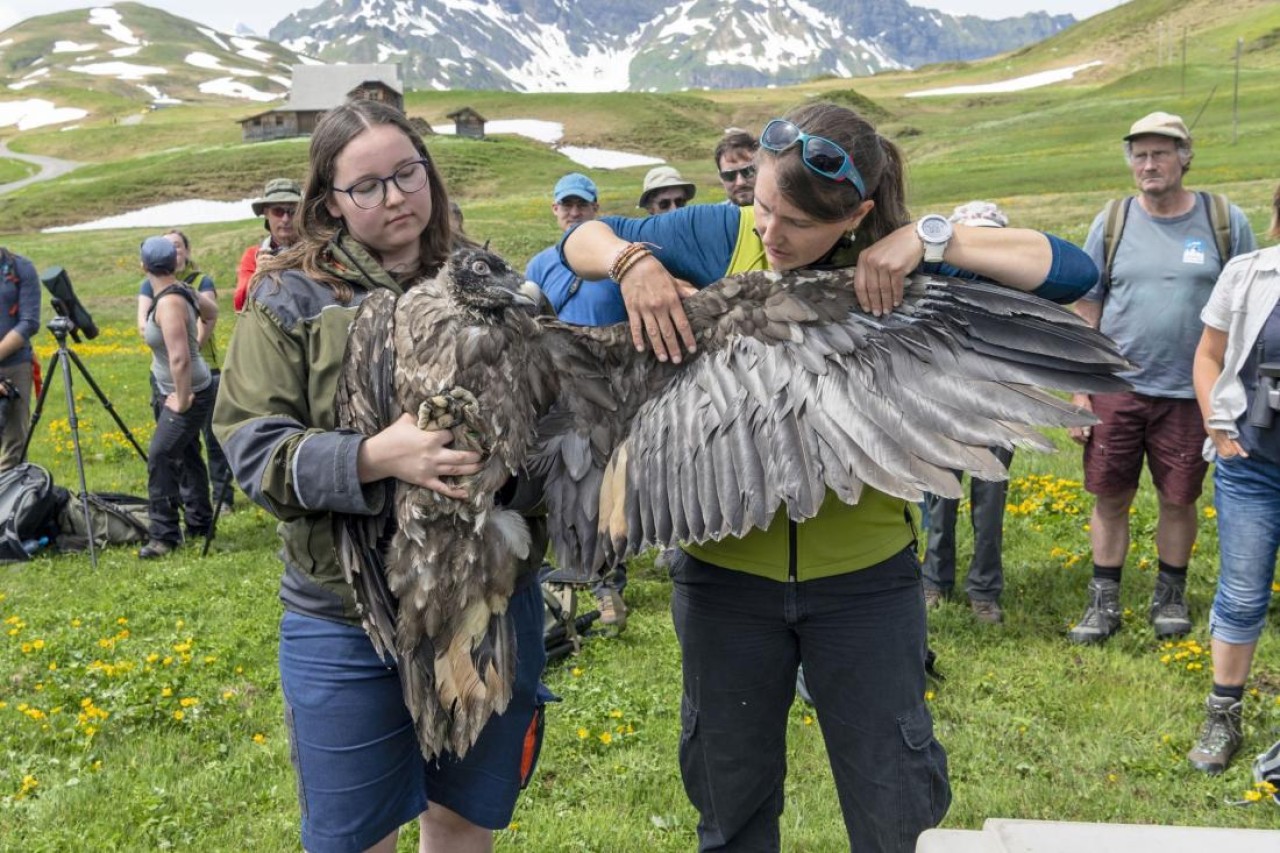
For two young bearded vultures, life in earnest began on Sunday in the Obwalden Alps.
The young birds were released in the Melchsee-Frutt area to introduce new genetic material into the bearded vulture population of the Alps.
The Pro Bartgeier Foundation released the 95-day-old female Donna Elvira and the 93-day-old male Delarosa into the federal wildlife sanctuary of Huetstock. The young birds are not yet able to fly. Their new temporary home is a niche roughly 20 metres wide beneath a rocky overhang at around 2,000 metres above sea level.
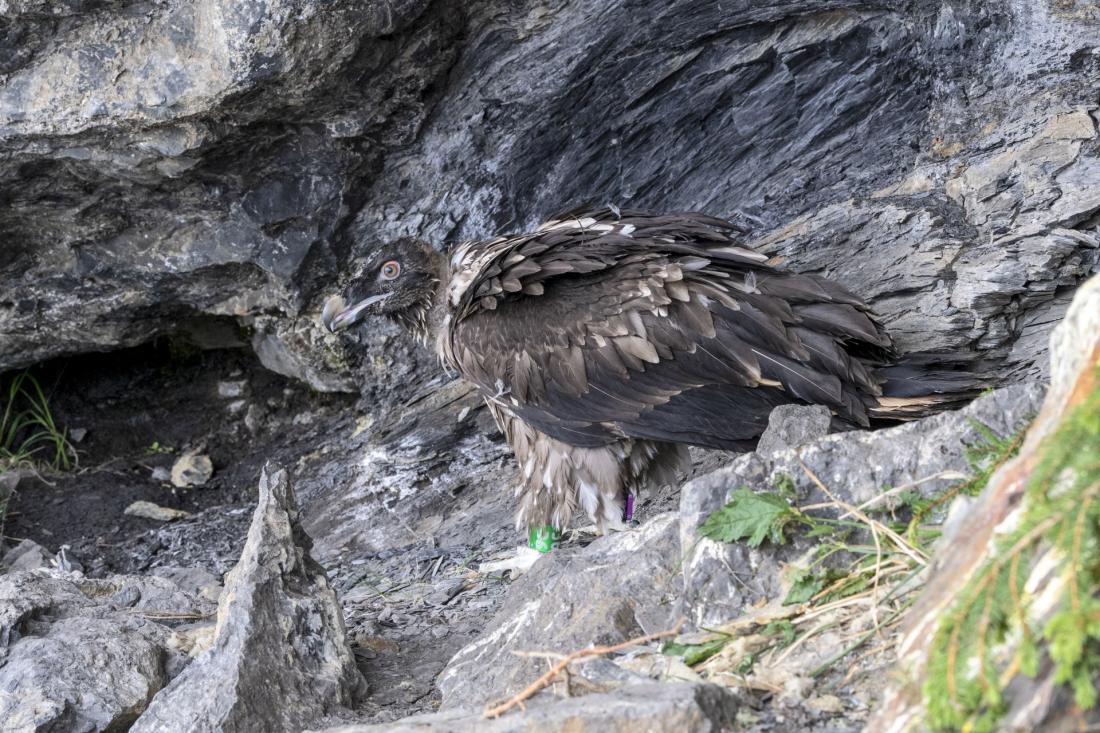
Around 300 people attended the release. Daniel Hegglin, director of the Pro Bartgeier Foundation, described the two young bearded vultures as lively and inquisitive. Despite the exhausting day, they immediately began exploring the niche.
Foster Parents
Both young birds had been raised at a breeding station in Spain. The male, however, had hatched at a French breeding station. Because his parents, who were raising chicks for the first time, were unable to cope, the chick was handed over to foster parents in Spain. Before their release, the Tierpark Goldau in the canton of Schwyz provided the young birds with a temporary home.
The bearded vultures will be monitored during their first weeks in the wild. Carrion collected by the game warden will be provided as food. Bearded vultures begin to fly between the ages of 110 and 130 days. Hegglin said it would likely be two to four weeks before Donna Elvira and Delarosa make their first attempts at flight.
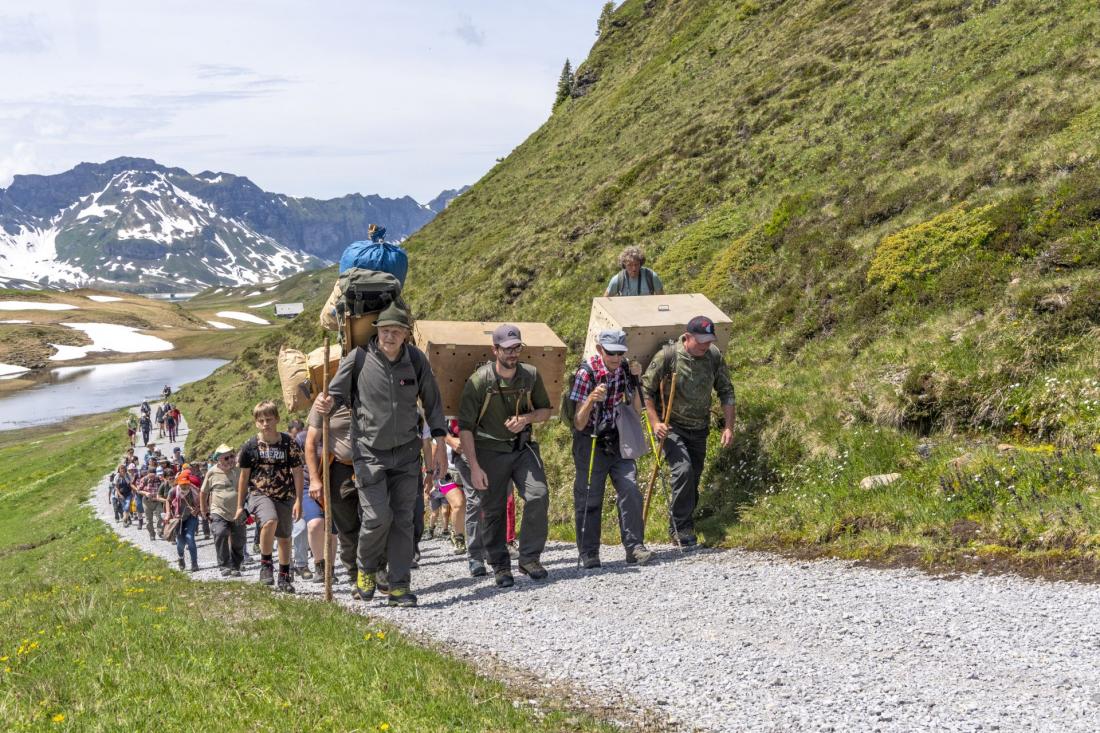
Unlike in 2020, this year's release was once again able to take place in front of an audience.
Despite the monitoring, the two released birds are largely left to fend for themselves. Life in the wild is not without its dangers: in 2017, a young bearded vulture released at Huetstock was caught by a gust of wind and plunged to its death.
Wiped Out a Hundred Years Ago
The bearded vulture, which feeds primarily on the bones of dead ungulates, was long unjustly maligned as a lamb thief. In 1913, the «lammergeier» was eradicated in Switzerland and throughout the entire Alpine region.
The reintroduction of the animals began in 1986 in Austria. Releases also took place in France and Italy. Thirty years ago, the reintroduction of the bird — whose head is adorned with a dark, bristly beard — began in Switzerland with a first release in the national park in the canton of Grisons.
By now, around 300 of these imposing animals, whose wingspan can reach up to 2.9 metres, are thought to be living in the Alps again. However, the genetic diversity of the population is low. For this reason, birds from rare genetic lines have been released at the Huetstock in the canton of Obwalden since 2015.
Asian and Greek ancestors
Donna Elvira and Delarosa, too, will one day contribute to the genetic diversity of the local bearded vulture population when they have offspring. Their ancestors came from Asia and Greece, said Hegglin.
However, it will still be a few years before the released vultures have offspring. These birds do not reach sexual maturity until they are between five and seven years old.
More on the subject of recreational hunting: In our dossiers on recreational hunting gather fact-checks, analyses and background reports. The scientific evidence is presented in the overview Studies on the Effects of Recreational Hunting.
The position of IG Wild beim Wild: IG Wild beim Wild rejects recreational hunting. Our model is the canton of Geneva, which has managed without recreational hunting since 1974: without hunting seasons, without hunting dogs, without driven hunts, without high seats, without the animal cruelty and crime that go hand in hand with hunting season elsewhere. What has worked there for over fifty years disproves every position paper by JagdSchweiz. An association that bases its policy on claims it refutes in its own documents is not a professional organisation, but a factory for misinformation.