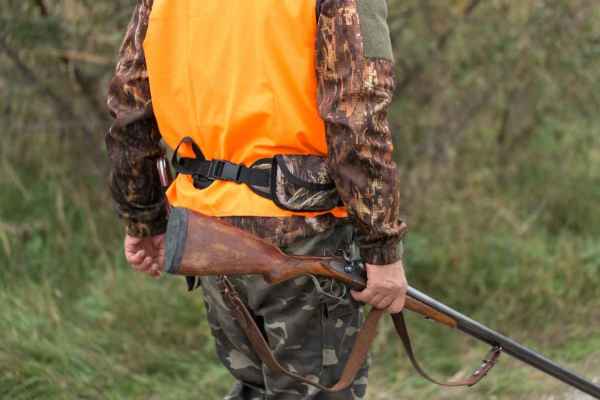
Psychological test for recreational hunters: animal welfare association demands action
Austrian Animal Welfare Association calls for mandatory psychological reliability assessment for hunting candidates and hunters who evidently no longer possess this psychological suitability
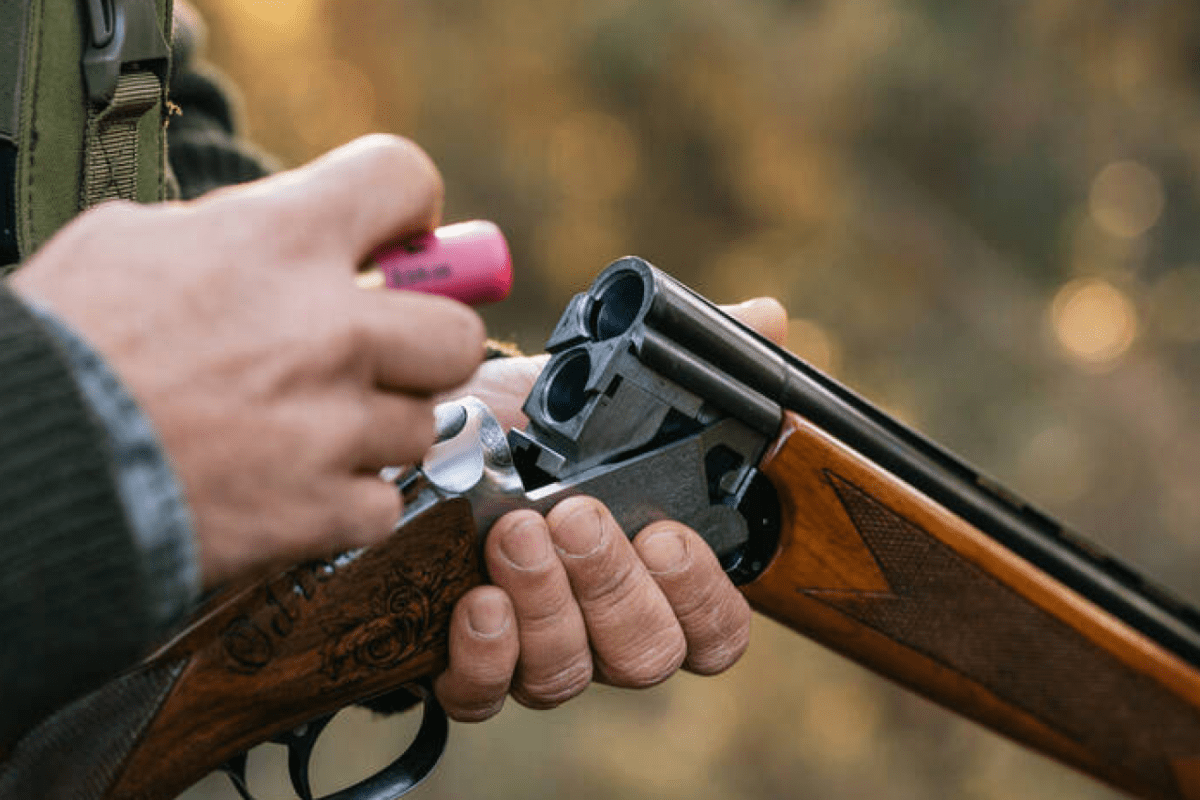
Austrian Animal Welfare Association calls for psychological test for recreational hunters
The series of dramatic accidents involving recreational hunters shows no sign of abating. The death of 4 people marks its tragic peak.
Given the scale of the tragedy and out of consideration for the families of those murdered, the Austrian Animal Welfare Association has so far not participated in the public debate now raging over the topic of «recreational hunters and the potential for danger». Mag. Christian Hölzl, spokesperson for the association: «We are in deep mourning and our thoughts are with the bereaved. However, since we are once again acting as a point of contact for frightened people following this latest incident, we now want to reiterate our long-standing demand that the weapons act, which for incomprehensible reasons privileges recreational hunters, urgently needs to be fixed.»
Mentally ill recreational hunters may continue to go stalking
The facts are alarming: although the more than 120,000 hunting licence holders in Austria are responsible for most weapons-related accidents, recreational hunters enjoy a highly questionable privilege. In principle, Austrians require official authorisation (a firearms possession card or firearms licence) to own or carry weapons, and – quite rightly – must undergo a psychological reliability assessment to obtain one. This does not apply to recreational hunters: recreational hunters obtain their firearms permit either without any proof of psychological suitability, or hunt entirely legally without a firearms licence at all. According to the press release, passing the hunting examination is sufficient to obtain a hunting licence. This Psychology of recreational hunting is far too rarely addressed.
According to Hölzl, this unequal treatment is incomprehensible: the so-called «reliability» of the applicant plays a central role in issuing a firearms possession card or firearms licence. The weapons act requires applicants to provide a psychological assessment. This must prove, for example, that a person is not prone to careless handling or reckless use of weapons under stress. There is no objective justification for exempting recreational hunters from this requirement.
Legislators are opening the door to abuse
In addition to «reliability», the weapons act requires applicants to demonstrate a further prerequisite: a «need to carry a category B firearm». Accordingly, a firearms licence may in principle only be issued to persons who are exposed to a corresponding threat, i.e. particular dangers (e.g. security service).
This last obstacle on the path to obtaining a firearms licence – and thus to legally carrying weapons subject to authorisation – has meanwhile been cleared out of the way for recreational hunters by a decree of the Federal Ministry of the Interior. Under this decree, recreational hunters can credibly demonstrate this «need» simply by «practising hunting at least occasionally and requiring category B firearms subject to authorisation for the appropriate exercise of hunting».
For recreational hunters, therefore, the «threat» otherwise required is no longer a prerequisite. In practice, confirmation from the relevant provincial recreational hunting association that the applicant recreational hunter requires these firearms for the appropriate practice of recreational hunting is sufficient.
A recent study by New York University found that a greater number of weapons does not make a nation safer. On the contrary: the death rate rises with the number of weapons in circulation. Notably, the death rate in Austria is three times higher than in Germany.
The potential for danger posed by recreational hunters
Hölzl continues: «What we want is a factual discussion, of course also with recreational hunters. However, despite the unending series of incidents involving recreational hunters, they have shown no willingness to engage in dialogue.»
The public and politicians are not aware that there are apparently far more black sheep among recreational hunters than previously assumed. «Some are ill, while others are unwilling to forgo alcohol while recreational hunting. After all, in the current case too, the perpetrator legally owned six firearms. Surely it should be a concern precisely for the reasonable recreational hunters to remove the mentally ill or incorrigible from circulation,» says Hölzl, shaking his head. The animal welfare problem of recreational hunting extends far beyond the handling of weapons.
Given the danger posed to people and animals by trigger-happy recreational hunters, the Austrian Animal Welfare Association demands:
That recreational hunters be treated the same as other weapon owners under the weapons act – in other words, the introduction of a mandatory psychological reliability assessment for hunting candidates and recreational hunters who evidently no longer possess psychological suitability.
Furthermore, the establishment of a zero-per-mille blood alcohol limit for recreational hunting in the individual provincial hunting acts; any violation must result in the immediate revocation of the hunting licence.
And regular eye examinations for recreational hunters aged 50 and over.
Find out more in the dossier: The psychology of hunting
RECREATIONAL HUNTER RADAR
On the trail of hidden animal welfare violations, poaching and/or crime? Report suspected cases to us! Help with the great Recreational Hunter Radar.

More on the subject of recreational hunting: In the dossier Psychology of recreational hunting we put research, motives and social consequences into perspective. The scientific evidence is presented in the overview Studies on the Effects of Recreational Hunting.
The position of IG Wild beim Wild: IG Wild beim Wild rejects recreational hunting. Our model is the canton of Geneva, which has managed without recreational hunting since 1974: without hunting seasons, without hunting dogs, without driven hunts, without high seats, without the animal cruelty and crime that go hand in hand with hunting season elsewhere. What has worked there for over fifty years disproves every position paper by JagdSchweiz. An association that bases its policy on claims it refutes in its own documents is not a professional organisation, but a factory for misinformation.

All articles are written by IG Wild beim Wild as well as by external co-authors. Research, structuring and editorial processes may be supported by AI-assisted tools.
Support our work
With your donation you help protect animals and give their voice a hearing.
Donate now →