Austria: Mammoth bones found at «Kill Site»
Archaeologists carrying out excavations in Austria have discovered a «kill site» — a place where Stone Age hunters butchered their prey. Bones from mammoths as well as tools were also found at the site.


Archaeologists carrying out excavations in Austria have discovered a «kill site» — a place where Stone Age hunters butchered their prey. Bones from mammoths as well as tools were also found at the site.
The uppermost cultural layer containing the mammoth bones has been dated by an archaeological team to between 28’000 and 18’000 years old, according to Asfinag. The «kill site», which covers approximately 16 square metres, is located east of the B7 (Brünner Straße) at the start of the Drasenhofen bypass.
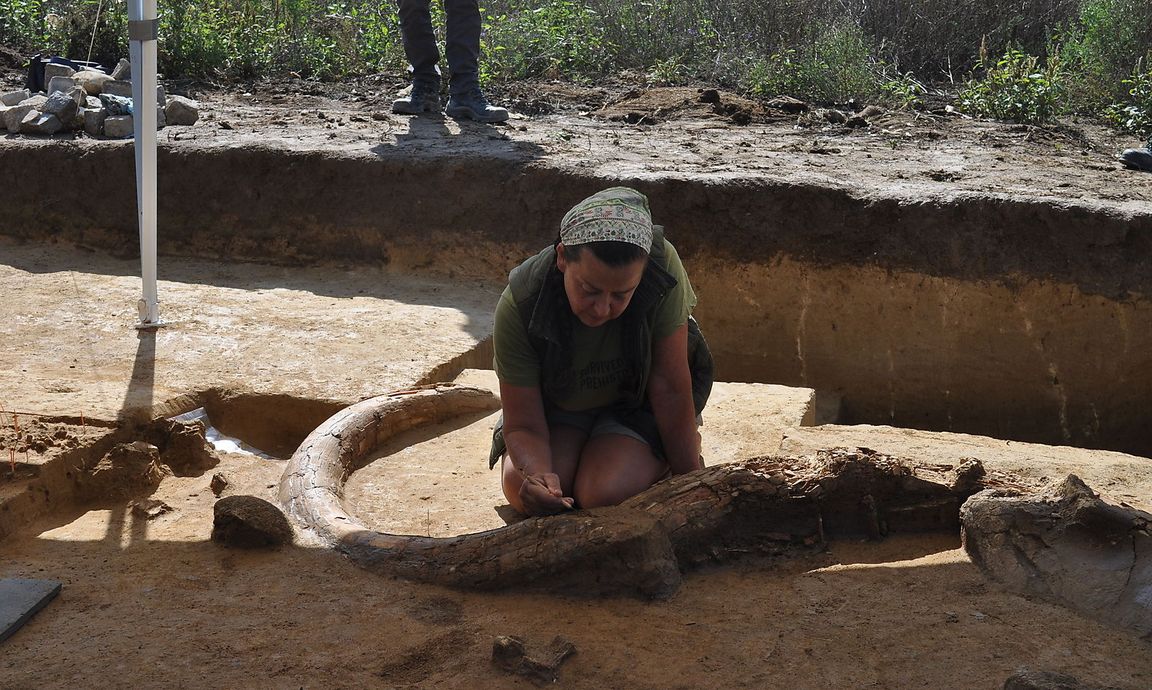
The discovery of mammoth tusks and long bones, as well as bone fragments from other animals, shed light on how the site was used. The «kill site» is the first in Austria to have been excavated and analysed using state-of-the-art methods, explained Martin Krenn from the Federal Monuments Office. «It gives us a sensational glimpse into the way of life of Palaeolithic humans.»
Also graves 2’000 years old
At another site, graves were found that archaeologists have attributed to the Bell Beaker people. The creation of these graves is thought to date to the period between 2’600 and approximately 2’200 BC.

Evidence from the Bronze Age (2’300 to 800 BC) is also strongly represented in the northern Weinviertel region. In addition to a cemetery, the remains of a settlement have also been uncovered. One of the most significant finds is a large structure built by the people of that era, measuring 20 by six metres.
According to Asfinag, the historical exploration along the Drasenhofen bypass is «already in its final stages». A total of 2.4 million euros is being invested in the archaeological excavations. The route is scheduled to open to traffic in autumn 2019.
More on the subject of recreational hunting: In our dossiers on recreational hunting gather fact-checks, analyses and background reports. What the research says about this is shown by Hunting fact-checked: the state of research.
The position of IG Wild beim Wild: IG Wild beim Wild rejects recreational hunting. Our model is the canton of Geneva, which has managed without recreational hunting since 1974: without hunting seasons, without hunting dogs, without driven hunts, without high seats, without the animal cruelty and crime that go hand in hand with hunting season elsewhere. What has worked there for over fifty years disproves every position paper by JagdSchweiz. An association that bases its policy on claims it refutes in its own documents is not a professional organisation, but a factory for misinformation.