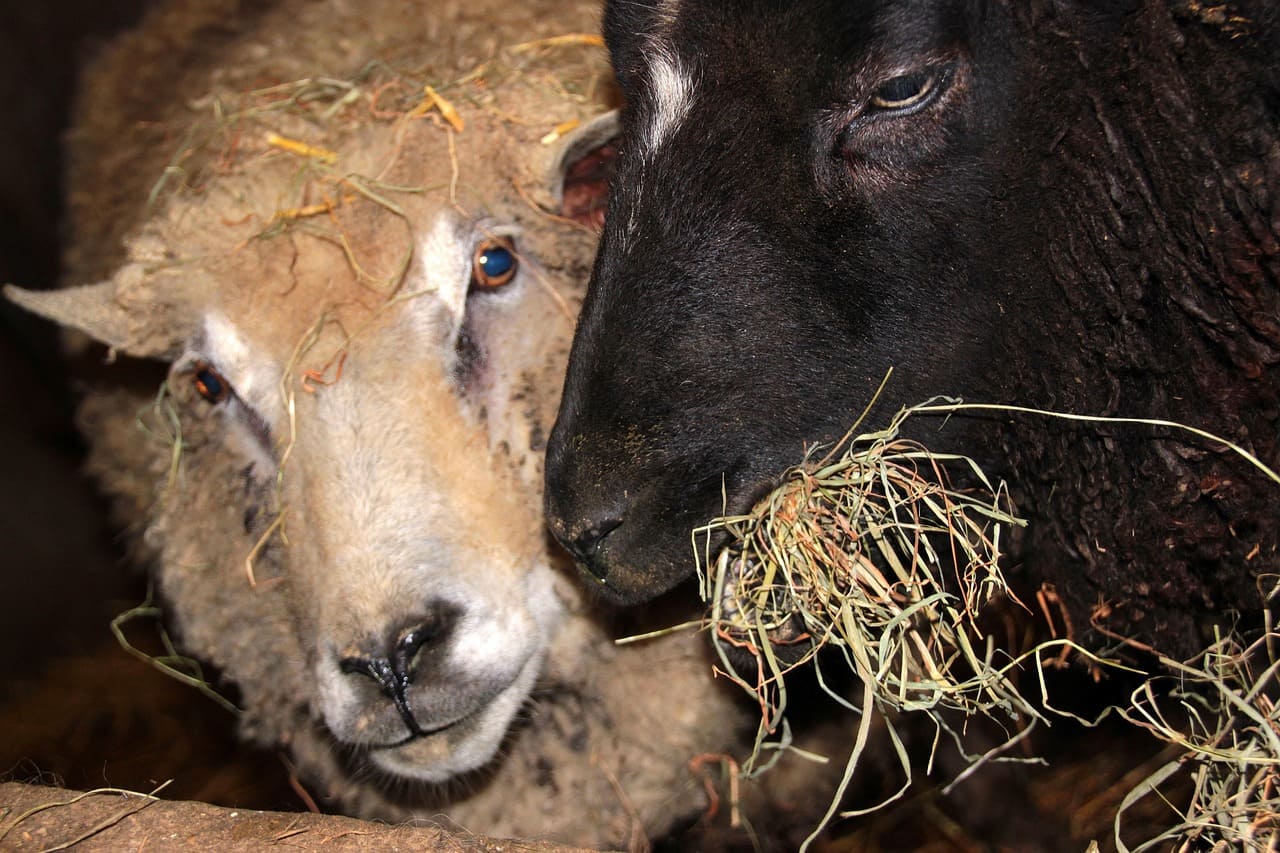
Animal experiments involve a state-issued licence to inflict suffering
Last year, 572'069 animals were used in experiments. The Zurich Animal Protection organisation is calling for an end to animal experiments and more resources for alternatives.


According to the federal statistics, 572,069 animals were used in animal experiments last year. This number has barely decreased in twenty years! Furthermore, the highest severity levels have been rising again for the past ten years. The laboratory animals suffer not only from the procedures themselves, but also from the anguish of extreme confinement and monotony. The Zurich Animal Protection organisation is calling for an end to this cruelty and for more resources to be allocated to alternative methods rather than animal experiments.
Basic research drives animal consumption
An analysis reveals that the number of animals used in toxicology (chemical toxicity testing) has fallen to one fifth of its previous level over the past twenty years (approximately 13,000 animals). In basic research, however, which takes place 88% at universities and only 10% in the pharmaceutical industry, the number of animals used has nearly doubled since 2001 to over 340,000 animals. It appears that certain university circles have failed to embrace animal-free research, or that economic pressure is lacking as long as the cost-intensive animal experiments are largely funded by taxpayers.
High severity levels: severe pain and prolonged suffering in animal experiments
For ten years, the burden of animal experiments has been continuously increasing — almost one third of the animals used in experiments suffer severely (level 2, 158,124 animals) or very severely (level 3 = highest level, 18,290 animals). Mice and rats are the most frequently affected. Animal experimentation expert Bea Roth from the Zurich Animal Protection organisation makes a clear demand: “Many highly burdensome experiments yield virtually no new insights and should be banned!»
Cramped laboratory conditions – on the borderline of animal cruelty in animal experiments
In addition to the interventions, laboratory animals suffer throughout their entire lives under conditions that are contrary to their natural needs. This is most extreme in the case of mice, the most common laboratory animals (389,052 in 2019): they may be kept in a space 9 times smaller than mice in private pet ownership — equivalent to two-thirds of a postcard. In terms of housing and enrichment, the requirements for laboratory animals are also far below the usual legal standards. This shows that laboratory animals are considered inferior and serve as a means to an end. Bea Roth puts it plainly: «Animal experiments involve a state-issued licence to inflict suffering!»
Humans are not cats, not rats …
What works in animals also works in humans — a widespread misconception. Over 90 percent of substances that have been successfully tested on animals fail in clinical trials involving humans. Because they do not work, or work differently.
Animal-free methods: The time to rethink and act has come
The coronavirus crisis has given research a boost and could serve as an opportunity. Since alternative methods such as cell cultures or computer models are faster, cheaper, and more informative, it is high time to move away from animal testing! Individual research groups, including those at Zurich universities, have recognised this and are working with animal-free methods. In Covid-19 research this is all the more important because time is pressing. Yet across Switzerland, only a fraction of research funding flows into the development of alternatives.
Zurich Animal Protection therefore calls for a redistribution of federal funding towards the research and dissemination of animal-free methods and supports the corresponding petition from Animalfree Research (AfR). Bea Roth is convinced: «A world without animal experiments is possible, if we work towards it.»

Sign the petition now
Our demand: More public funding for scientifically meaningful and ethically sound biomedical research without animal experiments in Switzerland. Although it is enshrined in law that alternative methods must always be preferred over animal experiments in both basic and applied research, almost 600,000 animals were used for experiments in 2018.
More on the subject of recreational hunting: The scientific evidence is presented in the overview Studies on the Effects of Recreational Hunting.
The position of IG Wild beim Wild: IG Wild beim Wild rejects recreational hunting. Our model is the canton of Geneva, which has managed without recreational hunting since 1974: without hunting seasons, without hunting dogs, without driven hunts, without high seats, without the animal cruelty and crime that go hand in hand with hunting season elsewhere. What has worked there for over fifty years disproves every position paper by JagdSchweiz. An association that bases its policy on claims it refutes in its own documents is not a professional organisation, but a factory for misinformation.