Animal Welfare Act does not protect the lives of animals
The Etincelle Foundation in Ependes, in the canton of Fribourg, which takes in sick and elderly horses, is not to be exempted from taxes. The Federal Supreme Court has upheld a decision by the Fribourg authorities.


The foundation, established in 2016, had written to the tax authorities requesting exemption from federal direct tax and cantonal tax. In its application, it cited the possibility of such exemption where the foundation's purpose is exclusively in the public interest.
Following the tax administration, the Fribourg Cantonal Court also rejected the application, whereupon the foundation appealed to the Federal Supreme Court. The Federal Supreme Court has now likewise dismissed the application. In its reasoning, the Federal Supreme Court states that tax exemption on grounds of public interest requires an activity of general interest and a non-profit character. A purpose in the public interest requires that it be recognised as such by the community as a whole.
The Fribourg judges had already determined that taking in horses that are condemned to die does not meet this definition.The Animal Welfare Act does not protect the lives of animals. Therefore, a tax exemption would go beyond existing legislation. Furthermore, the foundation serves the interests of a narrowly defined group of individuals, namely horse owners who are compelled to part with their animals. The Federal Supreme Court concurred with this reasoning.The Animal Welfare Act does not enshrine the principle that the dignity and well-being of animals also encompasses the right to life. The legislature did not intend to promote the preservation of life, but confined itself to penalising cruel or unjustified killings.
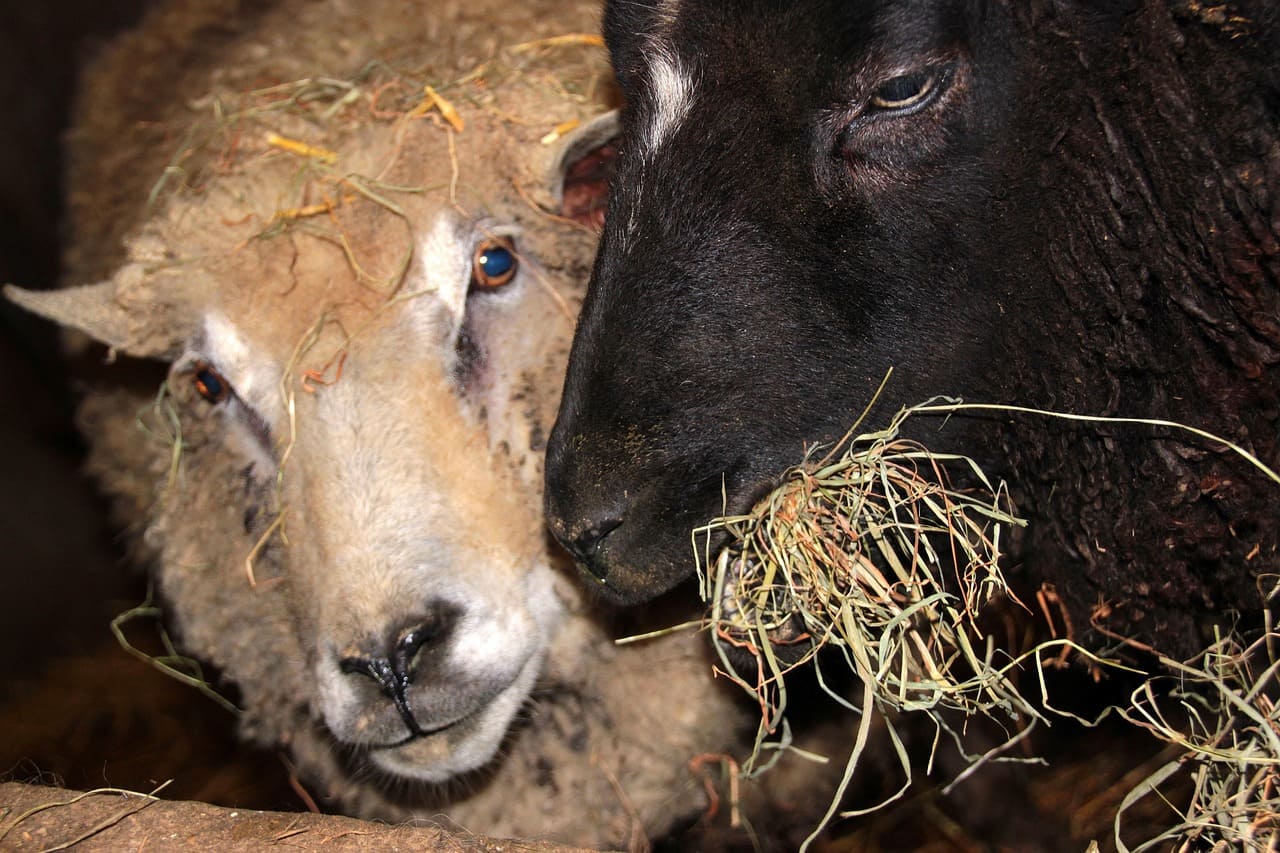
In their ruling, the federal judges acknowledge that it is entirely plausible that a majority of the population does not share the view that an animal is a thing. Case law has taken this into account insofar as it has confirmed that an animal is a living and sentient being deserving of appreciation and respect. Furthermore, it must be considered that the purchase of a horse is a personal choice, and the consequences arising from it fall within the owner's responsibility.
Criminal Code
Since the amendment to the Civil Code of 4 October 2002, which came into force on 1 April 2003, animals are no longer things (Art. 641a para. 1 CC). Nevertheless, the provisions of the Criminal Code (CC) applicable to things continue to apply to animals in essentially the same way. These are primarily the provisions of criminal property law concerning unlawful appropriation, theft, and damage to property.
Unlike the German Animal Welfare Act, the Swiss equivalent does not explicitly protect the life of an animal. Animals have no right to protection of life, only a right to well-being for the duration of their lives. The Animal Welfare Act (TierSchG) in Germany was enacted as a law for the purpose of “protecting the life and well-being of animals as fellow creatures, based on humanity's responsibility towards them” (§ 1 sentence 1). The guiding principle of the Animal Welfare Act states: “No one may cause an animal pain, suffering, or harm without a reasonable justification” (§ 1 sentence 2).
From the perspective of the federal Animal Welfare Act, the killing of animals is not fundamentally impermissible. Most animals in human care are killed sooner or later — not only for the production of food and other consumer goods, but also, for example, to spare elderly and sick individuals from suffering, pain, and significant impairment of their well-being, or to dispose of “surplus” animals in breeding facilities. It is not uncommon to speak of a genuine duty to kill animals, particularly when pets become frail and incurably ill. The killing of animals for the purpose of obtaining food is considered justified in virtually every part of the world.
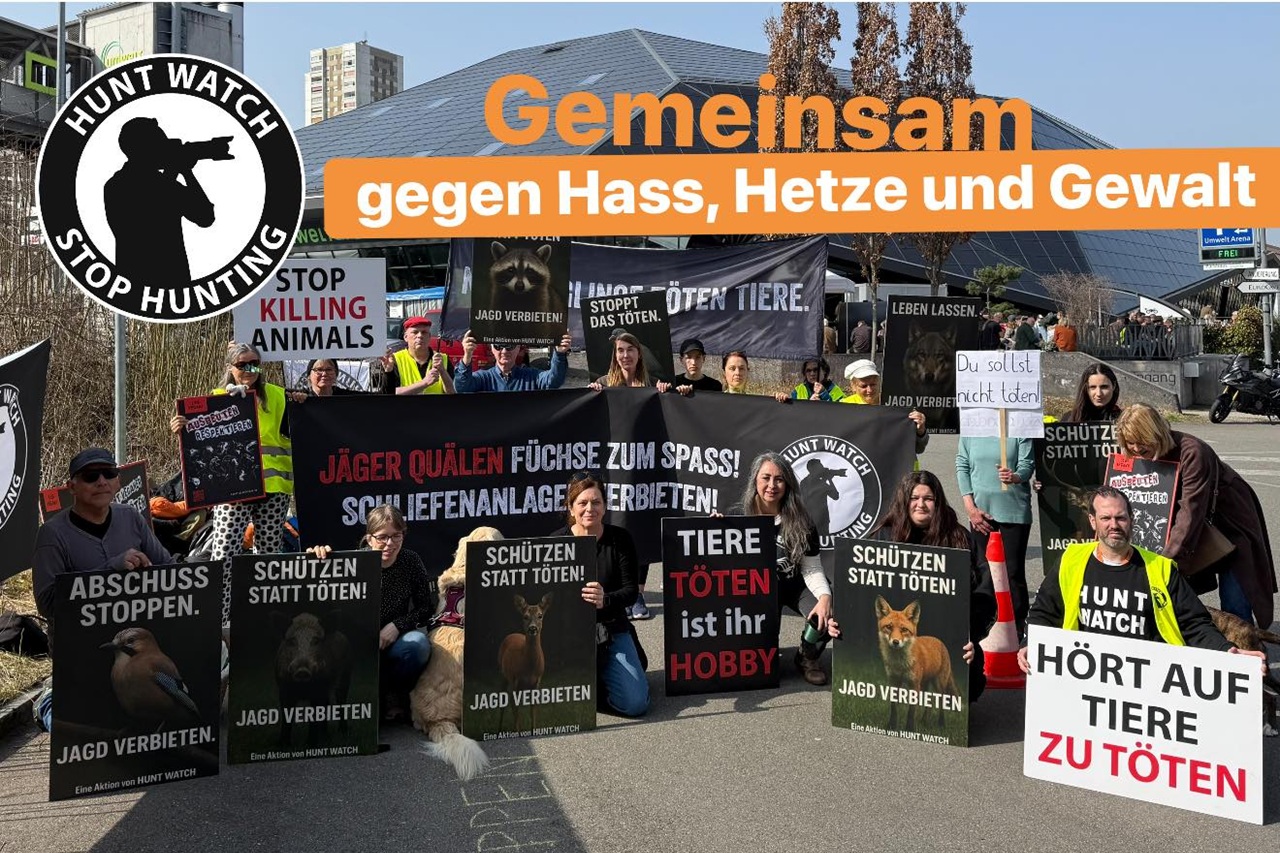
More on the subject of recreational hunting: In the dossier Poaching and hunting crime in Switzerland we document cases, legal questions and recurring patterns. What the research says about this is shown by Hunting fact-checked: the state of research.
The position of IG Wild beim Wild: IG Wild beim Wild rejects recreational hunting. Our model is the canton of Geneva, which has managed without recreational hunting since 1974: without hunting seasons, without hunting dogs, without driven hunts, without high seats, without the animal cruelty and crime that go hand in hand with hunting season elsewhere. What has worked there for over fifty years disproves every position paper by JagdSchweiz. An association that bases its policy on claims it refutes in its own documents is not a professional organisation, but a factory for misinformation.