Animal Welfare Groups Criticize Draft Federal Hunting Act
16 animal and nature conservation organizations criticize the draft amendment to the Federal Hunting Act as unconstitutional. Alternatives to culling are being ignored.

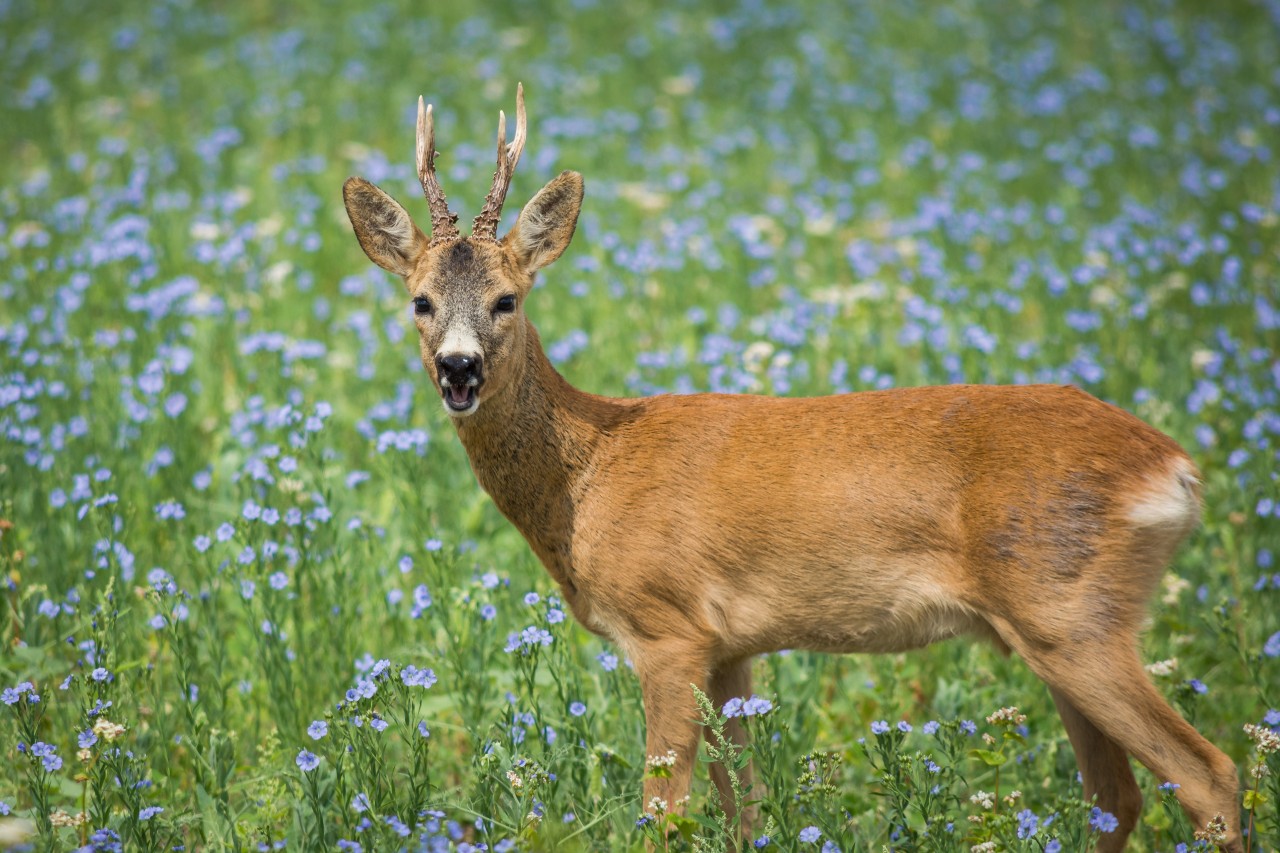
In an open letter to Federal Minister of Agriculture Klöckner 16 animal and nature conservation organizations criticize what they consider an unconstitutional draft amendment to the Federal Hunting Act. The animal welfare advocates are calling on the Federal Ministry to incorporate animal welfare considerations into the deliberations and to explore alternatives to increased culling of roe deer and other wildlife.
The legislator's aim in this case is to achieve natural forest regeneration without protective measures by means of even more intensive hunting of roe deer — a minimum cull is to be agreed upon between forest owners and hunters respectively.
The Basic Law requires that the achievement of this goal must not result in a deterioration of the state objective of animal welfare. Rather, it would be the responsibility of the Federal Ministry led by Klöckner to at least explore alternatives and weigh the theoretically possible total culling of roe deer and red deer against milder measures. This apparently did not happen. Equally, the opportunity was missed to involve animal welfare representatives in the process prior to the amendment of the Federal Hunting Act.
There are numerous approaches for milder, non-lethal measures. One option put forward by animal and nature conservation organizations is the radical reduction of hunting seasons to around three months per year. Lovis Kauertz of Wildtierschutz Deutschland advocates, for example, significantly reducing hunting seasons.
If there were no hunting pressure for nine months of the year, roe deer would lose their wariness and return in greater numbers to where their natural habitat actually is — in the fields, and ideally on meadows. If, on the other hand, driven hunts take place in January and February, even into March, and hunters are in future also able to pursue animals using night-vision devices, no one should be surprised when browsing damage in forests increases.
Further options include protective measures, for example in the case of complete reforestation projects, the promotion of wildlife-friendly transition zones between fields and forest, the complete prohibition of hunting during nighttime hours, the creation of hunting-free areas, not least through the recognition of animal welfare and nature conservation grounds when exempting land from hunting by natural and (!) legal persons.
Another important demand is to finally include a clarifying provision in the Federal Hunting Act stating that the killing of any animal requires a reasonable justification, as required by the Animal Welfare Act, which also specifies what such justifications entail.
More on the subject of recreational hunting: In the dossier The Role and Criticism of Recreational Hunters we shed light on the training, power and self-image of recreational hunters. The scientific evidence is presented in the overview Studies on the Effects of Recreational Hunting.
The position of IG Wild beim Wild: IG Wild beim Wild rejects recreational hunting. Our model is the canton of Geneva, which has managed without recreational hunting since 1974: without hunting seasons, without hunting dogs, without driven hunts, without high seats, without the animal cruelty and crime that go hand in hand with hunting season elsewhere. What has worked there for over fifty years disproves every position paper by JagdSchweiz. An association that bases its policy on claims it refutes in its own documents is not a professional organisation, but a factory for misinformation.