Animal Massacre Due to African Swine Fever
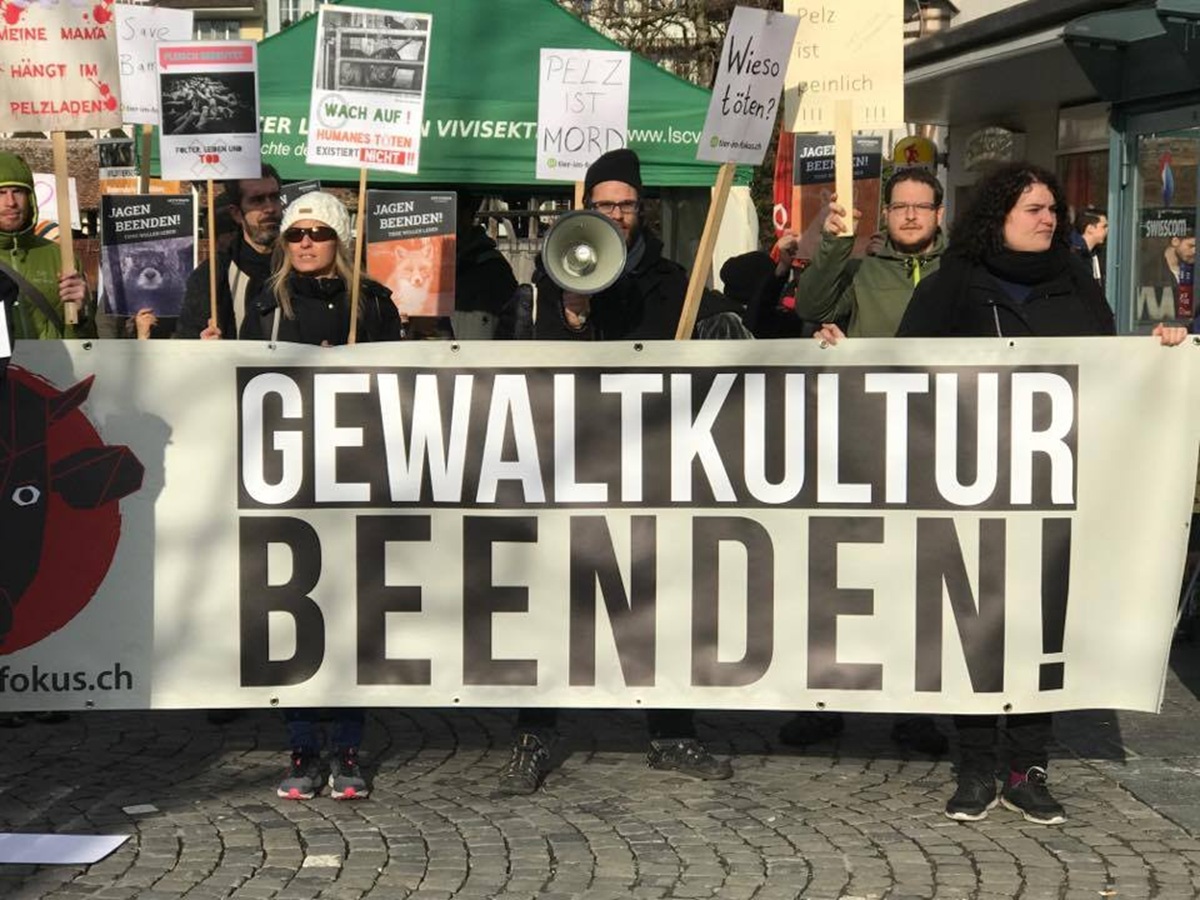
On 9 January 2018, more than a hundred recreational hunters hunted wild boar in the Teutoburg Forest between Sennestadt and Oerlinghausen in North Rhine-Westphalia (Germany). A dozen animal rights activists from various groups confronted the hunting parties on the ground. Hunt leaders subsequently reported lower death tolls as a result of the activists' actions.


The hunt was prompted by African Swine Fever — which has not yet actually been detected in Germany.
There are also doubts as to whether recreational hunting increases rather than reduces the risk of the disease spreading. For the activists, one thing is clear regardless: a potential disease threat cannot serve as justification for shooting innocent animals. Conversations with the recreational hunters make it apparent that the disease is hardly their concern either — it is rather about filling their freezers. Indeed, one of the two hunting parties is not shooting exclusively at wild boar.
Animal rights activists confront the recreational hunters
But the dialogue goes further. Some recreational hunters show understanding for the activists' position, admitting that it is only the anonymity of their victims that allows them to pull the trigger — the moral justification is absent. Others threaten the activists, whose presence is understandably unwelcome. However, no actual violence against the activists took place.
Others are not so fortunate. Too many animals targeted by the recreational hunters cannot be saved on this day. The album also contains images of victims. Some had more than one gunshot wound. Having fled after the first shot, they died from the second. There are also harrowing scenes of hunting dogs tearing wild boar apart.
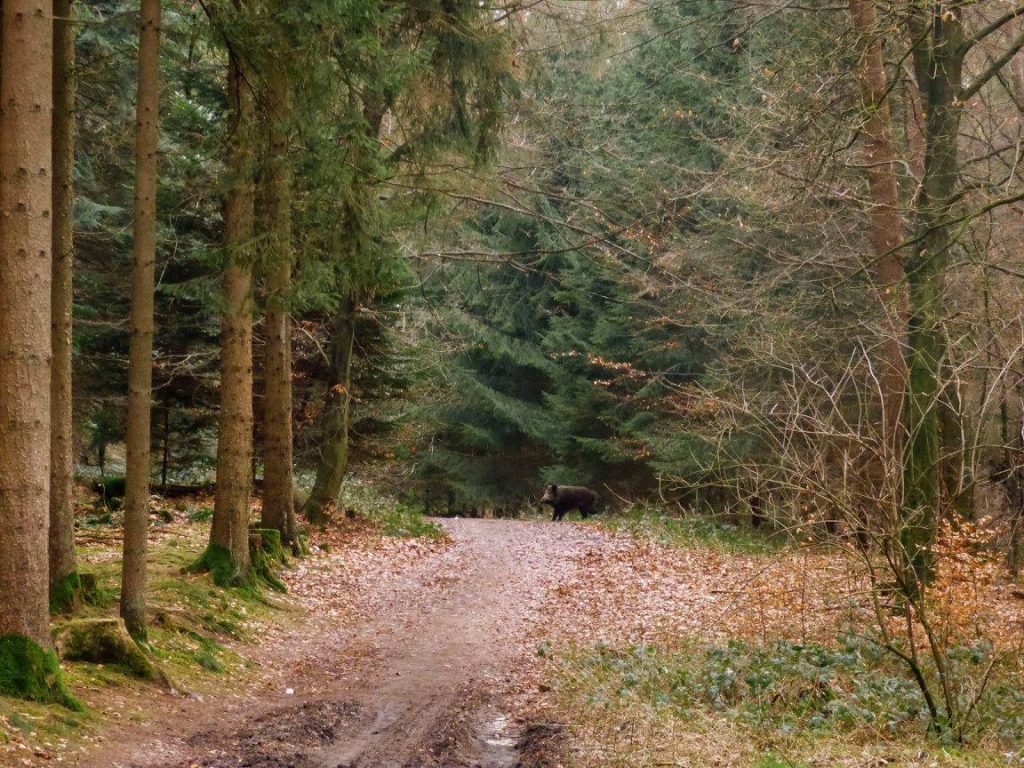
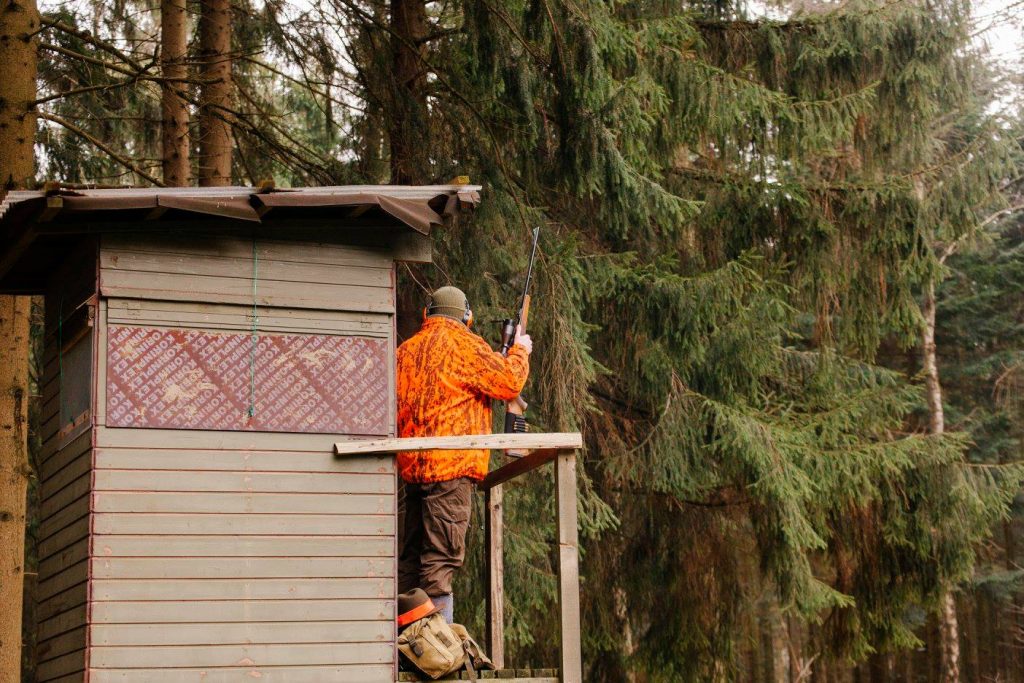


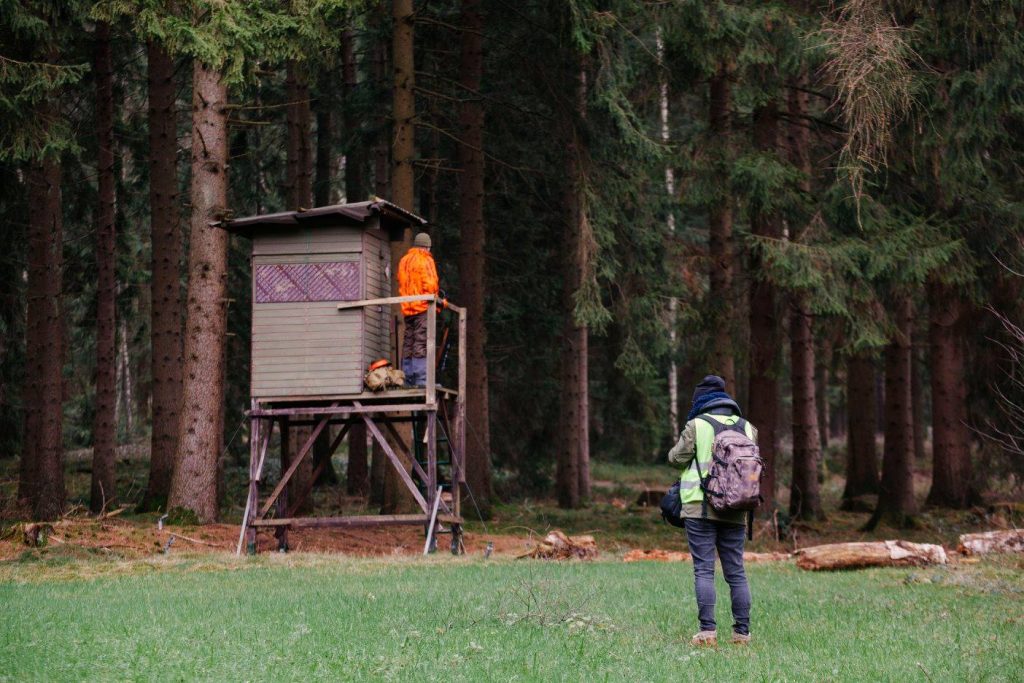


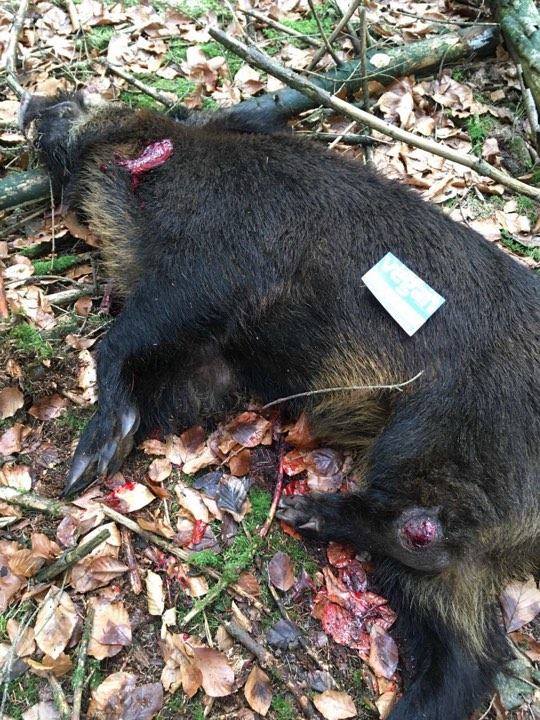
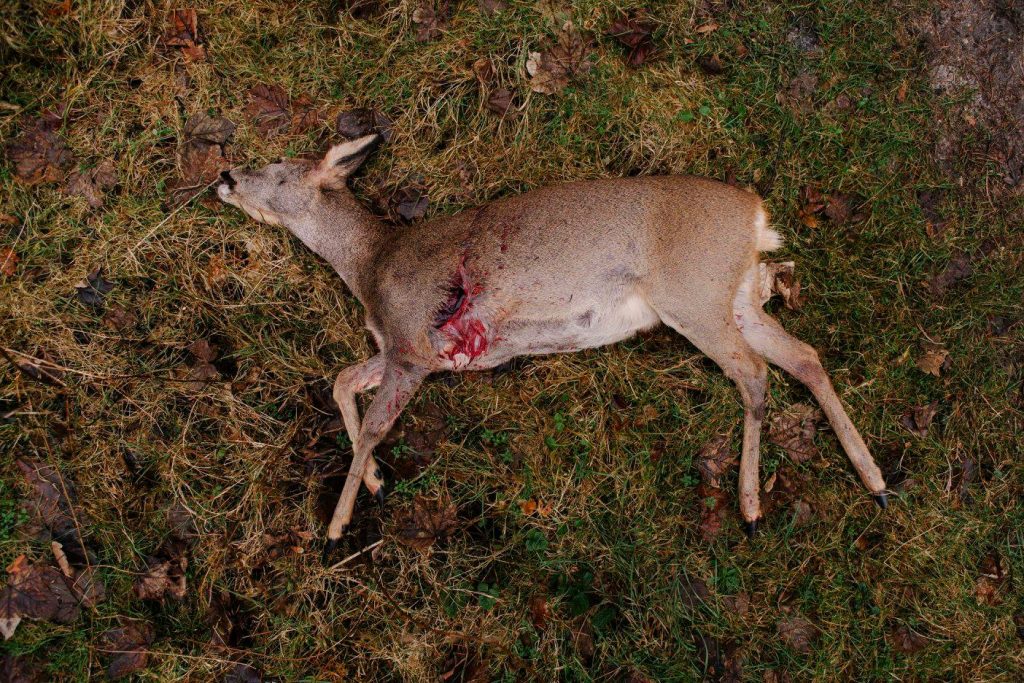
According to media reports, the death toll stands at 20 wild boar and 10 roe deer. There were likely additional victims in the forest — uncounted, not retrieved, but wounded or dead from their injuries. Ultimately, the recreational hunters were disappointed that more animals had not been shot. Animal rights activists were held directly responsible for this. For the activists, this was good news at the end of a terrible day.
Does recreational hunting lead to more wild boar?
For Holger Sticht of the North Rhine-Westphalian state association of the Bund für Umwelt und Naturschutz Deutschland (BUND) as well, «intensive hunting is part of the conflict and not part of the solution.» Because it leads to a increased reproduction of wild boar.
Sticht refers to a study that compared two wild boar populations: one that was frequently hunted and one that was barely hunted. In the heavily hunted population, the reproduction rate was «significantly higher.»
The wild boar is the gardener of the forest. Wild boar loosen the soil and prepare it for plants that thrive in it.
Ministry spokesman Peter Schütz also confirms this effect. For this reason, «the annual growth of wild boar must be overcompensated.» In other words: even more wild boar would need to be culled. Whether the recreational hunters could achieve this, Schütz does not know: «There will certainly be regions where the recreational hunters are not able to manage it.»
The BUND sharply criticizes the reduction of the close season for wild boar ordered by the Ministry of Agriculture. NRW Agriculture Minister Schulze Föcking had decreed by ordinance that the close season for wild boar would be lifted with immediate effect until March 31. The only exceptions are mother animals and piglets under 25 kilograms. She cited the occurrence of African swine fever in Poland as justification.
«No wild boar walks from Poland to NRW — the known transmission routes of African swine fever are hunting tourists and meat consumers who leave contaminated food scraps in the countryside,» said Holger Sticht, state chairman of BUND. The Ministry of Agriculture was therefore called upon to educate consumers and to exercise greater control over hunting activities.
«Instead of addressing the root causes of the problem, the Agriculture Minister is resorting to actionism that actually increases the risk of further spread,» said Sticht.
According to the ministry, the number of wild boar killed by recreational hunters in NRW has been rising steadily for years. In the last hunting year, 39’000 animals were shot, 4’500 more than the year before. From BUND's perspective, the fact that the number of conflicts continues to rise despite already intensive hunting is a clear indication that recreational hunting is not helping but is, on the contrary, making matters worse.
It has been scientifically proven that intensive hunting leads to higher reproduction rates in wild boar, says Sticht.
He refers to the «Servanty Study» of 2009, named after its lead scientist. Over 22 years, it examined two wild boar populations in France: one that was barely hunted and one that was frequently hunted. It demonstrated that the reproduction rate in the heavily hunted population was significantly higher than in the population largely left to its own devices.
The wild boar (Sus scrofa) is a mammal species originally widespread throughout NRW that, following its extermination in many parts of the region by the mid-20th century, is now returning on its own. This is essential for the preservation of biodiversity, as numerous animals, plants, and fungi benefit from the natural dynamic influences of this species. Nevertheless, this return repeatedly gives rise to various conflicts, as humans have occupied virtually all habitats. In fact, tried-and-tested solutions to all these conflicts have long existed: agricultural crops can be effectively protected with mobile electric fences, and cemeteries and residential areas can be safeguarded through appropriate fencing measures.
The pill for wild boar
The increased incursion of wild boar into residential areas in recent years is a consequence of widespread recreational hunting. The clever animals deliberately seek out protected areas (those exempt from hunting) in order to shield themselves from persecution.
However, there are limits to any further intensification of recreational hunting for wild boar — as is now being demanded by recreational hunters and their political allies in response to the outbreak of African Swine Fever in parts of Eastern Europe — both in a spatial sense (the problem of hunting in urban areas) and for ethical and animal welfare reasons: the abolition of closed seasons, the shooting of lead sows, increased hunting of piglets, and a growing number of driven hunts are not only meeting with public acceptance problems, but are also facing resistance within the recreational hunting community itself.
A solution that could help agriculture, municipalities, and cities lies in contraception for wild boar, argues the Wildlife Protection Germany.
More on the subject of recreational hunting: The scientific evidence is presented in the overview Studies on the Effects of Recreational Hunting.
The position of IG Wild beim Wild: IG Wild beim Wild rejects recreational hunting. Our model is the canton of Geneva, which has managed without recreational hunting since 1974: without hunting seasons, without hunting dogs, without driven hunts, without high seats, without the animal cruelty and crime that go hand in hand with hunting season elsewhere. What has worked there for over fifty years disproves every position paper by JagdSchweiz. An association that bases its policy on claims it refutes in its own documents is not a professional organisation, but a factory for misinformation.