Cantonal popular initiative: Canton of Schwyz
«For professional wildlife protection»
Constitutional initiative in the form of a drafted proposal
Pursuant to § 28 and § 29 of the Constitution of the Canton of Schwyz dated 24 November 2010 and the Act on Elections and Votes
Submitted by the initiative committee [date of submission]
Text of the initiative
The undersigned persons entitled to vote in the Canton of Schwyz submit the following constitutional initiative:
The Constitution of the Canton of Schwyz dated 24 November 2010 is amended by the addition of the following paragraphs:
§ [new] Professional wildlife protection
1 The exercise of hunting by private individuals (licence hunting, recreational hunting) is prohibited throughout the entire territory of the Canton of Schwyz.
2 The protection, care and, where necessary, regulation of wild animals shall be the exclusive responsibility of professionally trained wildlife managers employed by the canton.
3 The killing of wild animals is only permitted as a last resort, when all other suitable measures for preventing damage or averting danger have been exhausted or are insufficient. It requires prior approval by the Wildlife Commission.
4 The canton shall establish an independent Wildlife Commission, composed of representatives of animal welfare and nature conservation organisations, the scientific community and the authorities concerned. The commission shall oversee wildlife management and decide on regulatory measures.
5 The canton shall promote the natural regulation of wildlife populations, the connectivity of habitats and the coexistence of humans and wild animals.
6 Further details shall be regulated by law.
§ [new] Protection of endangered and protected wild animal species
1 The canton refrains from regulating populations of protected wild animal species pursuant to Art. 7a of the Federal Act on Hunting and the Protection of Wild Mammals and Birds and does not grant kill permits for individual animals of protected species pursuant to Art. 12 para. 2 of this Act, in particular not for wolf, lynx, bear, beaver, otter, golden jackal, golden eagle, goosander and other species protected under federal law. Paragraph 3 remains reserved.
2 It relies on fostering coexistence between humans and wild animals, passive damage prevention, the ecological enhancement of habitats and the scientific monitoring of wild animal presence.
3 Measures against individual wild animals that pose an immediate and significant danger to humans remain reserved. They are to be limited to the minimum necessary and carried out by the canton's competent specialist authority.
4 The canton actively advocates for the protection and preservation of endangered wild animal species within the framework of inter-cantonal cooperation and towards the Confederation.
Transitional provision
1 The cantonal government shall issue the necessary implementing provisions within two years of the adoption of this constitutional amendment.
2 Existing hunting licences expire upon the entry into force of the implementing provisions. Patent fees already paid for the current hunting season will be reimbursed on a pro-rata basis.
3 The cantonal government shall ensure continuity of wildlife management during the transitional phase.
Explanatory notes
1. Starting position
In the Canton of Schwyz, an alpine canton in Central Switzerland with around 160’000 inhabitants across an area of 908 km², today's recreational hunting is a system that serves neither species protection nor contemporary wildlife management. It is the practice of a bloody leisure pursuit at the expense of sentient beings, legitimised by outdated narratives that do not withstand scientific scrutiny. The claim that the ecological balance would collapse without recreational hunting has been empirically refuted for over 50 years by the Geneva model (see the comprehensive dossier on the Geneva hunting ban on wildbeimwild.com).
Recreational hunting in Schwyz is organised as licence hunting. Private individuals purchase a cantonal licence and hunt without fixed responsibility for a particular hunting ground. Contrary to the widespread claim, licence holders do not assume any ecological responsibility, but rather act within the framework of cantonal kill quotas that are primarily geared towards the interests of forestry and agriculture (see the The psychology of recreational hunting in the canton of Schwyz as well as the critical analysis of hunting training on wildbeimwild.com).
In parallel, an increasing number of protected wild animal species are coming under pressure at the federal level. The canton of Schwyz is at the centre of the national wolf debate: in July 2025, the first wolf pack in the canton was confirmed by camera trap evidence. Just around five weeks later, the canton applied to the FOEN for regulation and, on 28 August 2025, received approval to have two thirds of the pups shot. By the end of November 2025, three of the five young wolves had been killed. The short interval between the first evidence and the kill illustrates how quickly a biological fact can turn into a political killing order. Since February 2025, cantons have been able to approve the killing of individual beavers that cause significant damage (Art. 9d JSV). The lynx is native to the canton (see the analysis of hunting policy on wildbeimwild.com and the wolf policy on wildbeimwild.com).
The canton of Schwyz has the opportunity to set a clear example here: not only for professional wildlife protection instead of recreational hunting, but also for the consistent protection of endangered wild animal species at the cantonal level.
2. The role model: canton of Geneva
On 19 May 1974, a good 70 percent of voters in the canton of Geneva voted to abolish militia-style recreational hunting. Before the ban, big game in the canton had been practically wiped out: red deer and wild boars had been absent for decades, and only a few dozen roe deer remained. Over 400 recreational hunters released large numbers of pheasants, grey partridges and hares for recreational hunting.
The experience since the recreational hunting ban has been unequivocal:
- Biodiversity has increased markedly. The number of overwintering waterfowl has multiplied from a few hundred to around 30,000. Geneva is now home to the largest brown hare population and one of the last grey partridge populations in Switzerland.
- The roe deer population has settled at a healthy level, with an annual special cull by professional game wardens of just 20 to 36 animals.
- The ban has been in force continuously for over 50 years. Geneva has never repealed it.
- The total cost of professional wildlife management in Geneva amounts to around 1.2 million francs annually, split into approximately 600,000 francs for personnel (around three full-time positions, shared among roughly a dozen environmental officers), 250,000 francs for prevention, and 350,000 francs for damage compensation. This corresponds to around 2.40 francs per resident per year.
Geneva's fauna inspector Gottlieb Dändliker, responsible for wildlife management since 2001, describes the recreational hunting ban as the financially most favourable option for the canton. A detailed account can be found in the dossier «Geneva and the hunting ban» on wildbeimwild.com.
The efficiency of the Geneva model becomes clear in a direct comparison: a professional game warden in Geneva needs on average 8 hours and a maximum of 2 cartridges for a sanitary kill of a wild boar. A recreational hunter in the canton of Zurich needs 60 to 80 hours and up to 15 cartridges for the same task. The density of brown hares in Geneva is 17.7 animals per 100 hectares (the highest in Switzerland), whereas in the canton of Zurich it is only 1.0 per 100 hectares (cf. fact check by the Zurich Cantonal Council).
3. The concept: professional wildlife wardens instead of recreational hunting
The initiative does not replace recreational hunting with a vacuum, but with professional wildlife management based on the game warden model. This model is founded on the following principles:
Professional expertise instead of leisure pursuit. Professional wildlife managers act on a scientific basis, with biological training and within the framework of a cantonal performance mandate (see the critical analysis of hunting training on wildbeimwild.com).
Last-resort principle. A kill is only permissible once all non-lethal measures have been exhausted. These include electric fences, deterrence, habitat management, relocation, taste repellents and structural protective measures.
Democratic oversight through a wildlife commission. The independent commission prevents political pressure from diluting wildlife management. The initiative enshrines the approval requirement at the constitutional level.
Natural self-regulation as a guiding principle. Experience from Geneva, from national parks and from numerous scientific Studies proves it: in most cases, wildlife populations regulate themselves. Recreational hunting disrupts this natural process.
4. Why Schwyz?
The canton of Schwyz is particularly well suited to introducing professional wildlife protection for several reasons:
Schwyz is at the centre of the wolf debate. In July 2025, the canton's first wolf pack was confirmed. Five weeks later, the kill permit was issued. By November 2025, three of the five pups were dead. The gap between first confirmation and the kill illustrates how quickly a biological fact can turn into a politically motivated kill order – and why constitutional protection is needed before it ever gets that far. The initiative offers a constitutional answer to the wolf debate: professional wildlife management instead of politically motivated kills (see the wolf policy on wildbeimwild.com).
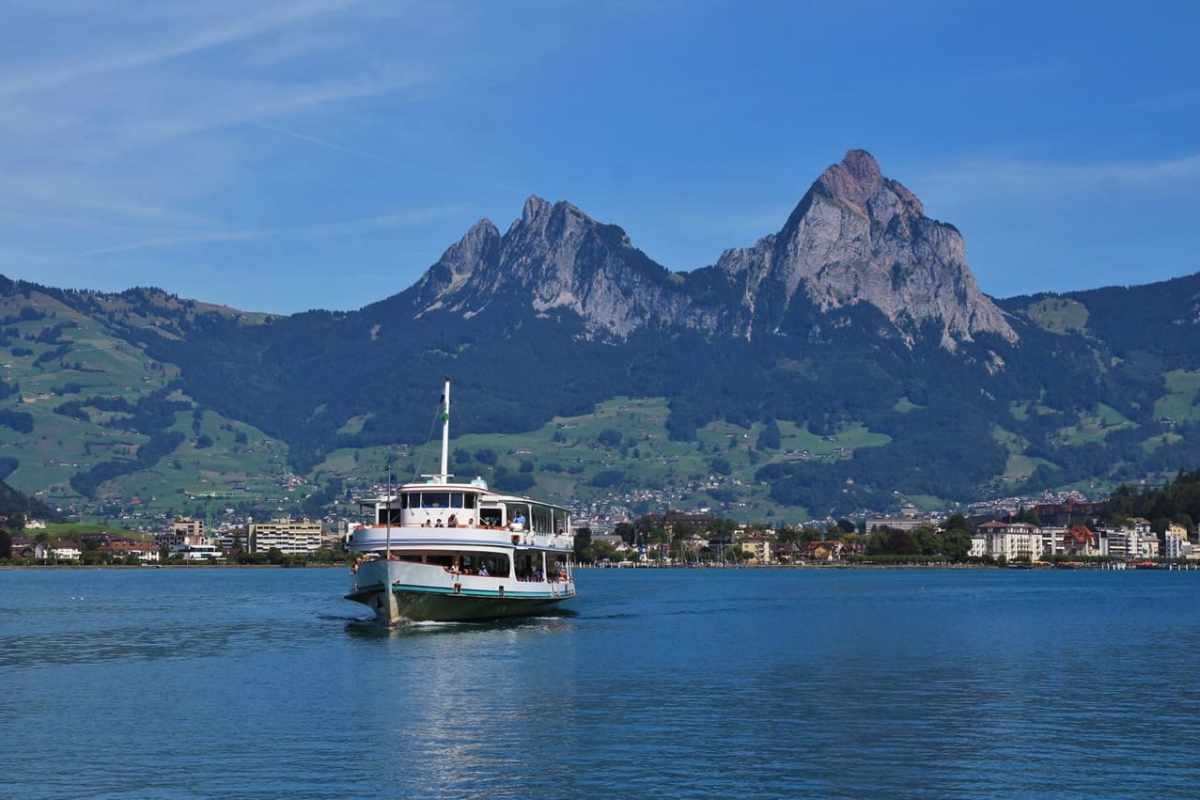
Mythen and Muotatal: unique wilderness areas. The Muotatal valley and the Mythen region are home to some of Central Switzerland's last remaining wilderness areas. The lynx is native here, and the ibex lives on the rocky ridges. Professional wildlife management would protect these unique habitats more consistently than recreational hunting does (see wildbeimwild.com on national parks and protected areas).
2,000 signatures. With 160,000 inhabitants, 2,000 signatures amount to just 1.25 per cent of the population. In Schwyz, Freienbach, Küssnacht, Einsiedeln and Wollerau, signatures can be collected efficiently.
Beavers on the Sihl and the southern shore of Lake Zurich. The beaver is documented in the canton. Since February 2025, it may be killed nationwide upon cantonal request. The initiative protects the beaver (see wildbeimwild.com on predators).
Licence hunting = a simple change of system. No lease agreements, no compensation for municipalities. Existing licences lapse, and fees already paid are reimbursed on a pro-rata basis.
Urban base on Lake Zurich. The municipalities of Freienbach, Wollerau and Küssnacht belong to the Zurich catchment area and have an urban character. Together with the cantonal capital Schwyz and Einsiedeln, a considerable share of the canton's population lives in agglomeration areas.
Signal effect for Central Switzerland.A success in Schwyz would have a signalling effect for the whole of Central Switzerland (LU, OW, NW, UR, ZG). Schwyz is the canton that symbolises the wolf debate.
5. On the text of the initiative
Paragraph 1: Ban on recreational hunting
The ban on licence hunting by private individuals is the core of the initiative. It corresponds to the Geneva model. The cantonal competence for this is undisputed: the federal hunting act (JSG) explicitly leaves the organisation of hunting operations to the cantons (Art. 3 para. 1 and 2 JSG). The three hunting systems in Switzerland (licence hunting, territorial hunting and state or regie hunting) are of equal standing. The canton of Geneva has been practising regie hunting in compliance with federal law since 1974.
Paragraph 2: Professional wildlife management
Instead of recreational hunters, professionally trained wildlife managers in cantonal service take on all tasks. In Geneva, this system has proven its worth for over 50 years.
Paragraph 3: Kill as a last resort
A kill is not the rule, but the exception. Passive measures take priority. In Geneva, around 250 wild boars are killed annually by game wardens (according to FOEN hunting statistics), mainly young animals, with lead animals explicitly spared.
Paragraph 4: Wildlife commission
The independent wildlife commission is modelled on the Geneva system. It ensures that animal welfare and nature conservation organisations have a say and prevents the cantonal government from independently granting exceptions. The involvement of science guarantees evidence-based decisions (see Hunting myths fact-checked). The wolf debate in Schwyz showed how quickly political pressure can lead to kill permits: five weeks between first confirmation and permit approval. A constitutionally enshrined wildlife commission would have prevented this automatism.
Paragraph 5: Natural regulation and coexistence
Promoting coexistence in Schwyz includes, in particular, securing and connecting the wilderness areas in the Muotatal and the Mythen region, the protective forest on the steep slopes, and educating the public on how to behave around wild animals.
Transitional provisions
The two-year deadline gives the cantonal government sufficient time to draft the implementing legislation. The existing Office for Forests and Nature can serve as an institutional basis. The system change from licence hunting to regie hunting is administratively straightforward.
6. On the second paragraph: Protection of endangered and protected wildlife species
The second paragraph is of the utmost topicality for Schwyz. The case of the first Schwyz wolf pack in 2025 exemplifies why constitutional protection is necessary: five weeks between first confirmation and kill authorisation. Three of five pups dead within a few months. Without democratic oversight by a wildlife commission, every wolf sighting automatically turns into a kill order. The lynx is native to the canton. The beaver has colonised the Sihl and the southern shore of Lake Zurich. The «in particular» wording also protects future returning species (cf. the wolf policy on wildbeimwild.com).
7. Cost implications: Concrete budget for Schwyz
The Geneva reference budget
In Geneva, which at 282 km² is around three times smaller than Schwyz and has around 500’000 inhabitants, the total costs amount to around 1.2 million francs annually: around 600’000 francs for personnel, around 250’000 francs for prevention and around 350’000 francs for damage compensation.
Conservative projection for Schwyz
For Schwyz, with an area of 908 km² and around 160’000 inhabitants, the following deliberately conservative cost estimate results:
Personnel costs: 480’000 to 840’000 francs annually. 4 to 6 full-time positions are required. Schwyz is three times larger than Geneva and topographically diverse: urban along Lake Zurich, alpine in the Muota Valley and the Mythen region.
Material costs: 100’000 to 180’000 francs annually.
Damage compensation: 60’000 to 150’000 francs annually.
Herd protection start-up investment: 400’000 to 700’000 francs. A one-off investment in herd protection infrastructure for the Mythen region and the Muota Valley over three to five years.
Total costs: 640’000 to 1’170’000 francs annually (gross). This corresponds to around 4.00 to 7.30 francs per inhabitant per year.
Compensatory reproduction and transition management
Compensatory reproduction caused by hunting pressure also affects the canton of Schwyz. Recreational hunting, through hunting pressure, produces more births than it removes. After the system change, targeted transition management will be needed in the first years, which is factored into the higher number of positions (cf. studies on wildbeimwild.com).
Savings and counter-financing
Against this stand savings: no hunting examinations, no licence administration, no kill quota planning, no hunting supervision. A single senselessly killed wolf costs the public around 35,000 francs. In 2025, three young wolves in Schwyz were killed within a few months of the pack's first confirmed sighting: costs that would not arise under professional wildlife management aimed at coexistence.
Lost revenue
Abolishing recreational hunting eliminates licence fees estimated at 400,000 to 600,000 francs annually. However, this must be weighed against the never-calculated external costs of militia hunting (wildlife accidents, hunting-related browsing damage in protective forests, administrative expenses, police and court interventions), which amount to many times these revenues. In the canton of Geneva, these revenues have been forgone since 1974 without any financial problems: before the hunting ban, over 400 recreational hunters were active; today, three full-time positions do the same work better. Sanitary and therapeutic kills by professional game wardens are not the same as regulatory hunting based on hunters' lore or a misunderstood “experience of nature” among recreational hunters. A full-cost accounting shows that militia hunting costs taxpayers considerably more than it brings in (cf. «What recreational hunting really costs Switzerland» on wildbeimwild.com).
Recreational hunters in politics vote against nature conservation. The recreational hunting lobby systematically opposes biodiversity and species protection concerns. In 2024, it fought against the Biodiversity Initiative (63 per cent No). In 2020, the hunting act it had helped shape failed at the ballot box (51.9 per cent No). In 2016, the Ticino hunting association torpedoed the Parc Adula national park. During the 2015–2019 legislative period, recreational hunters in parliament voted predominantly against environmental concerns. Anyone who claims that recreational hunters are nature conservationists is ignoring their voting behaviour (cf. Ticino Hunting Association: 30 Years of Nonsense and Cost dossier).
The Net additional costs are likely to be between 350,000 and 800,000 francs annually, which corresponds to around2.20 to 5.00 francs per inhabitant. Even generously calculated, this is less than 0.05 per cent of the cantonal budget of around 1.6 billion francs (2024 state accounts, FFA). Less than one coffee per person per year, for professional wildlife protection in the canton that symbolises the wolf debate (cf. Hunting myths fact check on wildbeimwild.com).
8. Compatibility with superior law
First paragraph: Abolition of recreational hunting
Compliant with federal law. Art. 3 para. 1 and 2 JSG. Three equivalent hunting systems. Unchallenged in Geneva since 1974.
Second paragraph: Protection of protected species
Art. 7a JSG permits preventive regulation but does not require it. The same applies to kill authorisations for individual animals under Art. 12 para. 2 JSG. Refraining from this violates neither federal law nor the Bern Convention.
Unity of subject matter
Ensured, as all provisions relate to cantonal wildlife management and the protection of wild animals.
9. Anticipating foreseeable objections
“Schwyz is an alpine canton, the Geneva model doesn't fit”
The facts: Schwyz is topographically diverse: the municipalities on Lake Zurich (Freienbach, Wollerau, Küssnacht) are urban. The Schwyz valley basin and the Einsiedeln catchment area are Central Plateau-like. The alpine areas (Muotatal, Mythen region) are sparsely populated with fewer conflict zones. In the urban part, the situation is directly comparable to Geneva. In the alpine part, there are fewer people and thus fewer conflicts, not more (cf. the The psychology of recreational hunting in the canton of Schwyz).
Short communicative formula: «Freienbach and Küssnacht are as urban as Geneva. And the Muotatal needs professional wildlife protection, not recreational hunting.»
«The wolf must be regulated»
The facts: Five weeks between first confirmation and kill authorisation. Three dead pups. That is not regulation, that is political activism with a rifle. Professional wildlife management would use the wolf as a natural regulator and protect livestock herds through professional prevention, not through reflexive kills. The wolf reduces browsing pressure in protective forests, which is ecologically and economically significant, especially in a canton with steep slopes.
Short communicative formula: «Five weeks from first confirmation to kill. Three dead pups. That is not regulation, that is political killing.»
“The costs are too high for a small canton”
The facts: Even generously calculated: around 2.20 to 5.00 francs per inhabitant per year. Less than one coffee per person per year. Less than 0.1 percent of the cantonal budget. Schwyz also has one of the highest tax capacities of all cantons.
Short communicative formula: «Less than one coffee per person per year. Less than 0.1 percent of the cantonal budget. Affordable for one of Switzerland's most tax-strong cantons.»
10. Summary
This initiative gives the population of Schwyz the opportunity to speak out in favour of modern, evidence-based wildlife management and comprehensive protection for endangered wild animal species. The first paragraph follows the Geneva model, which has proven itself for over 50 years. The second paragraph is a direct response to the case of the Schwyz wolf pack in 2025: it prevents every wolf sighting from automatically becoming a kill order, and also protects lynx, beaver and future returning species. As a canton at the centre of the wolf debate, a success in Schwyz would have a signalling effect reaching far beyond the canton's borders.
Initiative committee “For professional wildlife protection”
[Name 1], [Name 2], [Name 3] …
(Committee members in accordance with cantonal law, resident in the canton of Schwyz)
Contact address: [Committee address]
Appendix: Further documentation
The following dossiers and sources support the arguments of this initiative:
The Geneva model in detail: wildbeimwild.com/dossiers/genf-und-das-jagdverbot. Comprehensive overview of Geneva's wildlife management since 1974.
Scientific studies: wildbeimwild.com/studien. Collection of scientific studies on the self-regulation of wildlife populations.
Hunting in Switzerland: wildbeimwild.com/jagd-in-der-schweiz. Continuously updated overview of Swiss hunting policy.
Psychology of recreational hunting in the canton of Schwyz: wildbeimwild.com: Psychology of recreational hunting in the canton of SZ. Canton-specific analysis.
Psychology of recreational hunting: wildbeimwild.com/category/psychologie-jagd. Cross-cutting articles.
Wild animals in settlement areas: wildbeimwild.com/tag/stadtwildtiere. Coexistence of humans and wild animals.
National parks and protected areas: wildbeimwild.com/tag/schweizerischer-nationalpark. Natural self-regulation in protected areas.
Hunting myths: wildbeimwild.com/dossiers/jagdmythen. Fact check.
Cantonal popular initiative Basel-Stadt: Template text of the initiative in the canton of Basel-Stadt. The template for the entire initiative series.
Note on the procedure
The initiative committee submits the initiative text to the State Chancellery of the canton of Schwyz for preliminary review before the start of signature collection. 2,000 valid signatures are required for the initiative to come about. The submission procedures are governed by the Act on Elections and Votes.
Strategic briefing for activists
Popular initiative «For professional wildlife protection», canton of Schwyz Internal working document, as of March 2026
Summary
Schwyz is the canton of the wolf debate. The first wolf pack was confirmed in July 2025; five weeks later the kill permit was issued; by November, three of five pups were dead. The initiative is a direct response to this. 2,000 signatures among 160,000 residents is achievable. The urban base on Lake Zurich (Freienbach, Wollerau, Küssnacht) provides the mobilisation potential. The Mythen region and the Muotatal are unique wilderness areas that deserve professional protection.
1. Why Schwyz, of all places?
Centre of the wolf debate. First wolf pack in 2025. Five weeks from confirmation to kill. Three dead pups. The species protection clause is a direct response.
Mythen and Muotatal. Unique wilderness areas of Central Switzerland. Lynx, ibex, eagle.
2,000 signatures among 160,000 residents. 1.25 per cent. Achievable.
Urban base on Lake Zurich. Freienbach, Wollerau and Küssnacht have an urban character.
Licence hunting = a simple change of system. No lease agreements, no compensation for municipalities.
Signal effect for Central Switzerland. Schwyz symbolises the wolf debate.
2. Lessons from Zurich: What we are doing differently
Positive title. «For professional wildlife protection» instead of «Game wardens instead of hunters».
Concrete budget calculation. Around 2.20 to 5.00 francs per head. Less than one coffee per person per year.
Wolf debate as a mobilisation topic. The Schwyz wolf pack of 2025 is the most emotionally compelling argument in the series.
Secure party support early. Involve the SP, Greens and GLP early on. In Schwyz the base is smaller, but so is the hurdle (only 2,000 signatures).
3. Opponent analysis and prepared responses
Counter-argument 1: «Schwyz is an alpine canton»
The facts: Freienbach and Küssnacht are as urban as Geneva. In the Muotatal: fewer people, fewer conflicts.
Short communicative formula: «Freienbach is as urban as Geneva. And in the Muotatal, what is needed is professional wildlife protection, not recreational hunting.»
Counter-argument 2: «The wolf must be regulated»
The facts: Five weeks from first confirmed sighting to kill. Three dead pups. That is not regulation, that is political activism with a rifle.
Short communicative formula: «Five weeks from first confirmed sighting to kill. Three dead pups. That is not regulation.»
Counter-argument 3: “The costs are too high”
The facts: Around 2.20 to 5.00 francs per resident and year. Less than a coffee. Schwyz has one of the highest tax revenues of all cantons.
Short communicative formula: «Around 2 to 5 francs. Affordable for one of the most financially strong cantons.»
4. Communication strategy: The three core messages
«Five weeks from first confirmed sighting to kill. This cannot continue.» The wolf debate, emotionally and factually.
«Geneva has been demonstrating it for 50 years.» Never repealed since 1974, stable populations, minimal costs.
«Professional instead of hobby.» Qualified professionals instead of recreational shooters.
5. Timetable and next steps
| Phase | Content | Timeframe |
|---|---|---|
| Committee formation & preliminary text review | Consult a lawyer; recruit committee members resident in Schwyz | Month 1–3 |
| Submission for preliminary review | Schwyz State Chancellery | Month 3–4 |
| Publication & start of signature collection | Goal: 2,500+ signatures as a buffer | Month 4 |
| Party contacts & coalition building | SP, Greens, GLP; Pro Natura Schwyz; BirdLife; Friends of the Wolf | Month 1–12 |
| Submission of signatures | State Chancellery, official verification | After the collection period |
| Cantonal parliament debate | Parliamentary anchoring; media work | Following months |
| Voting campaign | Final mobilisation, wolf argument, Muotatal as a visual element | Before the vote |
6. Campaign material
- Geneva dossier on wildbeimwild.com as the central set of arguments.
- The The psychology of recreational hunting in the canton of Schwyz as background material.
- Local media: Bote der Urschweiz, Einsiedler Anzeiger, March-Anzeiger, Höfner Volksblatt, Tele 1.
- Infographic: Timeline «July–November 2025: From first confirmed sighting to kill». Muotatal and the Mythen region as a visual element. Cost comparison SZ vs. GE.
7. Further sources
- Geneva's hunting ban in detail
- Scientific studies
- Hunting in Switzerland
- The psychology of recreational hunting in the canton of Schwyz
- Hunting myths fact check
- National parks and protected areas
- Federal hunting statistics (BAFU)
- Cantonal popular initiative Basel-Stadt
This document is a template text from IG Wild beim Wild. It may be freely used by activists, organisations or initiative committees and adapted to the circumstances in the canton of Schwyz.
Fact check: The claims of the recreational hunting lobby
The brochure «Die Jagd in der Schweiz schützt und nützt» ("Hunting in Switzerland protects and benefits") published by JagdSchweiz reads like a promotional pamphlet, yet its central claims do not hold up to a fact check. Ten narratives put to the test, from «statutory duty» to «biodiversity» to «80% approval»: Dossier: Fact check on the JagdSchweiz brochure →