USA: Zoo Elephant in Court
In the USA, a zoo elephant is facing a court hearing. Animal welfare organizations are demanding the release of the animal from solitary confinement.

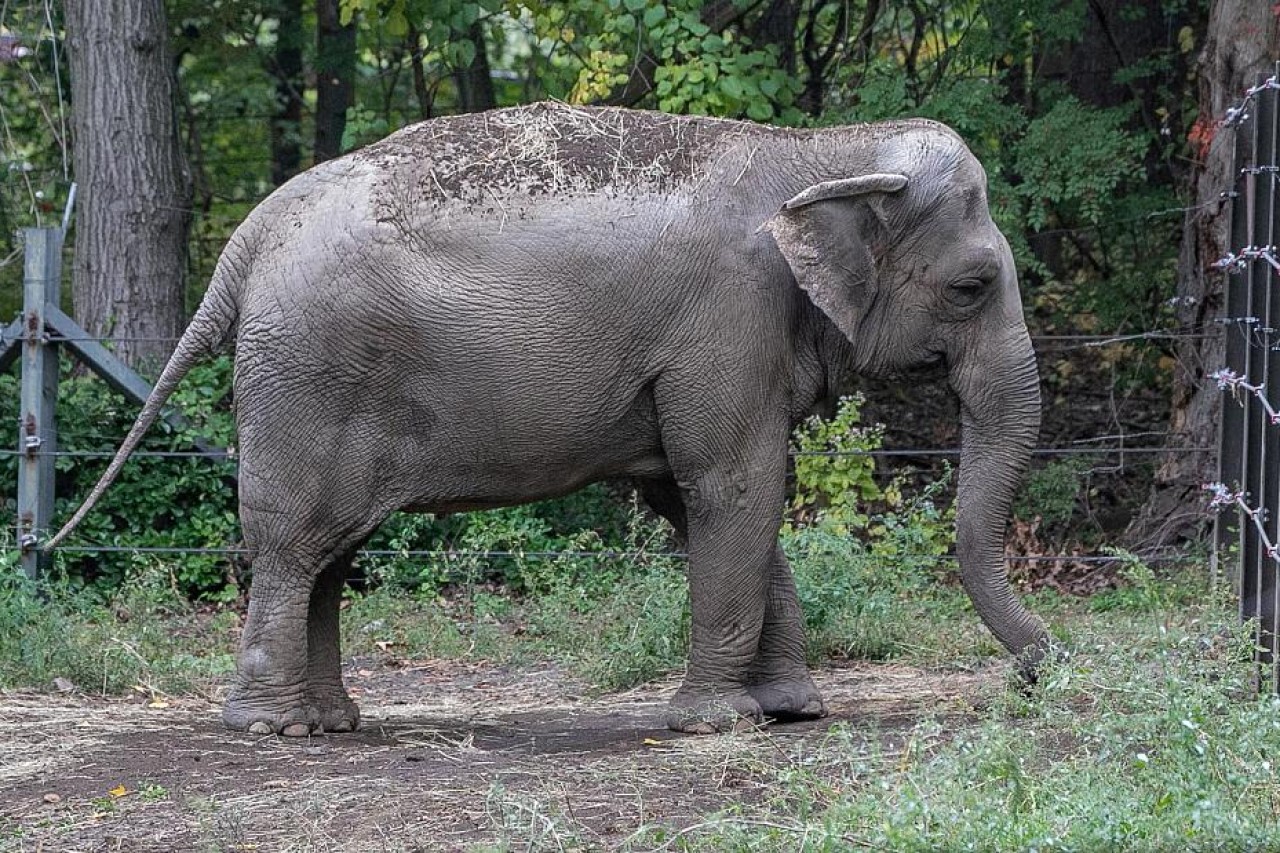
New York's highest court will soon decide whether an Asian elephant has the same rights as a human being and can be released to a sanctuary.
The Nonhuman Rights Project represents Happy, who has lived at the Bronx Zoo in America for four decades, and says the animal is a «cognitively complex non-human animal» that should be released.
The 51-year-old Asian elephant has been at the zoo since 1977. Since around 2006, Happy has been kept in a 0.4-hectare enclosure, separated from other elephants.
Four years ago, the Florida-based group began petitioning New York courts to release Happy to one of two elephant sanctuaries in the United States, arguing that the animal was being held illegally.
The entire history of humanity shows that the only way to truly protect the fundamental interests of people is to recognize their rights. It is no different for non-human animals.
The Nonhuman Rights Project has argued that Happy has a right to «Habeas Corpus», a legal procedure through which unlawfully detained individuals, or someone acting on their behalf, can demand the reason for their detention.
New York's habeas corpus law contains no definition of the term «person,» and in the group's view, Happy should be recognized as one.
Would granting human rights to an elephant mean that people are no longer allowed to keep dogs as pets?
Granting human-like rights to animals could be a dangerous path, according to some legislators. The appellate judges in Albany were visibly skeptical during the hearing.
Some questioned why the habeas corpus principle should apply, given that the group was seeking to swap Happy's placement in a zoo for placement in a sanctuary.
Other judges expressed concern that extending certain legal rights to elephants could raise other questions: «Does that mean I can't keep a dog?» asked Associate Judge Jenny Rivera.
The Nonhuman Rights Project's attorney, Monica Miller, countered that there is not as much evidence for the cognitive abilities of dogs as there is for elephants.
«Scientists agree that elephants are not only autonomous, but also cognitively complex and emotionally intelligent», she said.
According to a 2006 study, Happy passed a «mirror self-recognition» test, which is considered an indicator of self-awareness. The animal welfare organization argues that this is one of many cognitive abilities that Happy shares with humans.
The Nonhuman Rights Project claims that Happy needs the company of other elephants.
«The deprivation of physical liberty consists of being confined and living alone in a one-hectare enclosure», Miller said at the hearing.
Happy's long-time companion, Grumpy, was attacked by two other elephants in the early 2000s. Grumpy never recovered from the injuries and was euthanized. Another of Happy's companions, Sammie, later died.
The zoo's other elephant, Patty, lives in an adjacent enclosure separated from Happy by a fence.
The charity disputes the zoo's claim that the female elephant «does not get along with other elephants» and should therefore not be moved to a sanctuary. They say that Happy's behavior is a result of her long captivity and may change over time in a sanctuary.
The Bronx Zoo, operated by the Wildlife Conservation Society, has stated that Happy is not kept in isolation; Happy is not languishing; Happy is not kept in a barn for half the year. The Bronx Zoo's veterinarians, keepers, and curators believe it is in Happy's best interest to remain in her familiar environment.
Previous efforts to grant legal personhood to animals, including chimpanzees, have been unsuccessful.
The appeals court has not yet indicated when it will issue a ruling.